Must-Read Microhistories of The Common, The Ordinary, and The Extraordinary
⚓ Books 📅 2026-01-05 👤 surdeus 👁️ 17

I have a vivid memory of sitting cross-legged in the school library in first or second grade. The librarian was teaching us how to use the library, and one of the things she asked us to do was think of something that we did not believe could be the subject of a whole book. “Pencils!” I said. I wanted to know why we had to learn to write with pencils before we could graduate to pens, which, to me, was still years away. To my surprise and delight, the librarian showed everyone in the class that, indeed, several books in the library discussed pencils. Not all of the books were entirely about the topic, but I could start my reading in the children’s encyclopedia, and then I could pick up several books discussing school supplies or writing utensils to learn more.
My little mind was blown, even though I did wish to find a whole book entirely about the history of the creation and implementation of pencils as our most common writing tools.
Since those late 80s and early 90s memories, though, books on hyper-specific topics have grown in number and in popularity. Although there’s no single word to capture the kind of book where the author traces a specific object or idea throughout history, one of the most common and accepted terms is “microhistory.” You may also see them categorized as social or cultural histories. What makes this style of book particularly distinctive is its focus on a very specific subject. The writer takes a microscope to a topic and explores as many of its contours as possible.
There’s nothing better than reading a book where the author has gone all out nerd mode on a topic, except when you, yourself, get to join in that deep nerding out over the topic with them. That’s where microhistories come in. If there’s a topic you’re interested in, there may be an entire book dedicated to the history, the pop culture, the uses of, and the challenges with whatever that thing is. We’re not talking about the history of London here. We’re talking about a history of, say, pencils or of avocado or of eyeliner or of tuberculosis. Microhistories turn what can be ordinary objects or topics into something extraordinary and fascinating.
Perhaps the thing that makes microhistories so compelling–even and maybe especially if it’s a topic you’ve otherwise never thought much about–is that they’re thoroughly researched, but the story itself is written in a way that is no research report. It has a compelling narrative and writing that’s engaging, leaving the reader unable to put the book down. In some cases, these histories are interwoven with the author’s personal experiences, creating a seamless blend of history and memoir. Microhistories are often also the kinds of books where you tuck away some facts that lead to great conversations, be it small talk at a party or texting your friends with a “did you know?!”
The first task of Read Harder 2026 is to read a microhistory, and the great news here is that there are so many options from which to choose. If you have a topic you’re interested in learning more about, see if there’s a microhistory about it. You might be surprised. If you’re unsure what kind of topic could keep you engaged for 300 pages, you’ll likely find yourself wanting to add several of the microhistories shared here to your TBR.
I personally find these books to be among the best audiobook choices available. It’s something about the specificity of the topic that allows for dipping in and out on audio. If you’re a reader who loves a good aural experience, microhistories might be worth checking out in that format.
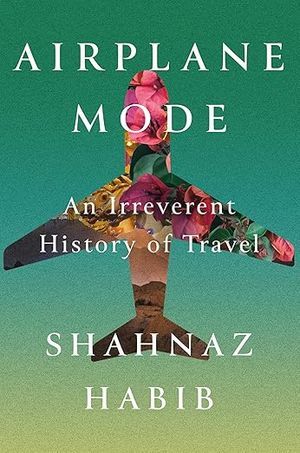 Airplane Mode: An Irreverent History of Travel by Shahnaz HabibHabib’s book blends the personal with the cultural. A frequent traveler, Habib has been hyper-aware of her brown skin and the color of her passport, carrying a particular weight when she travels. But why? This is a story about the history of travel, as well as about the various artifacts related to travel, like passports, guidebooks, trains, and wanderlust. It’s an engaging read, made even more interesting by Habib’s background, which extends not only to travel but also to travel writing. |
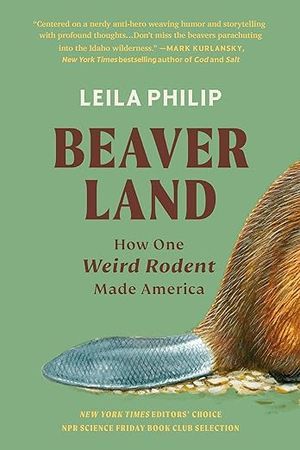 Beaverland: How One Weird Rodent Made America by Leila PhilipWho would think that the beaver would be such a crucial creature in America, both in its pre- and post-colonial history? It’s true, though: beavers have played a pivotal role in shaping this country. Philip blends personal narrative with history, incorporating conversations and perspectives from a range of people and groups who’ve devoted themselves to this fascinating and enigmatic rodent. |