Historical Fiction About Resistance
⚓ Books 📅 2026-01-21 👤 surdeus 👁️ 13

When the powerful lead with oppression and violence, resistance is the only option. Throughout history, people have responded to war, terror, dictators, and oppression with resistance movements, sometimes overtly, sometimes covertly. Resistance has been an active part of American politics since before its inception as an independent nation. It’s at the very core of American existence. From the Revolutionary War to Women’s and African American Civil Rights, Americans—and people from everywhere around the globe—have always had to fight for what is right when those in power try to impose injustice. These resistance movements have taken many different forms, from read-ins to protests and marches. Resistance can be as small and simple as educating yourself by reading a book or reaching out to help a neighbor in your community. Even just speaking truth amidst the proliferation of misinformation can be an act of resistance.
Of course, resistance comes in larger, more dramatic forms, too. When we talk about depictions of resistance in historical fiction, it’s easy to default to the abundance of books about WWII. There’s good reason for that, since the stories they recount of resistance against fascism are incredibly important, and we need to remember history in order not to repeat it. (A theory that works better in theory than actuality sometimes, see: current events.) But resistance to tyranny has never been exclusive to Germany or World War II. Dictators have to inspire fear and incite violence as long as there have been positions of power to exploit, and people have been fighting back against them for just as long.
These five historical fiction books depict resistance against violence and authoritarianism in many forms. It’s not always peaceful. It’s not always successful. But it’s always important.
Ready to refresh your shelves? We have a giveaway that can help! Enter to win a 1-year subscription to Book of the Month!
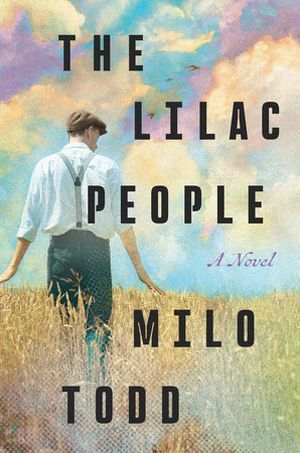 The Lilac People by Milo ToddThe persecution of LGBTQ people throughout the Nazi regime in Germany is often overlooked when discussing WWII. Given the ongoing (and worsening) persecution of trans people in the United States and elsewhere, this book feels especially important to highlight right now. In it, a trans man and his girlfriend living in Berlin manage to escape capture by assuming fake identities and living in isolation for years. But when a young man stumbles onto their farm on the brink of death, wearing prison garb, Bertie and Sofie know that they have no choice but to help him, even if it means risking the very fate he’s likely just escaped. |
 Human Acts by Han Kang, translated by Deborah SmithWhen a student uprising in 1980 South Korea is violently suppressed by the government, a young boy, Dong-ho, is killed. Now, as his friend searches for a corpse and his mother desperately seeks answers, Dong-ho’s consciousness still searches for his body. This controversial bestseller by the author of The Vegetarian and We Do Not Part is an act of resistance in itself: a refusal to forget a terrible moment in history that many would rather cover up than remember. |
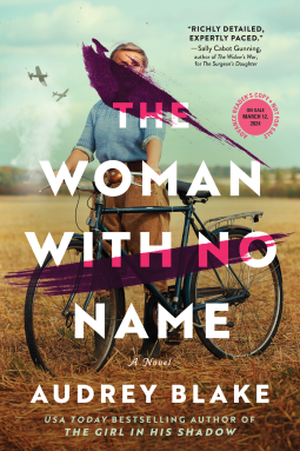 The Woman With No Name by Audrey BlakeA middle-aged woman overlooked by everyone around her is recruited by British Intelligence to become their first female sabotage agent in France. Yvonne Rudellat thinks her life is over when her apartment is bombed, but somehow she survives. With her home in Britain destroyed and her childhood home of France under Nazi rule, Yvonne decides it’s time to fight back. But no one believes a middle-aged woman will do any good for the war effort, even on the home front. It’s exactly that attitude that will make her the perfect undercover agent. The book is based on the life of a real woman who fought in the French Resistance during WWII, a fact which her family only learned after her death. |
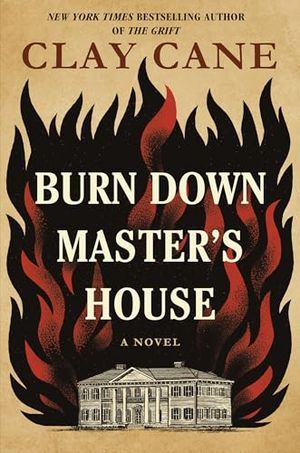 Burn Down Master’s House by Clay CaneWhile we generally learn about the Underground Railroad in school history classes, as a whole, small and large-scale resistance against enslavers and enslavement in the United States (and abroad) is rarely if ever covered. This book is based on true stories of enslaved people who dared to fight back, even when the consequences could be devastating. From those seeking freedom to those who have already found it in name if not in reality, Burn Down Master’s House is a decisive portrait of resistance in the face of utter brutality. |
 Against the Loveless World by Susan AbulhawaA woman in solitary confinement reflects on the events that led her to this place, from her birth to Palestinian refugees in 1970s Kuwait to the US invasion of Iraq that made her a refugee once again. How did Nahr find herself locked up in prison in a country she barely knows? She was radicalized by violence, by occupation, by invasion, by the search for a better life for herself and her family. Against the Loveless World is the story of a girl raised in the cross-hairs of warring nation-states and amidst the violence of imperial expansion, a girl who grows into a woman pushed to the very brink. |
Here’s more fodder for your resistance reading list:
15 Essential Books to Read for the Resistance
Reading and Resistance: How Reading Has Always Been Tied to American Freedom
Oppressive Regimes in Historical Fiction
🏷️ Books_feed