An Epic Poetic Journey Through the History of the Black Female Figure in Art
⚓ Books 📅 2026-01-28 👤 surdeus 👁️ 14

I’d had this book on my TBR for a while, but for some reason, despite hearing amazing things about it, it hadn’t risen to the top. Then a friend of mine told me, again, and rather pointedly, that I had really better read it. I’ve been thinking a lot about art and art history in the last two years, since going back to school. I’ve been thinking about curation, about how we talk about art, about whose stories get erased and whose get celebrated, about the violence of the art historical canon, about what is visible and what is hidden every time we walk into a museum. My friend knew all this, which is why she told me, in no uncertain terms, that I needed to read this collection already. Happily, I did. Reader, I will never be the same.
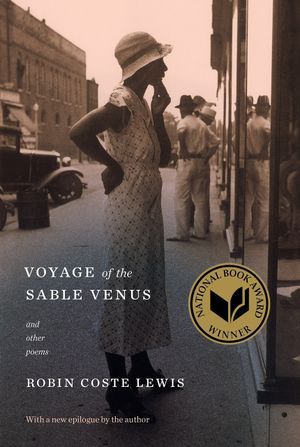 Voyage of the Sable Venus by Robin Coste LewisThis entire collection is stunning. It’s full of poems about desire, race, and the construction of the self. Lewis troubles the very idea of selfhood: what it means, how it happens, the historical and cultural forces that define and determine how we define and determine where each of us begins and ends. Some of the shorter, lyrical poems absolutely wowed me with their sharp and startling lines. So you’ll have to forgive me for focusing entirely on the titular poem. It’s not that the rest of the collection isn’t deserving, it’s just that this long narrative poem is so astounding, so world-shattering, so revelatory, that I have not been able to stop thinking about it since I read it. I will never think about poetry and art—and the making of both—the same way again. This poem changed my relationship to art-making. That is a rare and remarkable thing. In the prologue to the poem, Lewis explains that ‘Voyage of the Sable Venus’ is “a narrative poem comprised solely and entirely of the titles, catalog entries, or exhibit descriptions of Western art objects in which a black female figure is present, dating from 38, OOO BCE to the present.” She goes on to explain the rules she created for herself in the making of this poem, including this incredible note: beyond adding and altering punctuation, she did not change any titles or text. They appear exactly as she found them. The poem is broken into segments called Catalogs, which outline various times and locales (such as “Ancient Greece and Rome”). It ends with several pages of footnotes, in which Lewis lists all the museums and institutions that hold the works she drew from to create the poem. It is, as the title suggests, a voyage. Lewis takes us on an epic journey through the history of the representation of the Black female figure, and thus, the history of humanity itself. She lays bare the erasures, the silences, the violences enacted upon Black women in the name of “art.” But the poem is not about violence, and it’s not an erasure. There is unspeakable violence in it, but it is written of and with love. It is a poem of immense beauty. It reveals the racist, patriarchal structures that underpin so much of Western art, but—and this is a truly incredible feat—it does not speak from the voices of those structures. It is a story about the life force of Blackness and Black women. It’s a poem that holds endless layers of care. It refuses to capitulate to the violence it makes visible. I will never be done reading it; nothing I can write about it will do it justice. The book ends with an essay about the writing of the poem. While I was reading, I kept thinking about the immense weight of making a work like this—the research, the physical and emotional labor, the hugeness of the undertaking. Lewis speaks to this vastness in the essay, which only made me even more grateful, even more bowed over, even more humbled, by the gift of this poem. This is a once-in-a-lifetime kind of book. I think everyone should read it. |