U.S. Congress Holds Hearing on Cutting Healthcare Costs and Points to 3D Printing
⚓ p3d 📅 2025-12-16 👤 surdeus 👁️ 23

A U.S. House subcommittee held a hearing this week on how technology can help lower the rising cost of healthcare for Americans. Lawmakers pointed to 3D printing as a key example of a tool that could make healthcare both more efficient and cheaper.
WATCH: Chairman @RepEricBurlison opens today’s hearing on lowering healthcare costs.
“We have already begun to see the tremendous capabilities of artificial intelligence to help lower costs in our everyday lives.” pic.twitter.com/9UPlH87O8w
— Oversight Committee (@GOPoversight) December 10, 2025
Representative Eric Burlison (Republican congressman from Missouri), chairman of the Subcommittee on Economic Growth, Energy Policy, and Regulatory Affairs, opened a joint hearing titled “Lowering the Cost of Healthcare: Technology’s Role in Driving Affordability.” The session focused on how new technologies, like telehealth, wearable health devices, and 3D printing, can reduce costs and improve care delivery.
Burlison argued that current government policies and regulations, including parts of the Inflation Reduction Act (IRA), have made healthcare more expensive and slowed innovation. The hearing brought in experts to explain how technology could change that. According to the House Oversight and Accountability Committee, the hearing’s witness list included Brian Whorley, CEO of Paytient Technologies; Dr. Darius Lakdawalla, a health economist at the University of Southern California; Dr. Ziad Obermeyer, a professor of health policy and management at UC Berkeley; Chris Jacobs, founder of Juniper Research Group; and Sophia Tripoli, Senior Director of Health Policy at Families USA.
While lawmakers pointed to technologies such as 3D printing as possible ways to help lower healthcare costs, the witnesses primarily came from policy, economics, and healthcare research backgrounds, rather than from additive manufacturing or medical device production, keeping the discussion focused on broader healthcare systems and policy considerations.

3D Systems healthcare sector. Image courtesy of 3D Systems.
Why 3D printing matters here
3D printing is already used widely in healthcare to make custom medical parts quickly and at low cost, print prosthetics, dental devices, implants, and surgical tools, and produce items on demand, reducing waste and inventory needs.
At the hearing, lawmakers pointed to examples like these to show that when healthcare providers can manufacture devices faster and cheaper, it can help lower the total price patients pay. In medical 3D printing, a main focus is personalization. Many applications involve custom prosthetics, implants, and surgical tools that are made to fit each patient’s body. This patient-specific approach is common in medical 3D printing, especially as hospitals and clinics look for a better fit, reduced material waste, and more efficient production.
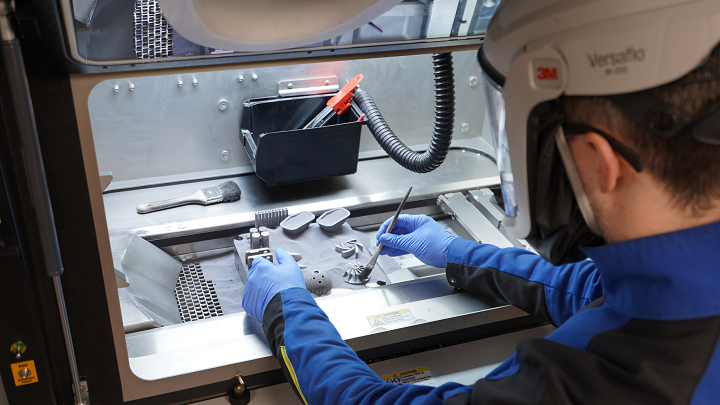
Tantalum components, manufactured using Croom Medical’s TALOS additive manufacturing platform, were carefully unloaded post-print. Image courtesy of Croom.
The hearing builds on recent policy discussions around healthcare costs and the use of digital and manufacturing technologies in medicine. Healthcare costs in the United States have been rising faster than both inflation and wages. For example, in 2025, average family health insurance premiums climbed about 6%, compared with roughly 2.7% inflation and roughly 4% wage growth. Over the past two decades, family premiums have increased by more than 300%, outpacing broader income and price trends. This is a major political and economic concern because it affects people’s access to care, not to mention their personal finances.
At the same time, new technologies are moving fast, and many believe they can help. Telehealth became common during the COVID-19 pandemic and showed that care can be delivered at a lower cost and with more flexibility. Wearable health devices help track patient conditions and can prevent expensive hospital visits. And of course, 3D printing has been moving from prototype labs into real-world medical use for years.
Lawmakers at the hearing emphasized that removing regulatory barriers could help these technologies be used more widely and help lower costs.
The hearing was about finding ways to make healthcare cheaper, and 3D printing was a great example that lawmakers want to push forward. The hearing shows that technologies such as 3D printing are now part of the broader conversation about healthcare costs, as policymakers continue to explore how they might fit into the healthcare system.
🏷️ p3d_feed