Top 10 Moonshot Ideas for 3D Printing’s Future
⚓ p3d 📅 2025-12-31 👤 surdeus 👁️ 16

As the year comes to a close, it’s clear that additive manufacturing (AM) is entering a new phase. Costs are falling, supply chains are changing, government spending is rising, and new materials are pushing limits that seemed out of reach a few years ago. Instead of looking back, this list looks forward, onward, at 10 emerging ideas that aren’t predictions, but real trends gaining traction across labs, factories, hospitals, and research centers.
None of these ideas are fully realized yet, but each one shows where 3D printing could be heading next.
- Zero-Waste, Closed-Loop Manufacturing
Recycling in AM has always been difficult, especially for polymers. But the idea of a fully circular workflow is getting closer to reality. New systems and processes are starting to make it possible to take an old printed part, break it down, clean the material, and use it to print something new. Some companies already have early systems that can clean melt streams, automate material shredding, and use chemistry to turn plastic waste back into “near-virgin quality” material, and are moving from research labs into actual print farms.
Early adopters include projects like Fraunhofer Institute’s work turning polypropylene packaging waste into new 3D printing filament, Renew IT’s MICROfactorie system that converts e-waste plastics into usable filament, and small, crowdfunded tools like ExtrudeX that let users shred old prints and melt them into fresh material.
The tools are improving, but recycling printed parts at scale remains challenging. Keeping material quality consistent and clean over multiple reuse cycles remains a challenge.
As companies face more pressure to cut waste and carbon, these recycling tools could become one of the main reasons big companies choose 3D printing in the future.
- The Push for Standardized, Code-Ready 3D Printed Homes
Construction printing keeps making headlines. Let’s face it, we’ve seen many regions worldwide announce new, one-of-a-kind 3D printed homes. But most of these projects are still approved one house at a time. The homes meet local codes, but the overall printing method isn’t yet certified as a repeatable, fully standardized building system. The real breakthrough would be a complete home that meets international building codes and can be printed in under a day, right? Several companies are chasing this idea, and governments are definitely (100%) paying attention as housing shortages grow. The technology isn’t entirely there yet, but it could be sooner than we think. It would take faster printing, cleaner materials, and more transparent, realistic cost data.
A few recent projects show how close 3D printed homes are to becoming real, code-approved buildings. In Texas, ICON and Lennar are printing entire houses in the Wolf Ranch community near Austin, using robotic concrete printers to accelerate build times. In Ireland, a COBOD-printed housing project met the new ISO/ASTM 3D printing standard, completing wall printing much faster than conventional methods. Nonprofit New Story and ICON have teamed up to build 3D printed homes in Mexico to expand communities. And in India, the first government-backed 3D printed rural house was completed to provide fast, affordable shelter. These projects show real progress, but the big leap will come when the method is approved in a repeatable way, not one house at a time.
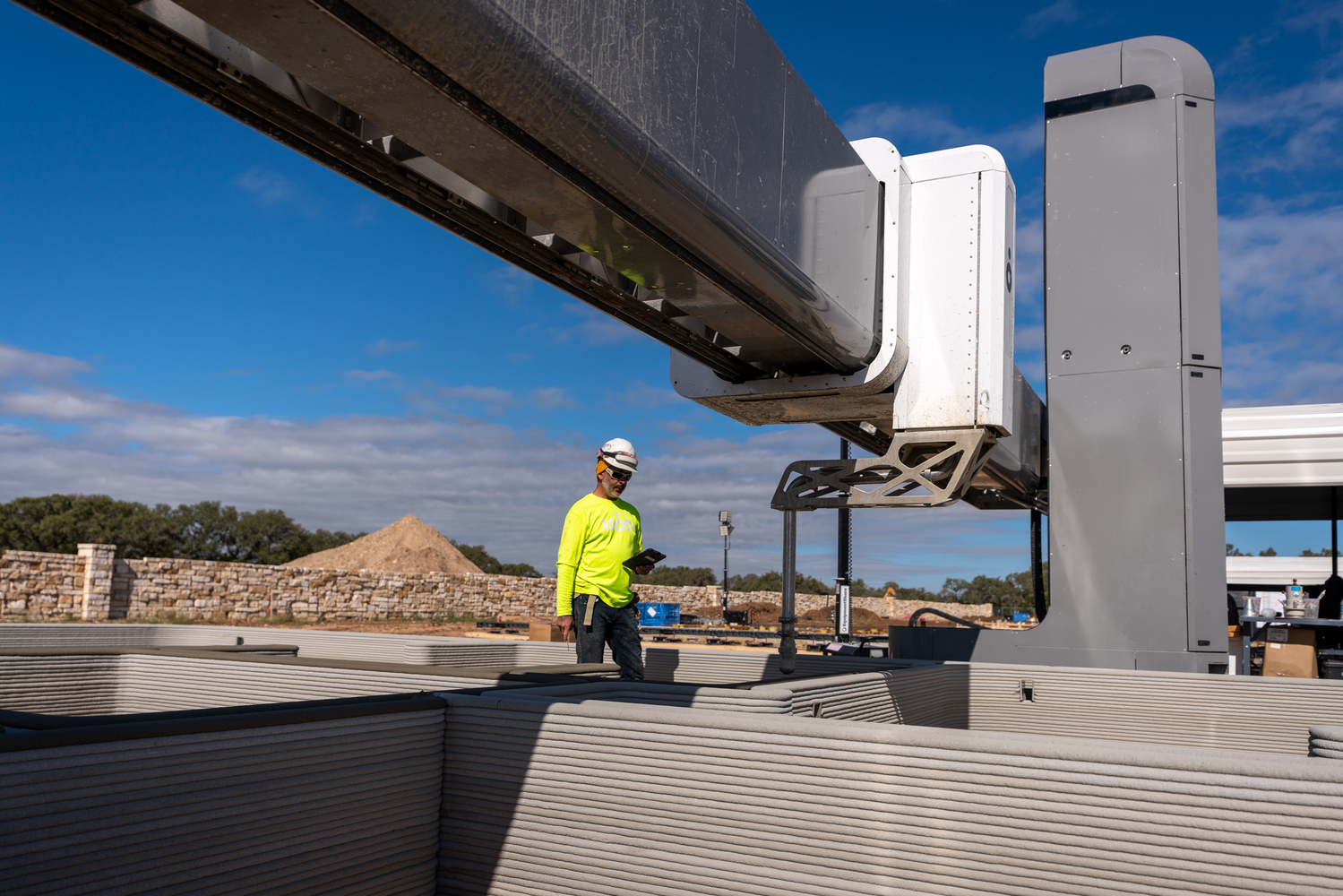
ICON and Lennar complete the first 3D printed model house at the Wolf Ranch community in Austin. Image courtesy of ICON.
- Climate-Positive Concrete
Construction 3D printing also has to deal with its carbon footprint. Researchers and startups are creating new types of printable concrete that, in early studies, have shown the potential to cut emissions by more than half. These ideas involve cleaner mixes, low-carbon binders, and new curing methods. They aim to make printed buildings stronger and more sustainable. If they scale, they could change how construction printing grows over the next decade.
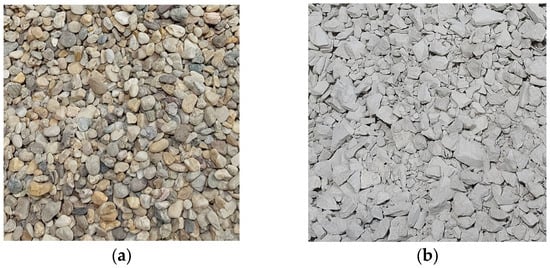
Aggregates: Quartz gravel (left) and RA of 3D printed concrete waste (right). Image courtesy of Applied Sciences.
In 2025, researchers showed that recycled concrete powder can replace up to half of the cement in a 3D printable mix, sharply reducing its carbon impact. Another project at the University of Virginia created a low-carbon printable concrete using graphene and limestone-calcined clay cement, lowering emissions by about 30% in lab tests. Other studies are testing recycled glass, fly ash, and industrial waste as ingredients for printable mixes.
- The “48-Hour Implant” Workflow
Hospitals want to shorten the time between diagnosis and treatment. The idea gaining momentum is a 48-hour workflow that moves quickly from patient scans to design, printing, post-processing, sterilization, and implantation.
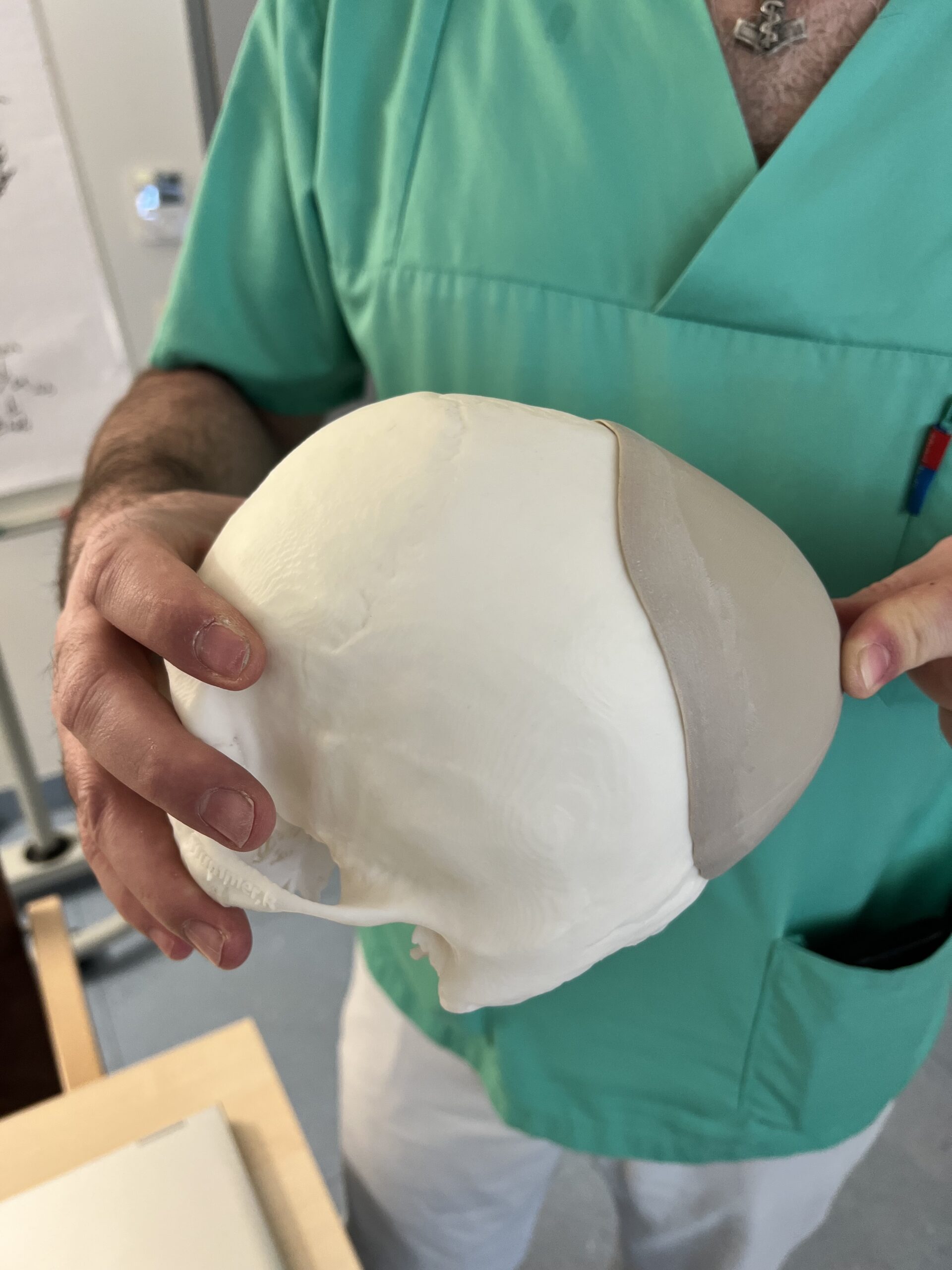
The prosthetic implant. Image courtesy of the Salzburg University Hospital.
Medical centers on just about every continent are testing versions of this workflow. With point-of-care labs and better biocompatible materials, this could become one of the most important developments in medical AM, and for the future of medicine in general.
Hospitals and medical centers are starting to validate rapid, point-of-care AM. At Austria’s Salzburg University Hospital, surgeons designed, 3D printed, and implanted a custom cranial PEEK implant right in the hospital using patient imaging data, showing how design and printing can happen under one roof. The team used CT data, Oqton software, and a 3D Systems Kumovis EXT 220 MED printer set-up as a point-of-care lab.
Meanwhile, in the U.S., the Mayo Clinic operates one of the most advanced hospital-based 3D printing labs, where teams use patient scans to design and produce custom surgical tools and anatomical models directly on site, and has discussed eventually producing patient-specific implants.
In Latin America, new regulatory pathways have dramatically shortened approval timelines for 3D printed implants and surgical guides, removing one of the biggest barriers to fast treatment workflows. And new hospital printing labs, like the one being set up at Ram Manohar Lohia Institute of Medical Sciences in India for customized dental and orthopedic implants, show how in-house workflows are being applied in more places. These developments show that a 48-hour scan-to-implant is getting closer.
- AM Materials Built for Hypersonic Flight
Hypersonics is driving a new wave of materials research. The key idea is that ceramics and alloys designed specifically for Mach 5+ conditions will be printable at scale and reliable enough for defense applications.
This field is early for sure, but major funding (public and private) suggests that hypersonic-ready AM materials could become one of the most competitive sectors of the decade. U.S. hypersonic developer Hermeus continues to use metal 3D printing to make parts for its Mach-5 Chimera engine and Quarterhorse aircraft, showing how AM is becoming part of real-world hypersonic development programs, even as materials and qualification work continue. Researchers at the Purdue Applied Research Institute are developing 3D printed dark ceramics chosen for their heat resistance in hypersonic vehicle components, highlighting how printable ceramic materials are being tailored for Mach 5+ environments.
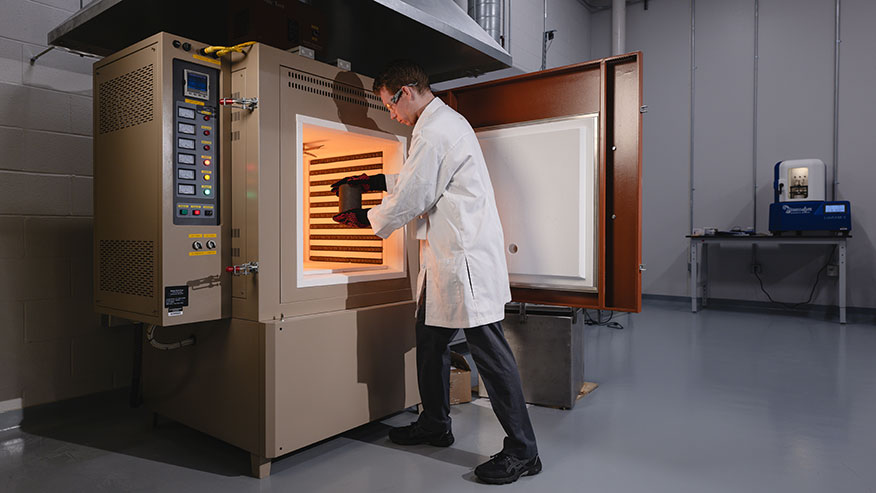
Matthew Thompson, a materials engineering doctoral candidate, loads a crucible into a box furnace to heat and remove binders from 3D-printed ceramic samples. Image courtesy of Purdue University/Charles Jischke.
- The Ultra-Light Aircraft Seat
Airlines watch every gram of weight because lighter parts mean lower fuel costs. Recent aerospace reports show that AM is increasingly used to produce lighter interior components by optimizing geometry and reducing material use. Applied to seat structures, even small weight savings can add up across a fleet, which is why interest in 3D printed seating concepts keeps growing.
In fact, 3DPrint.com Executive Editor Joris Peels recently explored this idea in his Killer 3D Printing Applications series, pointing out that aircraft seating is a surprisingly powerful use case. He pointed out that lighter 3D printed pads, thinner seat backs, and redesigned frames could not only save fuel but also make seats slimmer, giving airlines room for an extra row. Even small changes can have a big financial impact in an industry where every dollar matters.

Airplane seat.
It’s a simple idea with a large financial impact: lighter seats, thinner structures, and more efficient layouts. The hurdle is certification because aircraft seats must meet extremely strict safety standards for fire, crashworthiness, and long-term use, and proving that new materials and additive technologies meet those standards takes time and testing. Aircraft manufacturers and airlines have certified many smaller 3D printed interior parts (like cabin panels on Finnair’s A320s), but fully 3D printed seats are still in the prototype stage and have not yet entered regular commercial service.
- Micro-Factories Anywhere
AM systems packed into shipping-container-sized units, equipped with printers, inspection, storage, and post-processing, are becoming more real. The key is certified production in remote or high-risk environments, including defense sites, offshore platforms, and even disaster-response sites.
This trend overlaps with automation, robotics, and AI-driven monitoring, making it one of the clearest “next steps” for industrial AM.
For example, in 2025, Siemens and Ingersoll Machine Tools unveiled a containerized 3D printing and milling system that can be transported to remote sites for on-site manufacturing. Firestorm Labs partnered with HP to develop expandable container units that house industrial 3D printers for deployment to disaster zones, military bases, or other remote environments. And portable field AM systems are being explored by defense logistics groups to produce critical parts on-site, reducing dependence on factories that are hundreds of miles away.
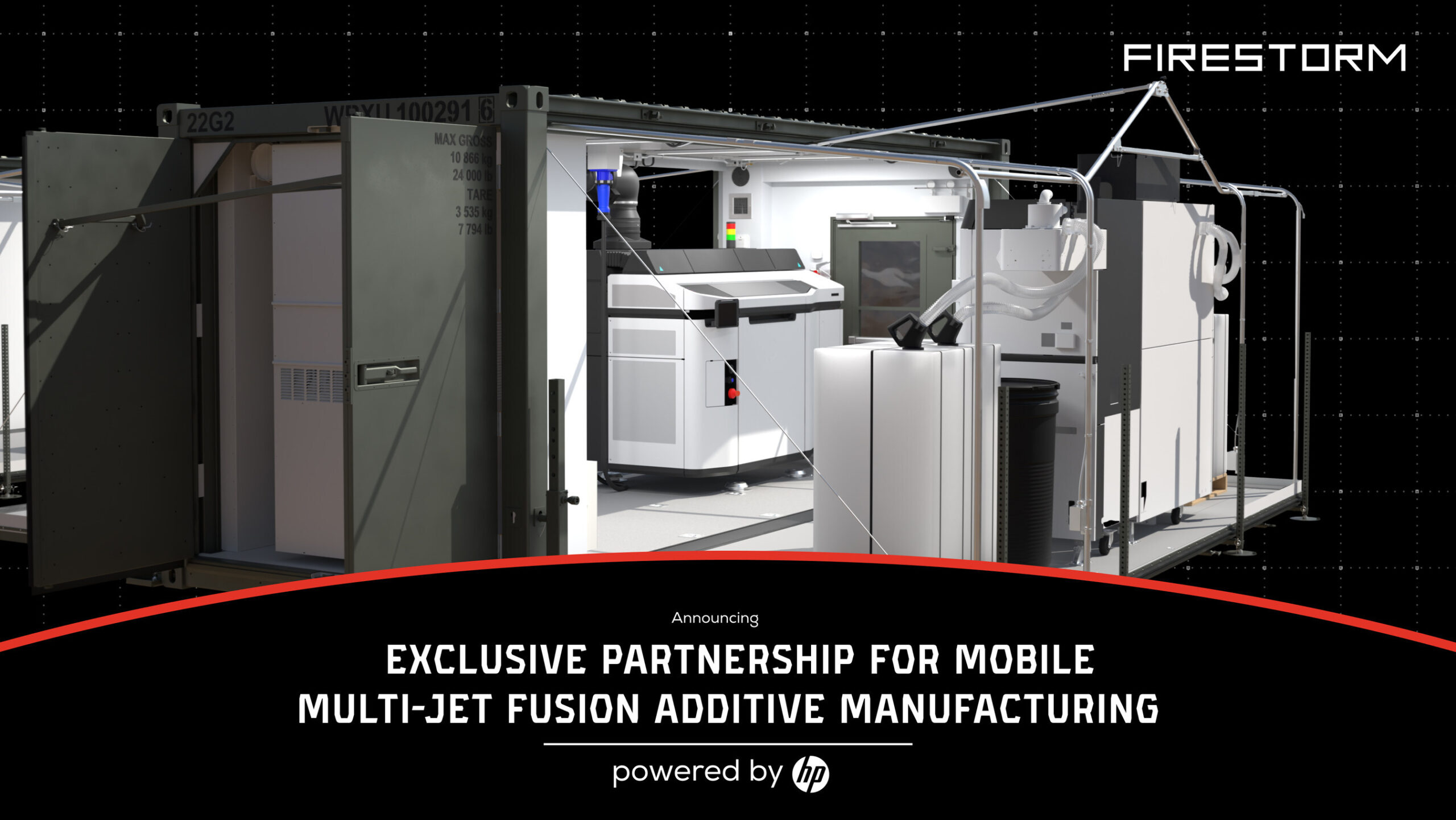
Mobile Multi-jet fusion additive manufacturing. Image courtesy of HP and Firestorm Labs
- Batteries Reinvented Through AM
3D printing is helping researchers rethink how batteries are made by allowing new shapes and internal structures that weren’t possible with conventional manufacturing. Instead of flat layers, designers can build complex 3D internal geometries that improve how ions move and heat spreads through the cell, all of which can lead to safer, higher-performing batteries.
A recent review shows that 3D printing can make battery parts with tiny internal structures that help the battery store more energy, deliver power more efficiently, and charge and discharge better.
There’s also new work on 3D printing solid-state batteries, which use solid materials instead of liquid ones and are considered safer. A 2025 European project showed that 3D printing can help shape these batteries more efficiently and improve how the parts connect inside, which is an important step forward.
What’s more, recent studies show that 3D printing can create battery parts with detailed internal structures that improve ion movement, which is hard to achieve with conventional methods.
It’s still early research, and these are not commercial products, but these projects show how 3D printing could lead to safer, denser, and more efficient batteries for electric cars, drones, medical devices, and grid storage in the future.
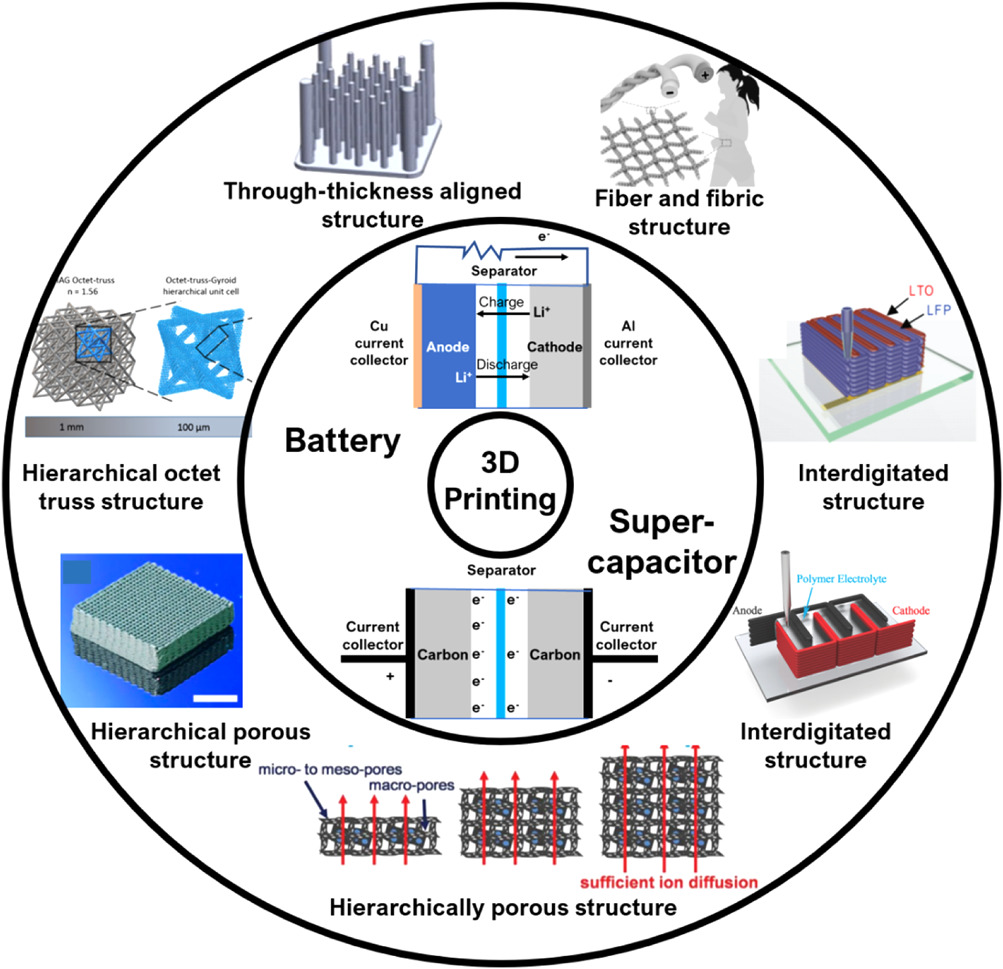
Examples of 3D printed battery electrode architectures with complex internal geometries. Image courtesy of Carbon Energy (Wiley).
- A Low-Cost All-In-One CNC and 3D Printing Machine
A low-cost machine that can perform both 3D printing and CNC milling is no longer a fantasy. Brands like Snapmaker already sell 3-in-1 systems, and several fast-moving Chinese manufacturers are pushing prices toward the $1,000 mark.
The next big step would be a serious hybrid machine at that price point, one with the rigidity, accuracy, and reliability needed for real CNC work, not just light-duty milling. If a machine like that is made, makers and small workshops could do far more with a single tool, without jumping to industrial-level machines. It would mark one of the most important shifts in the desktop market since the first wave of affordable FDM printers.
- Vascularized Bioprinted Tissue
One of the biggest challenges in bioprinting is helping living tissue stay alive long enough to function, and this is largely due to the need for blood flow. Real tissues need tiny vascular networks to carry nutrients, oxygen, and waste in and out, a process also known as perfusion. Traditional printing methods can make tissues with cells, but without these channels, the cells in the center quickly die.
Recent developments have shown real progress in solving this. At Stanford, bioengineer Mark Skylar-Scott and his team have developed a much faster way to model and print vascular trees that resemble real human vessel networks, speeding up how complex vascular structures can be designed and produced. Additionally, scientists at Stanford have also made progress in creating 3D printed blood vessel designs that could help bioprinted hearts and other organs survive and function. Meanwhile, the Wake Forest Institute for Regenerative Medicine (WFIRM) is getting ready to send 3D printed liver tissue with vascular channels to the International Space Station, where researchers will study how these tiny blood vessel networks behave in microgravity.
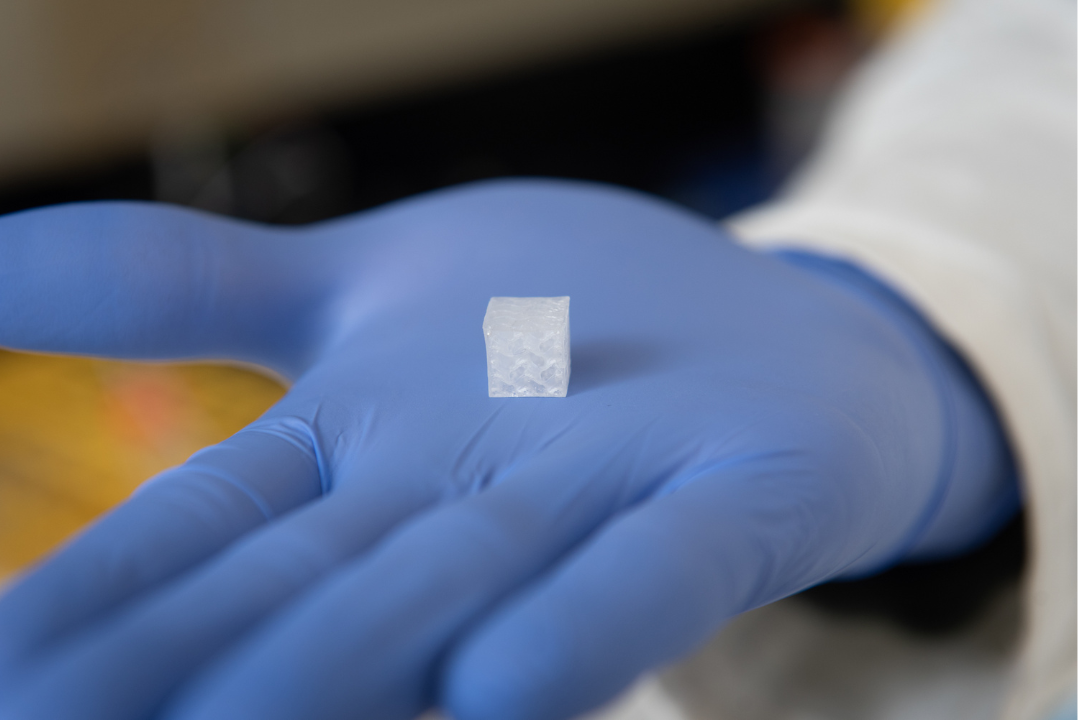
3D bioprinted tissue construct used to replicate human tissue. Image courtesy of WFIRM.
These are early-stage projects, and bioprinted organs are still far from clinical use, but these advances show the field is making important strides toward creating functional tissues that could one day work like real human tissues and organs.
🏷️ p3d_feed