Inside Xometry’s 2026 Outlook: Why AM Is Becoming Essential — and What’s Still Holding It Back
⚓ p3d 📅 2026-01-01 👤 surdeus 👁️ 20

In the first part of this series, we spoke with Xometry’s Senior Vice President of Marketplace Operations, Mike Cavalieri, about how manufacturers are reshoring, diversifying their suppliers, and building more resilient supply chains. Now, in Part Two, we return to our conversation with Cavalieri to explore how additive manufacturing (AM) is becoming one of the ways companies respond to those pressures, not just in prototyping, but throughout their development cycles, and what still limits its wider adoption.
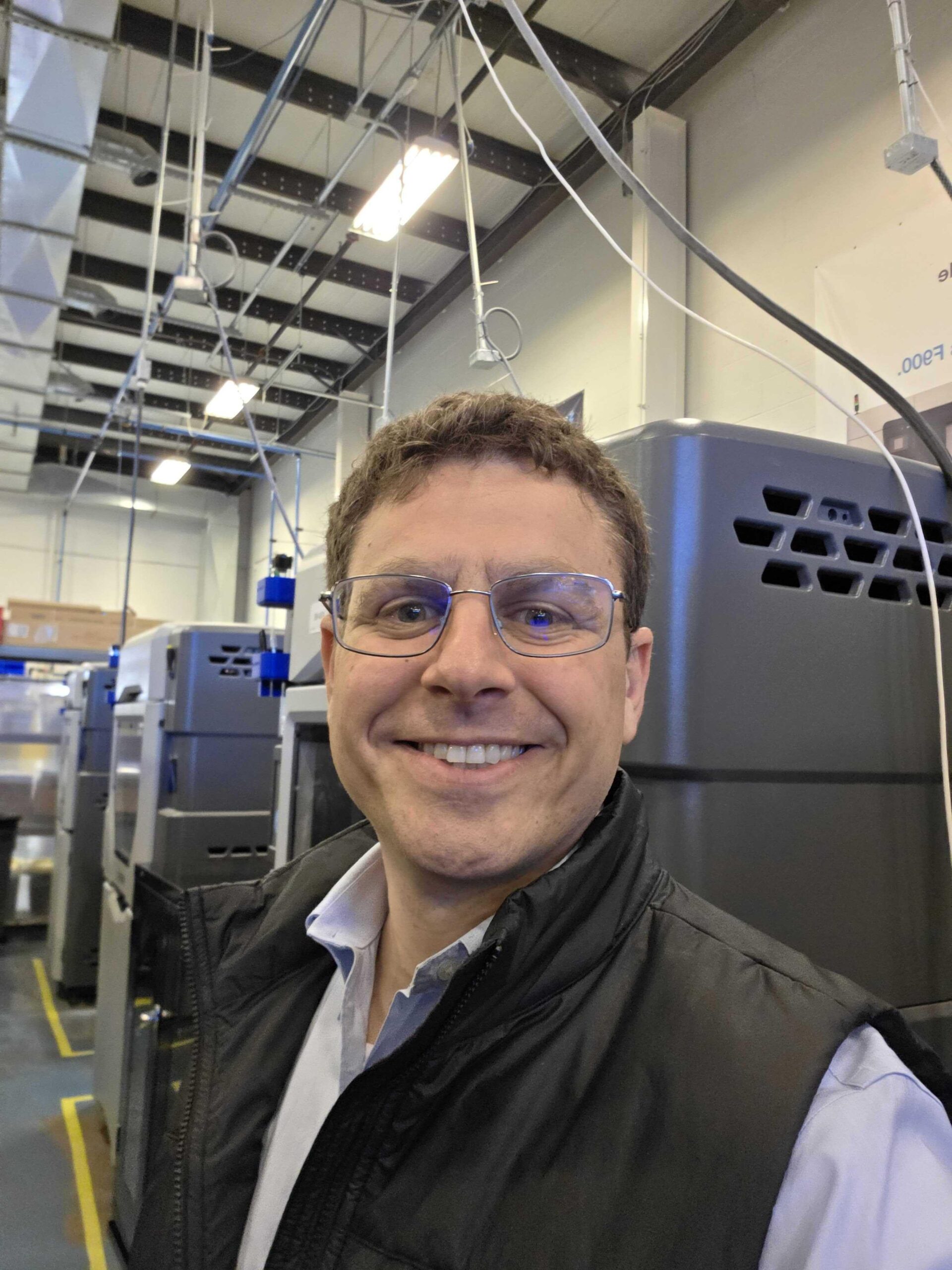
Mike Cavalieri. Image courtesy of Xometry.
As designs mature, some customers keep parts in AM for niche, complex, or lightweight components. Others use it to test their designs before moving to traditional methods. Typically, Cavalieri says they see customers transition from AM to injection molding once the design is stabilized and they want the lowest-cost solution. But AM is what lets them get there faster; they can test, iterate, and learn without waiting weeks for tooling.
This helps explain why Xometry sees growing demand across the entire AM spectrum, from aerospace and defense to consumer products and, more and more, with the booming drone sector.
“We see significant uplift in drone applications. The technology is cheaper, the software is better, and the use cases (from medical supply delivery to defense) are expanding fast.”
That spectrum is incredibly wide. On the high end, Xometry is supporting parts for space exploration and advanced defense systems. On the everyday side, it might be a simple consumer product or even a home gadget, like a window box for city gardening. What connects these projects isn’t the industry, but the need for faster development and less exposure to supply-chain risk, he explains.
So what’s still holding 3D printing back?
Despite its momentum, AM still struggles with one major barrier: confidence.
“Material traceability and certification are the biggest hurdles. Customers want to know how layers are bonded, how to prove the material matches the design, and how to qualify it for zero-tolerance applications.”
For sectors like aerospace and automotive, where a single failure is unacceptable, this remains a deal-breaker. In fact, some of Xometry’s customers are trying to close that gap themselves.
“We see more customers embarking on their own research to get confident with additive material structure. They’re printing and testing material coupons (small sample pieces used to verify properties) and working with OEMs to better understand how these parts behave in real-world conditions. The core benefits, like lower weight, less material waste, and the ability to print geometries that are impossible with CNC or molding, are simply too valuable to ignore.”
“Any time you’re thinking about lowest cost, less material usage, and lighter parts, additive has incredible advantages,” he added. “The question now is how quickly certification and standards can catch up so more of those parts can move into truly critical applications.”
Cavalieri compared it to CNC machining, noting that with this, users can order billet aluminum, get their certification from the mill, and know exactly what properties to expect. But AM doesn’t have that same comfort level. This gap has slowed the use of AM for end-use production, even as advances in process monitoring and material science continue.
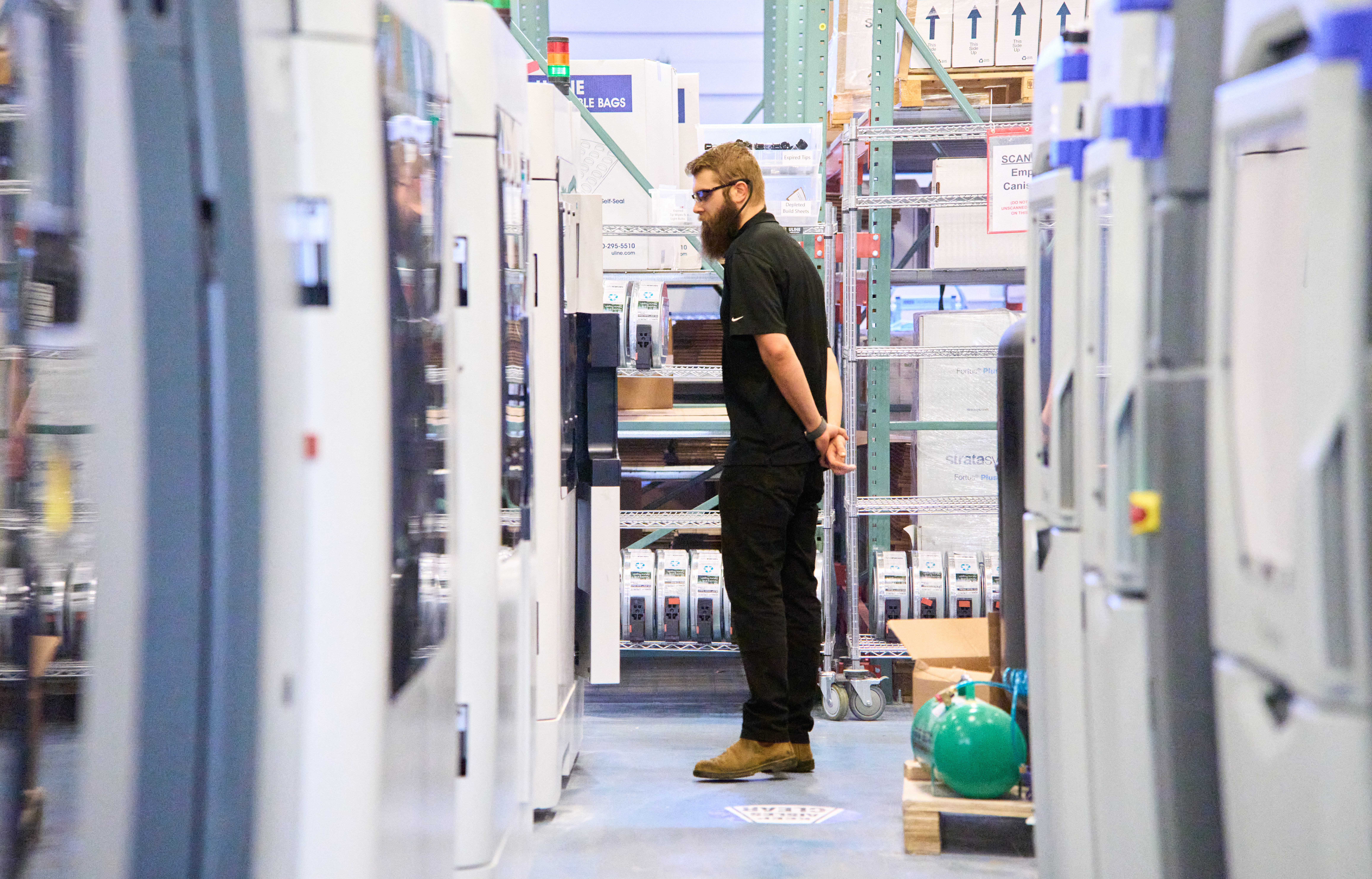
Xometry’s Gaithersburg, Maryland site. Image courtesy of Xometry.
AI is accelerating AM adoption
One area where AM has a natural head start is digital quotability. Because every part begins as a 3D file, AI-powered quoting and matching are particularly accurate, Cavalieri stated.
“Our AI can analyze the 3D model, calculate the toolpath, estimate the material, and instantly generate the cost. That speed is a major reason customers move quickly in additive. This also enables companies to scale prototyping far beyond what an internal print lab can handle. If you want a larger sample size for early production or testing, Xometry can rapidly spool that up.”
AI also helps customers decide when AM is the right answer and when it isn’t. And because everything starts from a 3D model, Xometry’s quote engine can very transparently calculate what it will take to print a part and compare that with CNC or molding. That means engineers don’t have to guess. They can see when AM is the fastest path, when it’s the cheapest, and when it makes sense to switch technologies. This mix of AI-powered quoting and strong AM capacity is why Cavalieri sees the tech as a lasting part of manufacturing, not a short-term trend.
The marketplace strategy
Cavalieri kept coming back to how Xometry sees its role: a transparent marketplace that offers customers more choices and gives suppliers a steady stream of work.
“We’re not exposed to any single geography. If a disruption happens, we can quickly find another location to manufacture. This matters just as much for small AM shops as it does for large machine houses. Partners come to us because they know we’re a reliable source of demand. They can keep their shops running at full capacity using our platform.”
Internally, Xometry is expanding rapidly as well; the company now has 1,500 employees.
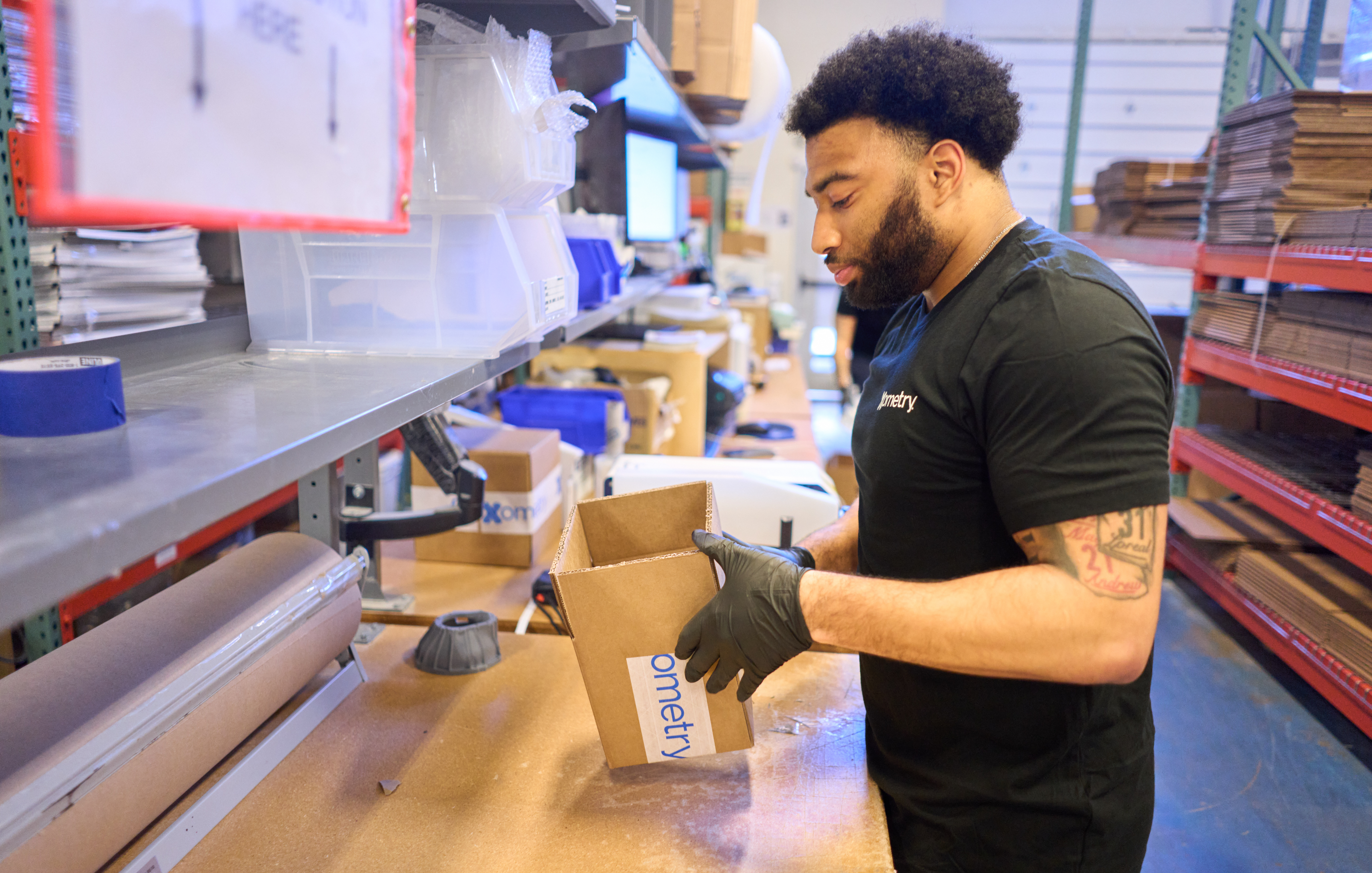
Xometry’s Gaithersburg, Maryland site. Image courtesy of Xometry.
When reflecting on Xometry’s day-to-day work with customers, Cavalieri highlighted two things. First, the variety of additive applications that companies bring to the platform continues to expand. Second, customers continue to face strong cost pressures, and Xometry is working closely with its manufacturing partners to push costs down while helping customers exceed expectations.
Even with that pressure, the momentum is undeniable. AM is no longer a niche technology; it’s becoming a standard part of the manufacturing toolbox, especially for companies looking for resilience, speed, and design freedom.
Cavalieri said Xometry plans to continue expanding its technology portfolio, everything from more CNC capabilities to new AM processes, all aimed at reducing cost and lead time and focused on the brand’s “mission to expand the menu of products it brings to customers, proving to be more cost-effective and faster than anyone else.”
The company’s 2026 Manufacturing Outlook Report offers a detailed view of the forces shaping the coming year, and Xometry expects to share more additive-specific data as it becomes available.
🏷️ p3d_feed