SpaceX’s First Twilight Rideshare Carries 3D Printing Experiment Into Orbit
⚓ p3d 📅 2026-01-13 👤 surdeus 👁️ 18

SpaceX launched its first Twilight rideshare mission early Sunday morning, sending 40 small payloads into orbit aboard a Falcon 9 rocket. While the launch included missions for NASA and several commercial satellite operators, one payload stood out for the additive manufacturing industry: a 3D printing experiment designed to manufacture a structure directly in space.
The rocket lifted off at 5:44 a.m. local time from Vandenberg Space Force Base in California. Twilight is a new series of dedicated small satellite rideshare missions, and this was its very first flight.
After stage separation, the Falcon 9 booster successfully returned to land at Vandenberg, while the payloads were deployed into a dawn-dusk sun-synchronous orbit, an orbit that allows satellites to pass over the same part of Earth at the same local time each day.
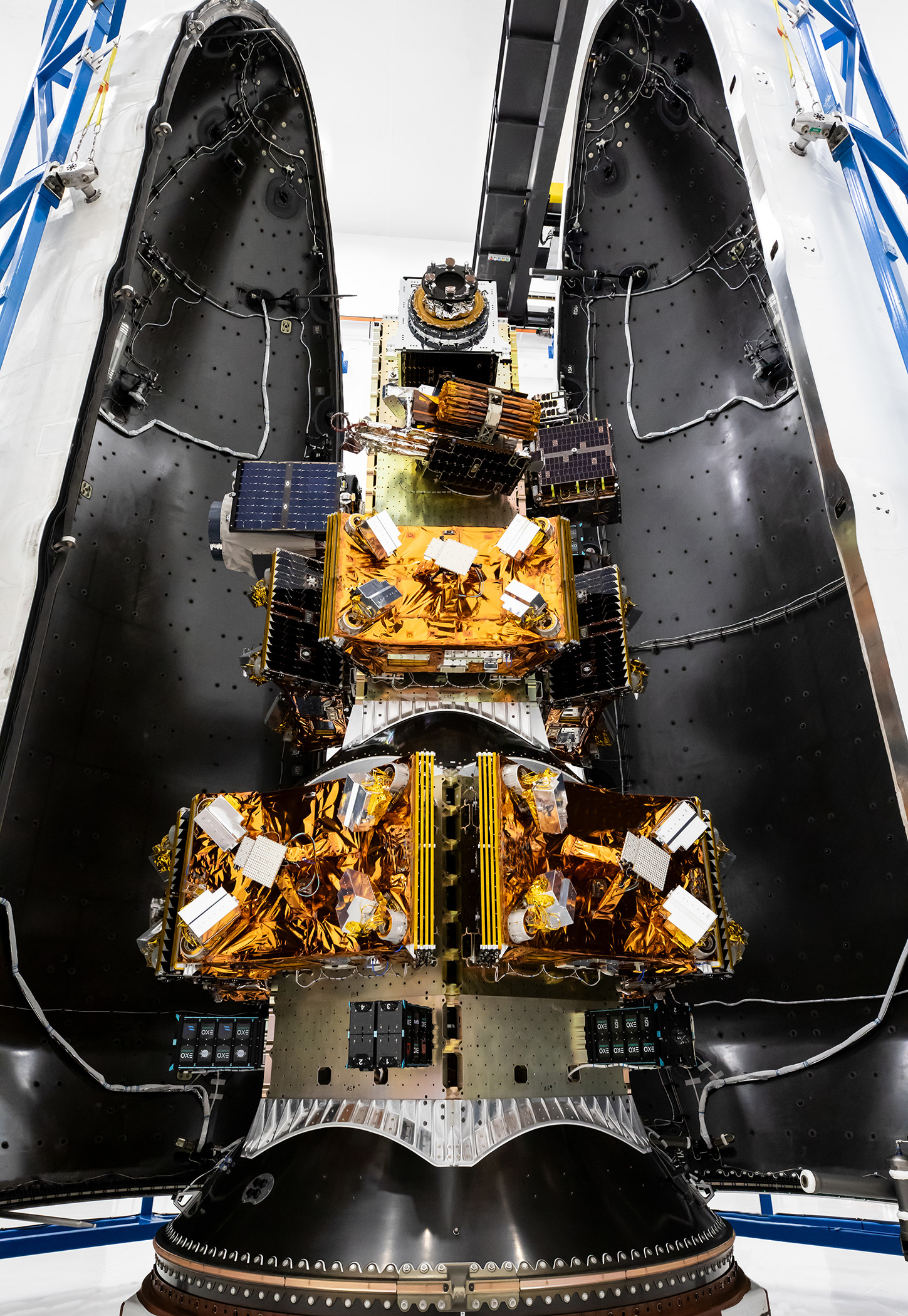
Falcon 9 is vertical at pad 4E in California ahead of the Twilight rideshare mission to dusk-dawn orbit. Image courtesy of SpaceX.
A 3D printing mission in free space
Among the 40 payloads was a mission from Dcubed, a company focused on deployable space structures and in-space manufacturing. Dcubed’s mission, called ARAQYS-D1, is designed to 3D print and manufacture a 60-centimeter boom directly in orbit.
Following the launch, Dcubed confirmed that its Dcubed-1 ARAQYS-D1 mission had successfully lifted off aboard SpaceX’s Falcon 9 Twilight flight. The company said satellite deployment was expected within hours, after which the mission would enter a commissioning phase. Once commissioning is complete, Dcubed plans to begin on-orbit manufacturing of the boom, marking its first in-space manufacturing demonstration.
The goal is to prove that structures can be built after launch, rather than being fully manufactured and folded inside a rocket on Earth. If successful, this approach could help reduce launch mass, lower costs, and enable much larger structures in space than are practical today.
This experiment is part of a broader push toward in-space manufacturing, where components are made or assembled once they are already in orbit. For 3D printing, this is one of the clearest examples of the technology moving beyond Earth-based production and into real operational testing in space.
In fact, this mission follows Dcubed’s earlier announcement of its ARAQYS in-space manufacturing platform, which the company unveiled in late 2025. As previously outlined, ARAQYS-D1 is the first of several planned pathfinder missions designed to validate the core manufacturing steps needed to build larger structures in orbit. Future missions are expected to scale the approach toward in-space-manufactured solar arrays capable of delivering kilowatts of power.
NASA and other payloads on board
The Twilight mission also carried NASA’s Pandora small satellite, which will study exoplanets and their host stars. In addition, two CubeSat missions supported by NASA (SPARCS and BlackCat) were included on the flight, along with commercial satellites focused on Earth observation and Internet-of-Things connectivity.
More than half of the payloads on the mission were supported by Exolaunch, which specializes in helping small satellite missions reach orbit through rideshare launches.
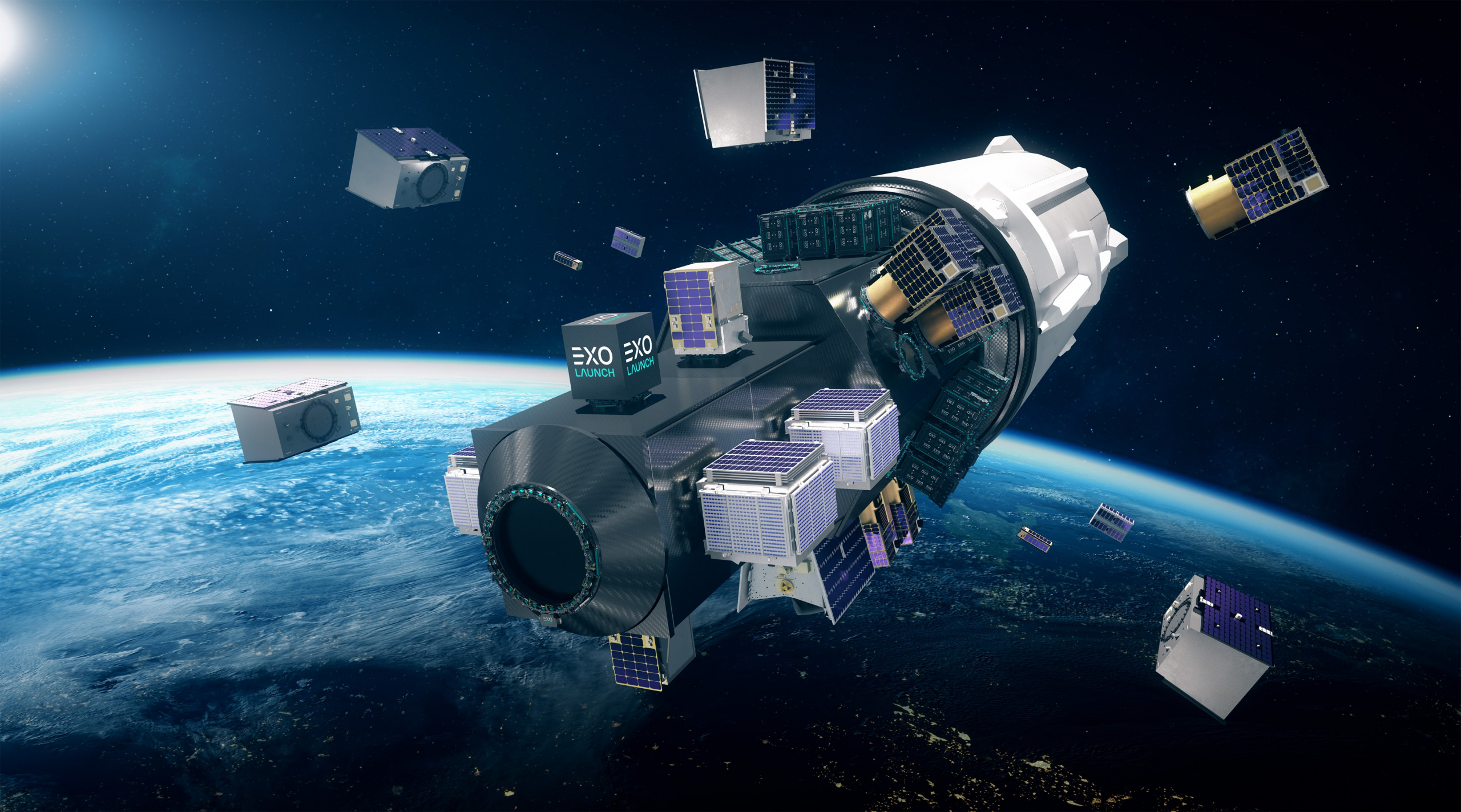
Rendering of the ExoLaunch. Image courtesy of Exolaunch.
3D printing has already been tested in space before, both on the International Space Station and through earlier in-orbit experiments. But missions like this show that it is becoming more common. Easier access to rideshare launches is helping turn these experiments into regular tests rather than isolated demonstrations.
🏷️ p3d_feed