The Future of Metal Parts for Aerospace and Defense
⚓ p3d 📅 2026-01-14 👤 surdeus 👁️ 21

Aerospace and defense manufacturing is entering a pivotal era. The demands placed on metal parts have never been higher, driven by rising performance expectations, increasing system complexity, and an operating environment where resilience and adaptability are no longer optional. Traditional manufacturing methods remain foundational, but they are being challenged by new realities that call for more flexible, data-driven, and sustainable approaches to producing mission-critical components.
Metal additive manufacturing is no longer a fringe capability or a tool reserved for rapid prototyping. It is increasingly viewed as a strategic manufacturing lever, one that is reshaping how aerospace and defense organizations think about part design, material sourcing, and long-term sustainment.
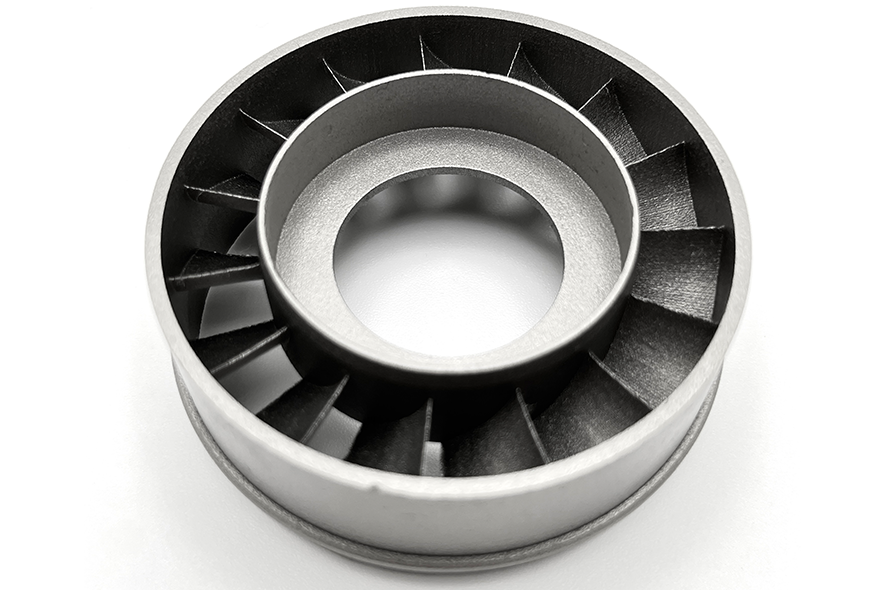
Additively manufactured stator ring for aerospace & defense turbines—used in compressors, nozzle/guide vane assemblies, and other high-temperature, mission-critical hardware. Images courtesy of Continuum Powders.
Performance Optimization Through Design Freedom
For decades, engineers designed parts around the limitations of casting molds, machining access, and tooling constraints. Today, additive manufacturing allows designers to start from performance requirements rather than manufacturing compromises. Internal channels, lattice structures, and geometry optimized for real-world load cases are becoming practical realities rather than theoretical exercises.
In aerospace applications, these capabilities translate directly into lighter components, improved thermal management, and greater fuel efficiency. In defense systems, they enable parts that are purpose-built for specific mission environments, whether that means extreme temperatures, high-cycle fatigue, or complex multi-axis stresses. The result is metal components that are not just lighter or stronger but better aligned with how they are used in the field.
Supply Chain Resilience and Manufacturing Agility
Recent global disruptions have made one thing clear. Dependence on long, rigid supply chains introduces unacceptable risk for industries that rely on absolute reliability. Aerospace and defense manufacturers are increasingly reevaluating how and where critical metal parts are produced.
Additive manufacturing supports a more distributed and responsive production model. Parts can be produced closer to the point of use, reducing lead times and minimizing dependence on single-source suppliers. This is particularly important for sustainment programs and legacy platforms, where replacement parts may be needed decades after original production tooling has been retired.
Equally important is the growing emphasis on material efficiency. High-value alloys used in aerospace and defense are too costly, economically and strategically, to waste. Advanced powder production and reclamation approaches are enabling unused or excess material to be reintroduced into manufacturing workflows without sacrificing quality or performance. This shift supports both supply chain resilience and long-term cost control.
Materials Innovation and Qualification at Scale
The future of metal parts is inseparable from the evolution of materials themselves. Nickel superalloys, titanium alloys, and other high-performance metals remain central to aerospace and defense applications, but the way these materials are produced and qualified is changing.
Advancements in powder production, process control, and in-house materials characterization are enabling tighter control over chemistry, morphology, and consistency. This level of control is critical for meeting the rigorous qualification standards required for flight-critical and defense-related components.
At the same time, industry collaboration is accelerating progress. OEMs, material suppliers, research institutions, and government agencies are working together to modernize qualification pathways and standards. These efforts are helping move additive manufacturing from limited production runs into broader, repeatable deployment across platforms and programs.
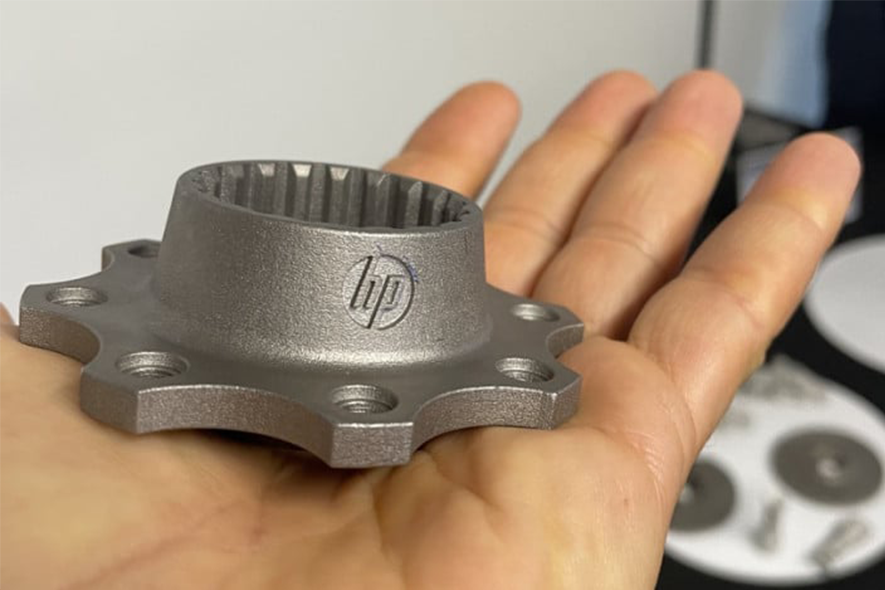
Continuum OptiPowder M247 powering HP Metal Jet binder jet builds. Credit: HP AM Solutions.
Building Confidence Through Data and Digital Infrastructure
As additive manufacturing scales, confidence becomes paramount. Aerospace and defense organizations require absolute traceability, repeatability, and assurance that every part meets specification. This is driving increased adoption of digital manufacturing infrastructure, including real-time process monitoring, advanced analytics, and closed-loop quality systems.
Data-driven manufacturing allows teams to correlate powder characteristics, process parameters, and final part performance in ways that were not previously possible. Over time, this creates a feedback loop that continuously improves quality, reduces variability, and shortens qualification cycles.
Equally critical is workforce development. Engineers and operators must be fluent not only in additive processes but also in materials science, digital quality systems, and design-for-additive principles. The organizations that invest in this expertise today will be best positioned to capitalize on the technology’s full potential.
A Defining Moment for Aerospace and Defense Manufacturing
The future of metal parts for aerospace and defense is not about replacing every traditional manufacturing process. It is about expanding the toolbox and using the right approach for the right application. Additive manufacturing, advanced powder production, and circular material strategies are becoming integral components of that toolbox.
As performance requirements intensify and supply chain expectations evolve, the ability to produce high-quality metal parts with greater agility, efficiency, and confidence will separate leaders from followers. The organizations that succeed will be those that view materials and manufacturing not as fixed inputs, but as strategic assets.
In that future, innovation is not just about new designs or faster machines. It is about rethinking how metal parts are sourced, produced, and sustained across the entire lifecycle. For aerospace and defense, that shift is already underway.
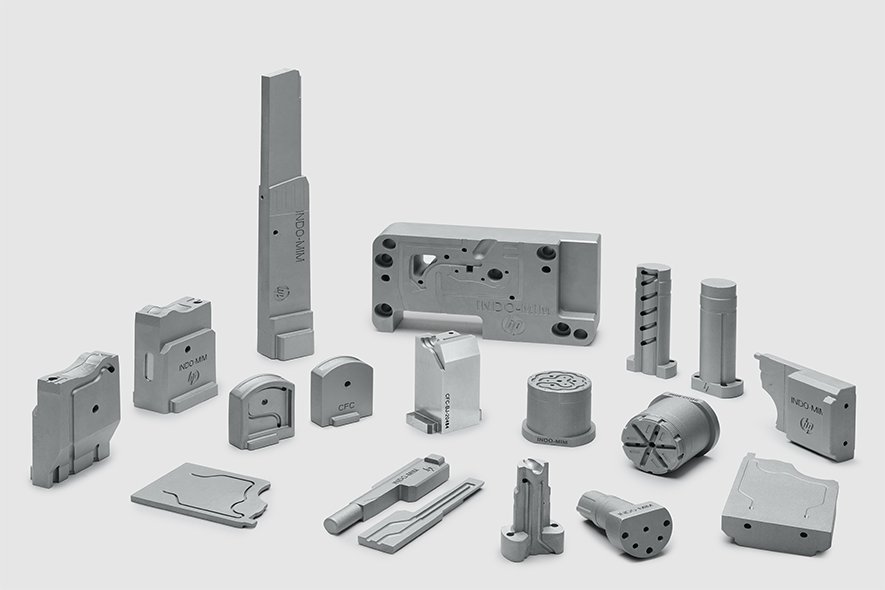
Binder jet sample parts produced with INDO-MIM, demonstrating production-grade geometries and surface finish. Image courtesy of HP AM Solutions.
About the Author:
Rob Higby joined Continuum Powders as CEO in April 2024, bringing more than two decades of leadership in Aerospace, Defense, and Space. He previously headed AEA Investors’ Aerospace & Defense practice, advised Velo3D, and served as CEO of TurbineAero, EVP at StandardAero, and Global VP at GE Aviation. Rob holds an MBA from MIT and a BA from Duke University. When not working with exciting next-generation companies positively disrupting their industries, Rob enjoys golfing, hiking, and skiing in Colorado with his family.
Readers interested in discussing advanced metal powder solutions, reclaimed materials, and strategies for building more resilient aerospace and defense supply chains can connect with Continuum Powders at continuumpowders.com.
Rob Higby will be speaking at Additive Manufacturing Strategies (AMS), a three-day industry event taking place February 24–26 in New York City. Higby will participate in the panel “The Future of Metal Parts for Aerospace & Defense” on February 25, moderated by Tali Rosman, alongside Frank Roberts, Michael Fuller, and Mark Benedict. Registration for the event is open via the AMS website.
🏷️ p3d_feed