3D Printing News Briefs, January 15, 2026: Project Call, Sports Medicine, Aluminum Alloy, & More
⚓ p3d 📅 2026-01-15 👤 surdeus 👁️ 19

In today’s 3D Printing News Briefs, America Makes announced the winners of a $1.1 million Project Call, Austal USA named a new Vice President for Business Development and External Affairs, and ASTM International welcomed a new board Chair. Former Duke University football players are using 3D printing to revolutionize sports medicine. Finally, researchers from Japan developed heat-resistant, recyclable aluminum alloys for metal 3D printing.
America Makes Announces AAMI Project Call Winners

America Makes and the National Center for Defense Manufacturing and Machining (NCDMM) announced the winners of the $1.1 million Project Call for the Allied Additive Manufacturing Interoperability (AAMI) Program. Lockheed Martin leads the first team, consisting of ASTM International and Additive Manufacturing Solutions, Ltd., while Eaton Corporation leads the second team, made up of EOS North America, Materials Solutions (A Siemens Energy Business), and 3Degrees. The project call is funded by the Office of the Under Secretary of War for Research and Engineering’s Manufacturing Technology Office (OUSW(R&E)), Manufacturing Technology Program. AM is becoming ever more important to U.S. manufacturing, but executing it at scale requires expertise in materials, manufacturing technologies, standards, supply chain capacity, and more. Both the UK and the U.S. face similar challenges in adopting the technology, like secure data transmission and intellectual property rights. The goal of AAMI is to set up AM equivalency and interoperability between the U.S. Department of War (DoW) and UK Ministry of Defense (MoD) supply chains, with a specific focus on LPBF 3D printing of critical parts. The winners of the project call, in alignment with the U.S. Regional Sustainment Framework (RSF) and the UK Advanced Manufacturing Strategy, will work to determine barriers to allied interoperability, and support development of international qualification approaches.
“Defense sustainment still relies on legacy materials and processes that fall short of today’s operational demands. This effort enables teams to propose and demonstrate a qualification framework for metal additive manufacturing suppliers in both the U.S and the U.K, ensuring consistent parts across allied nations. We’re honored to work with leading global experts to prove AM equivalency and interoperability,” said Ben DiMarco, Technology Transition Director at America Makes. “By advancing laser powder bed fusion qualification and accelerating real-world adoption, we’re demonstrating how collaboration can overcome technical, regulatory, and supply chain hurdles to deliver tangible results to the warfighter and allied defense operations.”
Austal USA Appoints New VP for Business Development & External Affairs
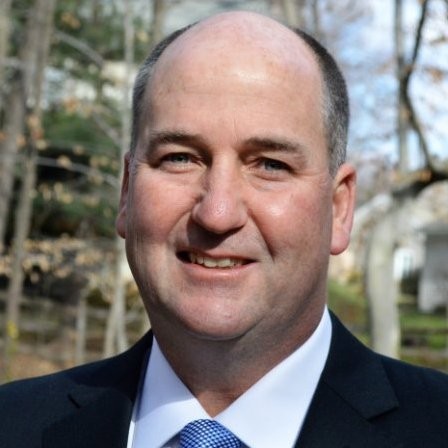
Dan Brintzinghoffer
Shipbuilder Austal USA, a key member of the U.S. Navy submarine industrial base, has appointed a new Vice President for Business Development and External Affairs. Effective February 9th, Dan Brintzinghoffer will succeed Larry Ryder in this role. Brintzinghoffer has plenty of experience in shipbuilding, program management, and defense acquisition, which aligns with the company’s growing submarine and maritime programs. With decades of honorable service in the Navy, including Commanding Officer of USS Pinckney (DDG 91) and Executive Assistant to the Assistant Secretary of the Navy for Research, Development, and Acquisition, Brintzinghoffer has a strong record of strategic planning, driving business growth, and delivering solutions over multi-domain programs in the defense industry. Most recently, he served as Senior Vice President of Growth and Strategy for the Defense Systems Sector at Leidos, and helped the organization secure over $11 billion in new business awards, plus grow capabilities in hypersonic technologies, space sensing systems, and maritime domain solutoins.
“Austal USA continues to strengthen its leadership team to support long-term growth and mission success. Dan’s breadth of experience across defense acquisition, operational leadership, and industry growth makes him uniquely qualified to lead our business development and external engagement efforts,” said Michelle Kruger, Austal USA President.
Amer Bin Ahmed Starts Term as Chair of the ASTM International Board
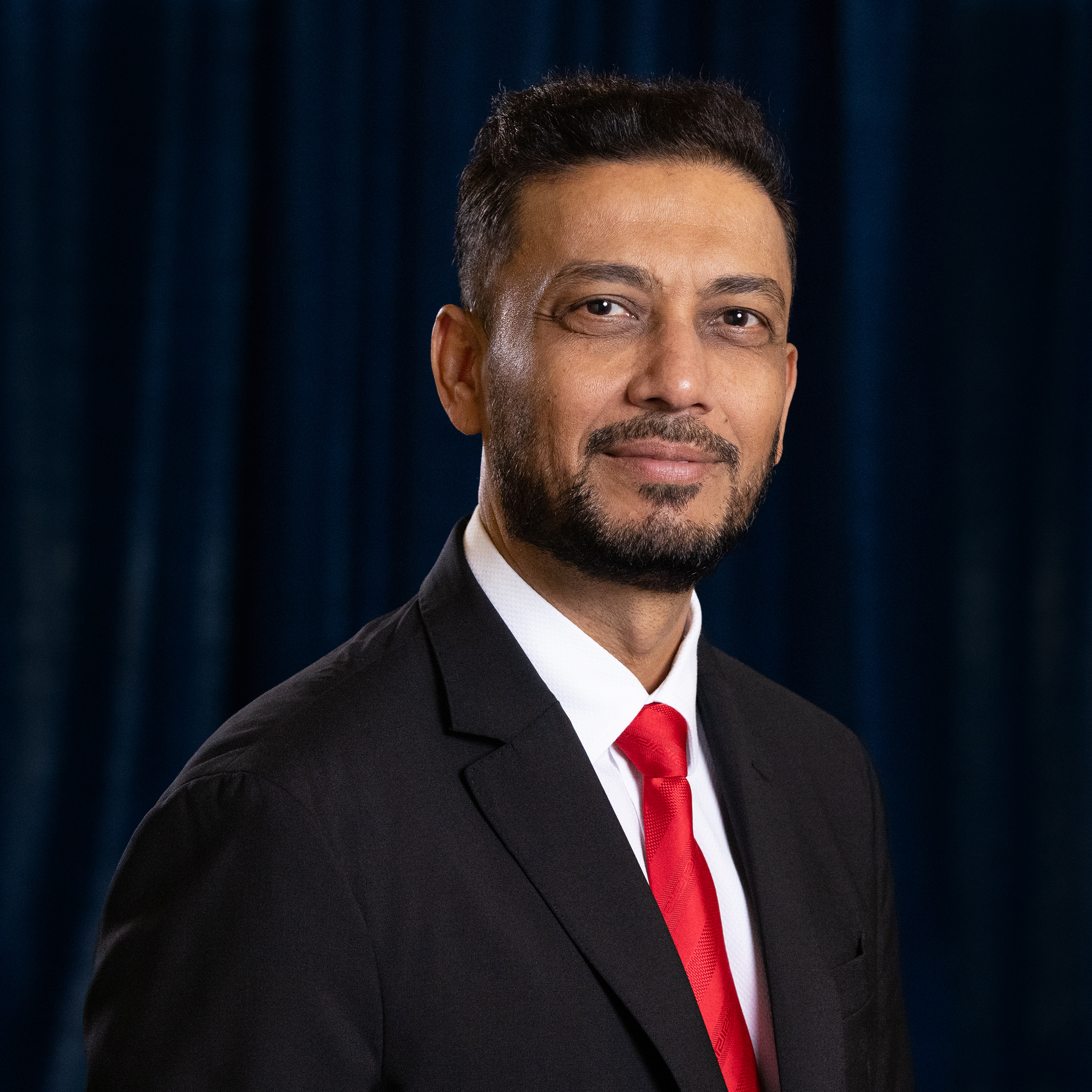
Amer Bin Ahmed
The ASTM International Board of Directors is made up of 25 leaders, representing academia, government, industry, and professional organizations from around the world. The board members offer strategic oversight to support the organization’s more than 12,000 global standards and business services. This month, the newest Chair of ASTM’s Board of Directors began his term at the top. Amer Bin Ahmed has nearly 20 years of leadership in sustainability, standards-driven innovation, and industrial manufacturing, specifically in the gypsum industry, and previously served as Vice Chair. Bin Ahmed has degrees in business and management, and also completed executive education programs at MIT, with a focus on emerging technologies and innovation.
Bin Ahmed has experience building and scaling sustainable industrial operations across Africa, Asia, and the Middle East, and led business development for building products companies Boral and Lafarge. He most recently served as Managing Director of Knauf Middle East, a subsidiary partner of multinational construction company Knauf. His regional responsibilities in this position included India, where he received lots of recognition for advancing quality, sustainability, and industrial excellence. Focusing on third-party verification, system-based compliance, and practical application of standards to emerging technologies, Bin Ahmed increasingly worked with advanced and additive manufacturing technologies. He’s supported ASTM-led initiatives, and participated in industry engagements, lectures, and workshops about additive construction (AC). Some of his work included AM capability-building with public-sector partners, including the R&D 3D printing initiatives led by Dubai Electricity and Water Authority, and engaging with early AC initiatives in Dubai. His combination of continuous learning and field experience prepared Bin Ahmed well for this leadership role at ASTM.
Former Duke Football Players 3D Printing Custom Braces for Recovering Athletes
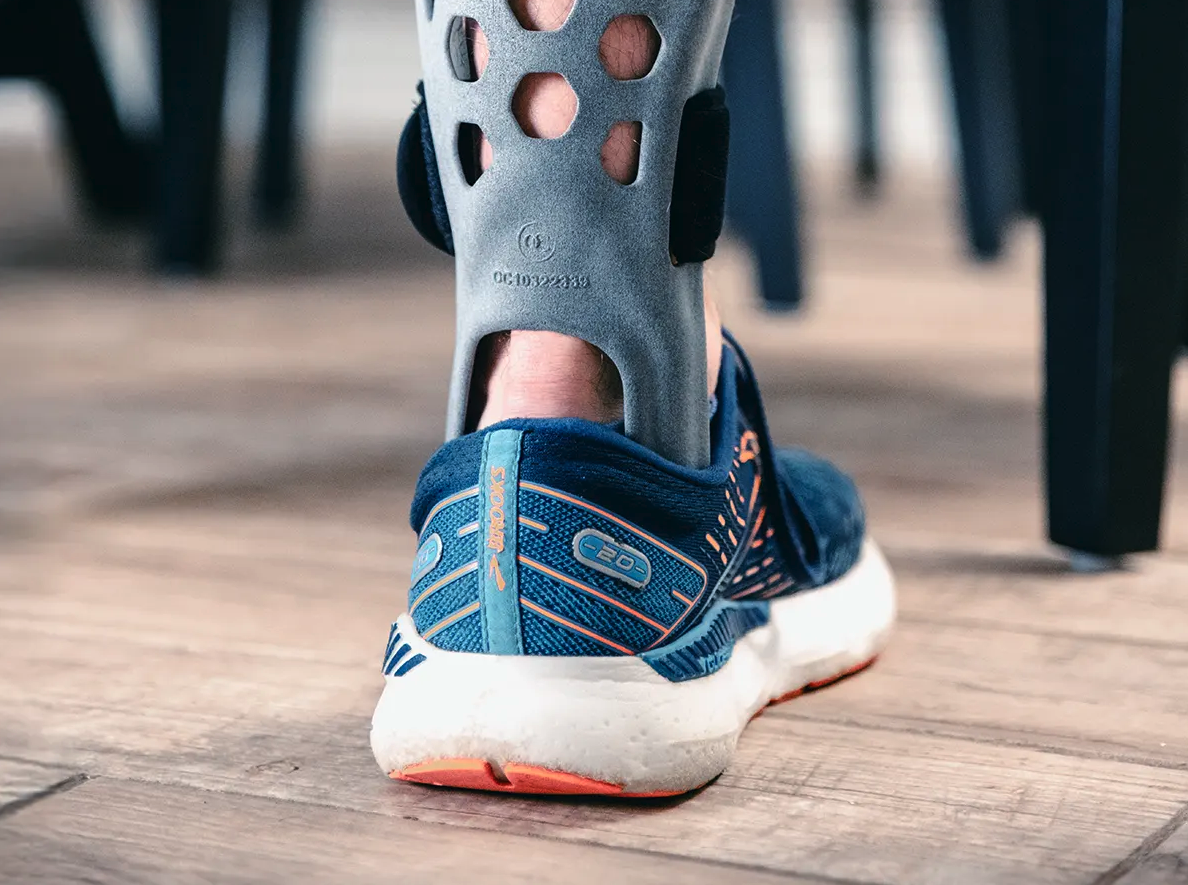
Image courtesy of Protect3D
In 2019, Kevin Gehsmann, Clark Bulleit, and Tim Skapek founded PROTECT3D, which is using 3D printing to transform sports medicine. The custom braces developed by the former Duke University football players are designed to help athletes recover and get back on the field faster, and have become a standard solution in professional sports. It all started back in their college days, when mechanical engineering graduate Gehsmann and his two co-founders combined their knowledge of biomechanics and love of sports with 3D printing to help their former teammate Daniel Jones, who’s now a quarterback for the Indianapolis Colts. Now, the North Carolina company 3D prints everything from orthotics and braces to splints, arm casts, thumb guards, and even impact pads. Medical staff take 3D scans of their patients using a smartphone, which PROTECT3D uses to create a digital design. With about 48 hours, a custom brace is 3D printed and shipped, allowing athletes all over the U.S. to get back on the field for midweek practice. The company wants to expand their reach and help people in the military community and beyond.
“The best part about making custom products for people is the tangible impact it has on people from that lower extremity, ankle, foot, orthosis device that helps people walk better than they have in years,” said CEO Gehsmann.
“As we’ve scaled the company, we’ve continued to push the envelope and push the bounds of what’s possible with 3D printing technologies and the different types of products we can create.”
Nagoya University Researchers Develop Aluminum Alloys for Metal 3D Printing
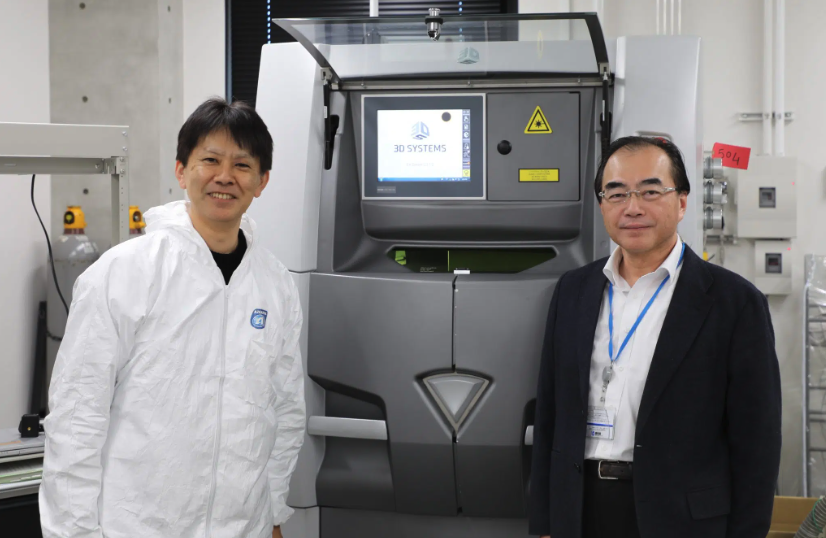
Materials science researchers from Nagoya University in Japan developed a new family of heat-resistant, recyclable aluminum alloys designed for metal 3D printing. Aluminum is strong yet lightweight, but its strength plummets at high temperatures, which means it can’t be used in systems subjected to continuous heat, like turbines and engines. The team based their design on the use of iron, which is often avoided in aluminum because it makes the material brittle and vulnerable to corrosion. But, in 3D printing processes like laser powder bed fusion, molten iron rapidly cools and solidifies, which generates metastable phases not seen in traditional manufacturing that trap atoms in new configurations, and with different properties. The team didn’t just adapt an existing material, though: they designed mechanically stable, heat-resistant, recyclable alloys, using low-cost elements, for the extreme environment of 3D printing. They chose other elements to add to aluminum, including iron, titanium, copper, and manganese, in order to reinforce the material’s internal structure while also maintaining workability.
Testing their work with high-resolution electron microscopy, the most promising alloy they developed was made of aluminum, iron, manganese, and titanium (Al-Fe-Mn-Ti). It pairs flexibility at room temperature with high resistance at elevated temperatures, and is easier to print than typical high-strength aluminum, which often cracks or deforms during printing. The team’s new aluminum alloys are recyclable, which is a win for the circular economy, and their work provides a new metal design framework developed specifically for 3D printing, which can speed materials development in many sectors. This alloy family can print lightweight components that operate at high temperatures, like compressor rotors or turbine parts, and has specific applications in the automotive, aeronautics, and energy sectors.
🏷️ p3d_feed