Replique Deepens Work With Alstom
⚓ p3d 📅 2026-01-16 👤 surdeus 👁️ 24

Production and MRO service Replique is deepening its collaboration with transport giant Alstom. Alstom itself is doing great work in additive, working with 3D Spark to save money, printing train parts with Stratasys FDM, previously working with Replique on bound metal parts, and joining Replique years ago.
Given the sheer amount of rolling stock worldwide and the billions spent on repairs, upgrades, and refits each year, rail is one of the biggest opportunities in 3D printing. Alstom seems to be ahead of its peers in the adoption of the technology as well. In this case, Replique now serves as a global supplier to numerous projects and subsidiaries across Singapore, Brazil, Australia, France, Italy, Germany, Thailand, and Spain.
That globe-spanning work is great news for Replique because it will be a powerful showcase of the promise of 3D printing MRO. The idea is: yes, we have to qualify and wrestle with it at the beginning, but eventually, 3D printed MRO will be an efficient global solution that is fast and ties up less capital. For Replique and its 350 production partners, public cases like this are crucial because they show that the platform is able to deliver on promises and actually works. Many firms, for many reasons, would not want to or care to talk about 3D printing MRO. Many of Replique’s customers will perhaps eschew the limelight. A public case like this is therefore doubly important to Replique. Replique says that it has done part volumes in the “lower five-digit range” and is used as end-use parts on vehicles.
The partnership covers several 3D printing technologies, as well as CNC and casting. Replique is also used to determine whether parts are suitable for printing and which process will be best. That is a notable thing to realize here. If you’re building a digital platform to score, evaluate, price, and repart manufacturing jobs, limiting yourself to additive will reduce your effectiveness. If you deal with all digital manufacturing techniques, you as a tool will be stickier, you will embed yourself deeper in the organization, and you will distribute much more revenue. I would expect that all digital MRO platforms, workflow platforms, MES tools, and evaluation platforms move more towards other forms of manufacturing.
Replique CEO Max Siebert said,
“We are proud to provide Alstom with global solutions that make their parts supply more efficient and flexible. Our components are used in series production, and each project highlights the diverse challenges of parts procurement while motivating us in our vision of a globally connected, sustainable, and efficient supply chain.”
Alstom 3D Printing Program Manager, Lorenzo Gasparoni, stated,
“Replique doesn’t just deliver the components; it ensures consistently high quality across the globe, which is especially crucial for series production. Replique also completed the entire series approval process, including First Article Inspection and First Article Mount – with excellent results.”
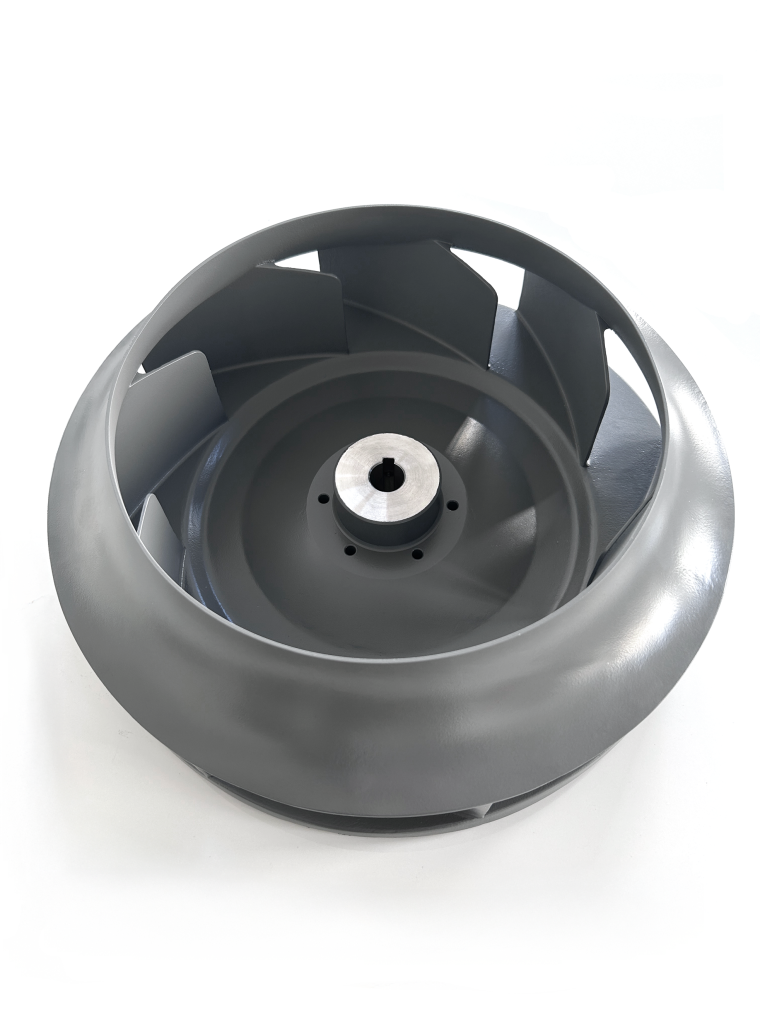
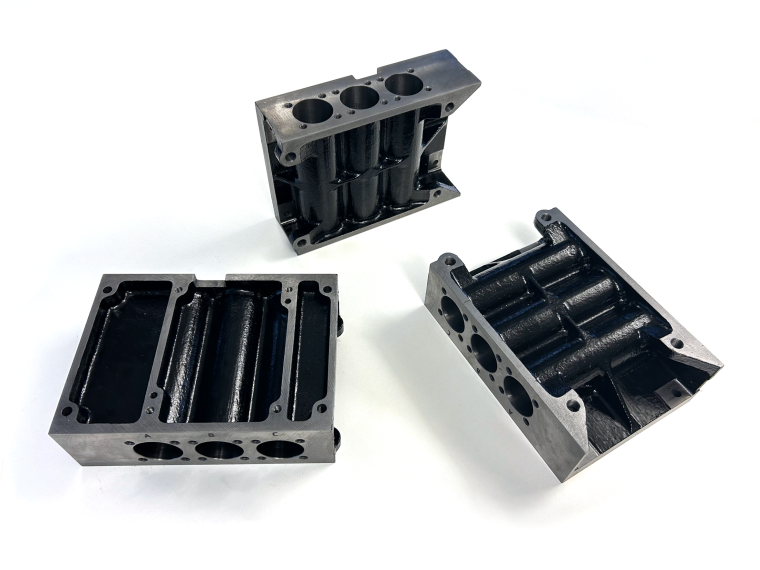
The parts are varied from the above impeller for a metro cooling unit used in Asia. A super cool thing is that Alstom branding plates are at the top of the article. In Italy, an out-of-business supplier meant Replique had to develop molds to produce intercoolers, as shown below.
This is great news for the industry. Platforms for scoring, fixing, and getting parts made are a great way to make additive more accessible, make implementation faster, and reduce the risk of getting 3D printed parts made. We can do the heavy lifting, get the right experts to make the right parts, and it’s all done without up-front investments by clients. These kinds of platforms are force multipliers for our industry. Here, Replique is a service that also functions as a systems integrator, bringing together specific knowledge, a customer, and suppliers to tailor a solution. That, too, is something we need to see more of if we want to speed up part delivery and industrialization.
🏷️ p3d_feed