3D Printing News Briefs, January 21, 2026: Scanning Inspection, Manufacturing Upskilling, & More
⚓ p3d 📅 2026-01-21 👤 surdeus 👁️ 31

In 3D Printing News Briefs, we’ll start with 3D scanning news from Artec 3D. Then, Nanoscribe opened a demolab in Shanghai, and The Ohio State University Center for Design and Manufacturing Excellence received a grant from the Small Business Administration. Finally, researchers in China are working on wound management with 3D printed barbed microneedle electrodes. Read on for all the details!
Artec 3D Announces Global Partnership with InnovMetric for Inspection
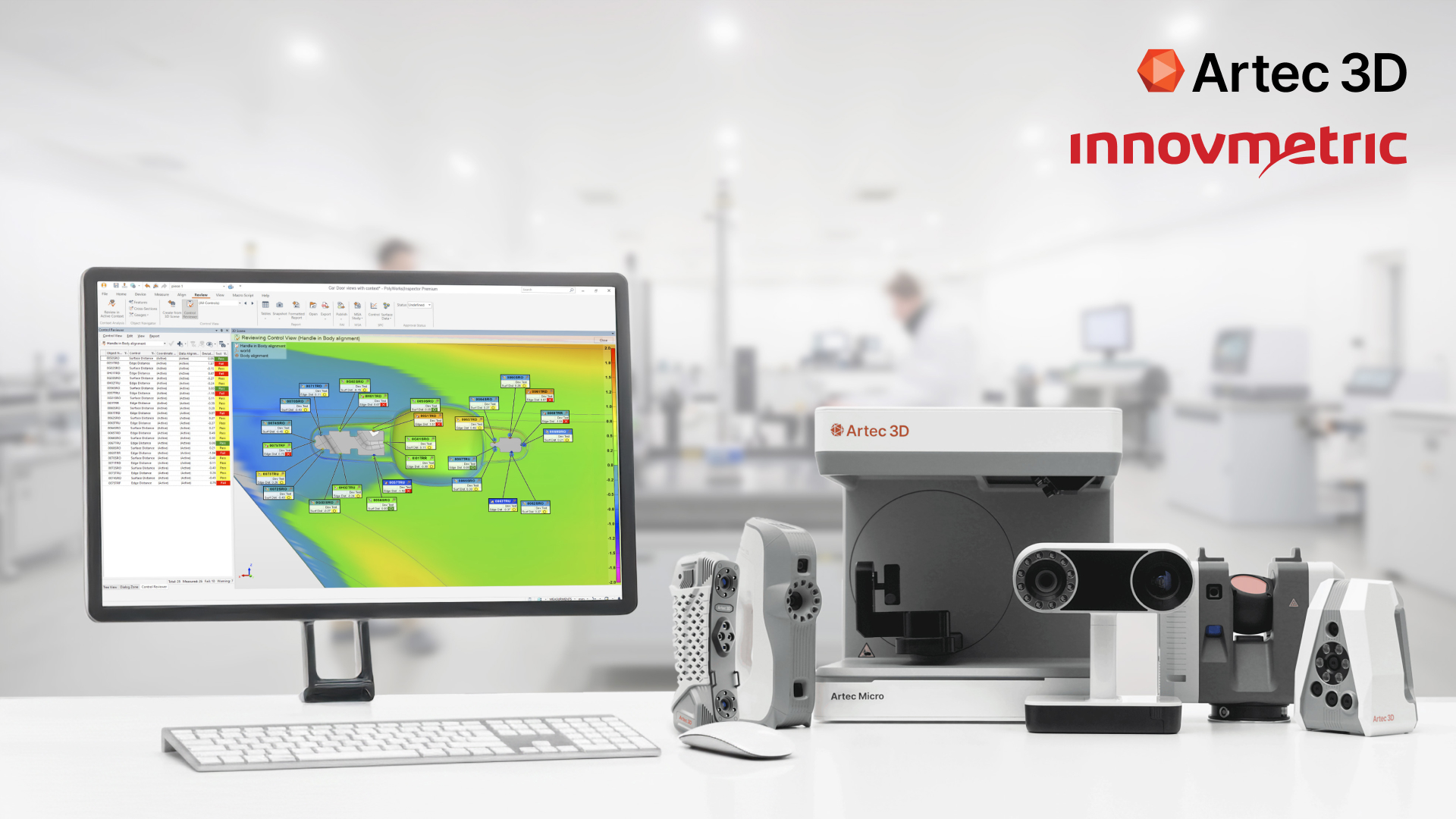
Artec 3D has announced a global partnership with InnovMetric, a metrology software development company, in order to make its inspection offering stronger. The initial focus will be integrating InnovMetric’s leading PolyWorks|Inspector software into the Artec 3D product ecosystem. This solution, powered by PtB-certified algorithms, features advanced GD&T tools, and, as Artec 3D explained, “streamlines the extraction of actionable insights from captured 3D data.” PolyWorks|Inspector allows users to complete full dimensional analyses by comparing 3D scans to CAD models in order to find any deviations, and is able to diagnose and solve manufacturing issues. Plus, it offers detailed reports for easy translation of inspection results. By building on Artec Studio‘s already strong inspection suite with the integration of the PolyWorks|Inspector platform, professional users of Artec 3D’s portable scanners can gain more efficiency in quality control.
“Our partnership with Artec 3D marks another significant step toward making advanced 3D metrology more accessible and efficient for manufacturers worldwide,” said David Bergeron, Chief Revenue Officer at InnovMetric. “By seamlessly integrating PolyWorks with Artec 3D’s professional scanners, we provide a unified, high-performance solution that accelerates the journey from measurement to actionable insight. This streamlined workflow is key to helping our customers achieve new levels of product quality and operational excellence.”
Nanoscribe Inaugurates Quantum X Demolab in Shanghai
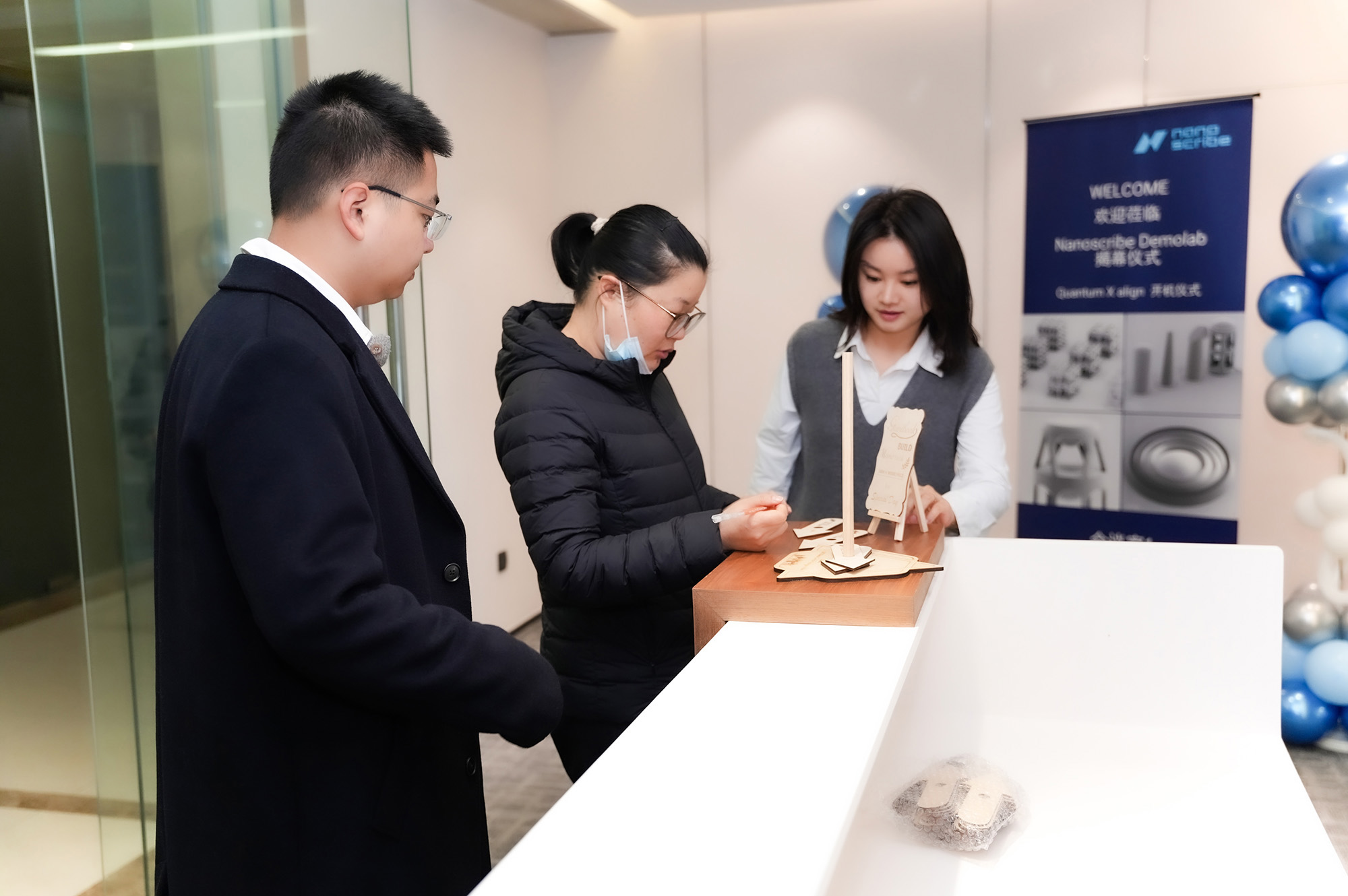
Nanoscribe, a leader in advanced microfabrication and additive manufacturing solutions, inaugurated the new Quantum X demolab at its Shanghai subsidiary. CEO and Co-founder Martin Hermatschweiler spoke at the event remotely from the company’s German headquarters, welcoming industry and academic experts and explaining the “strategic relevance” of having the demolab in the engineering and innovation hub of China. The inauguration was the official commissioning of the company’s high-performance Quantum X align system, making its Aligned Two-Photon Lithography (A2PL) available for hands-on experience in China. The event also acted as a high-level symposium, with scholars and industry experts presenting their research, and there was also a live demonstration of the Quantum X align, showing off its ability to print complex structures with low-tolerance shape accuracy and optical-grade surface roughness. Customers and partners can now visit the demolab and access feasibility studies, product demonstrations, targeted training sessions, and more.
“The Shanghai Quantum X demolab is more than a local facility – it represents a milestone in our long-term commitment to the Chinese market. By providing access to high-throughput two-photon lithography instrumentation, we enable our customers to accelerate development cycles and bridge the gap from academic proof of concept to industrial-scale production,” explained Hermatschweiler. “This is how we actively support the transition from ‘lab to fab’.”
CDME Receives $344,000 SBA Grant for Manufacturing Upskilling Program
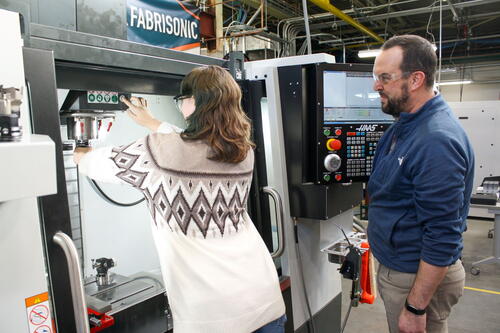
Participants will receive hands-on training taught by CDME engineers.
The Ohio State University Center for Design and Manufacturing Excellence (CDME) was awarded a one-year, $344,000 grant from the Small Business Administration (SBA) Empower to Grow (E2G) Program. The funds will go towards providing targeted training courses that help Ohio’s small manufacturers in upskilling and reskilling their workforce, with a focus on skills for assemblers, inspectors, and machinists. My home state has over 680,000 employees in the manufacturing sector, and as it keeps growing, a trained workforce is critical to help meet the demand. E2G Program awardees, like CDME, will offer regional support to small manufacturers in critical industries for SBA’s Made in America Manufacturing Initiative. The training programs by CDME will offer the chance to get hands-on experience in emerging technologies, and teach participants what they need to know in order to transition to a skilled trade in industrial automation. CDME engineering experts will teach the courses, including welding, manual machining, and of course, 3D printing.
Vimal Buck, CDME’s Director of Industrial Cybersecurity, said, “As leading companies look at investing and developing domestic manufacturing capacity in industries such as semiconductors, electric vehicles, biotechnology, drone manufacturing and battery technologies, CDME is uniquely positioned to successfully help the region create a workforce ready to ensure Ohio remains a key manufacturing state in the future.”
Researchers Using 3D Printed Barbed Microneedles in Wound Management
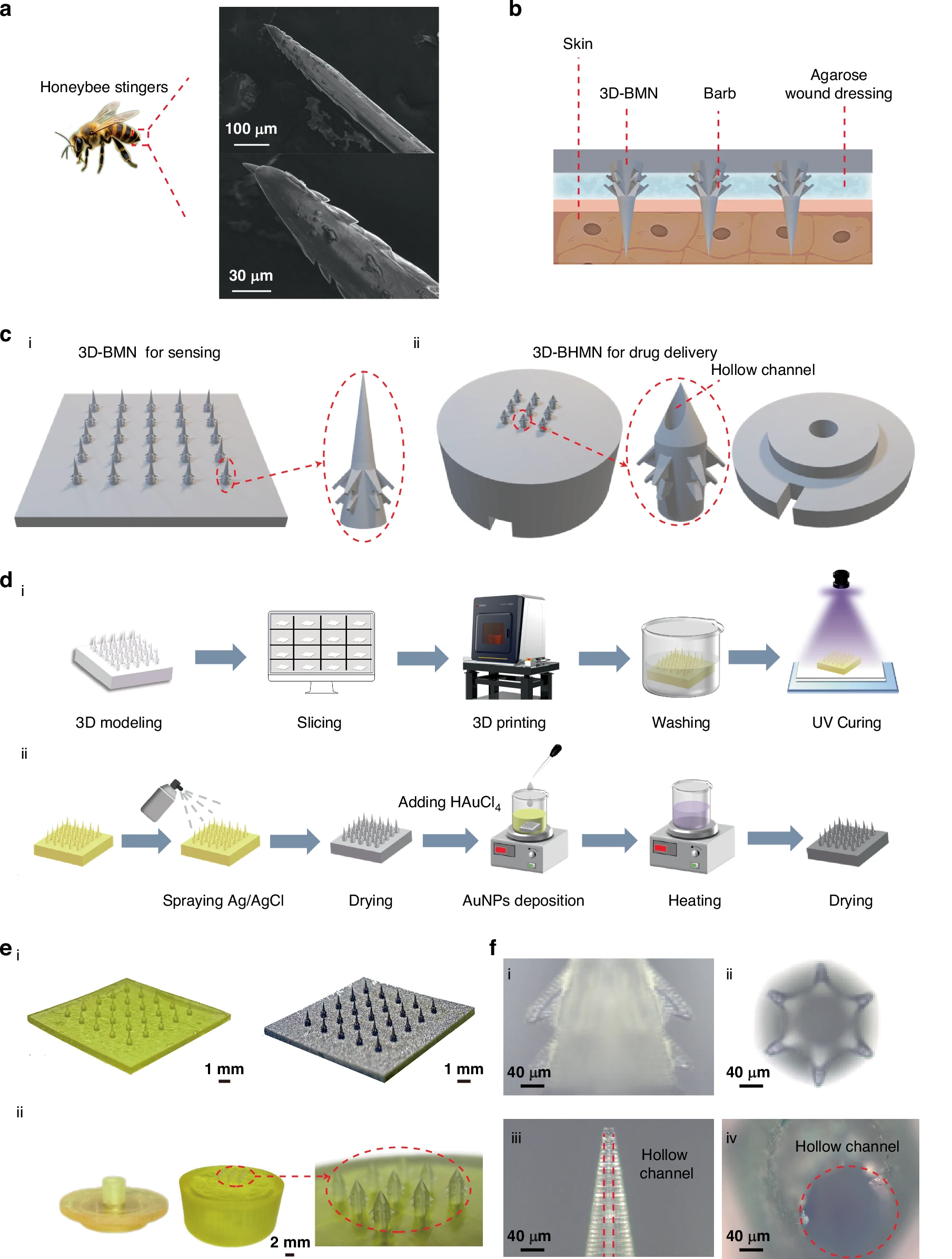
Fabrication process and physical images of a SEM images of 3D-BMN and 3D-BHMN. a honeybee stinger, showing the distinct barbed morphology. b Schematic illustration of the operation principle of 3D-BMN. c i – Design schematics of 3D-BMN for sensing. ii – Design schematics of 3D-BHMN for drug delivery. d i – Fabrication of the 3D-BMN resin matrix via PμSL technology. ii – Conductivization process of 3D-BMN through Ag/AgCl spray coating and AuNP deposition. e i – Optical images of 3D-BMN before and after conductivization. ii – Optical images of 3D-BHMN. f Optical microscopy images of barbed microneedles, demonstrating their morphological characteristics.
Over 60 million people around the world suffer from chronic wounds, making it “a major global healthcare burden,” according to researchers from the University of Electronic Science and Technology of China, Sichuan University, and the Chinese University of Hong Kong. They say traditional wound dressings are too passive, forcing healthcare workers to remove and inspect them multiple times, leaving the patient vulnerable and disrupting the healing process. The team wanted to develop an integrated wound care solution that offers on-demand therapeutic intervention, as well as continuous monitoring. As they explain in their published paper, they turned to 3D printed microneedles that incorporate complex, bioinspired barbs, like those of a bee’s stinger. The geometry of the barbs enables them to strongly interlock with wound dressings, so the microneedles won’t fall out. Using projection micro-stereolithography (PμSL), they developed and printed two types: monolithic barbed microneedles (3D-BMN) for wound biosensing, and barbed hollow microneedles (3D-BHMN) for drug delivery.
🏷️ p3d_feed“Conductivization with Ag/AgCl and AuNPs imparts robust electrochemical performance, allowing accurate monitoring of wound impedance, which correlates with wound status. 3D-BHMN integrates an ultrasonic atomizer for efficient drug delivery. A closed-loop feedback system couples 3D-BMN and 3D-BHMN, forming a closed-loop system for on-demand delivery of therapeutic agents modulated by the sensed impedance value that aligns with the dynamic wound status,” the researchers wrote in their abstract. “This integrated platform advances smart wound management by combining diagnostics and therapeutics, offering broad translational potential.”