Zellerfeld To Make Nike Air Max 1000 Black Sabbath
⚓ p3d 📅 2026-01-22 👤 surdeus 👁️ 23

Nike is working with Zellerfeld on the Air Max 1000. This time the shoe is a multicolor model. Previously, at the end of 2024, Zellerfeld unveiled a single-color 3D printed Nike Air Max 1000. That TPU sneaker saw a limited release, joining the many leading companies that have worked with Zellerfeld. In the Summer of 2025, the company released another sneaker, the “oatmeal” version, which cost $210. The so-called foamy oat was a computer-like beige, but the next Air Max looks like it could be a combination of purple and black.

A “Black Sabbath”–inspired purple and black colorway showcases Zellerfeld’s multiple color 3D printing improvements. Previously, the company showed its own 3D printers, which can print support and build material. Now they can print different colors. In the images, we can see that the company can print different colors throughout. It looks like they’re using the support nozzle for two build materials in this case. On the soles, we can see multiple colors on different sides, different zones in different colors, as well as an intermixing of colors.
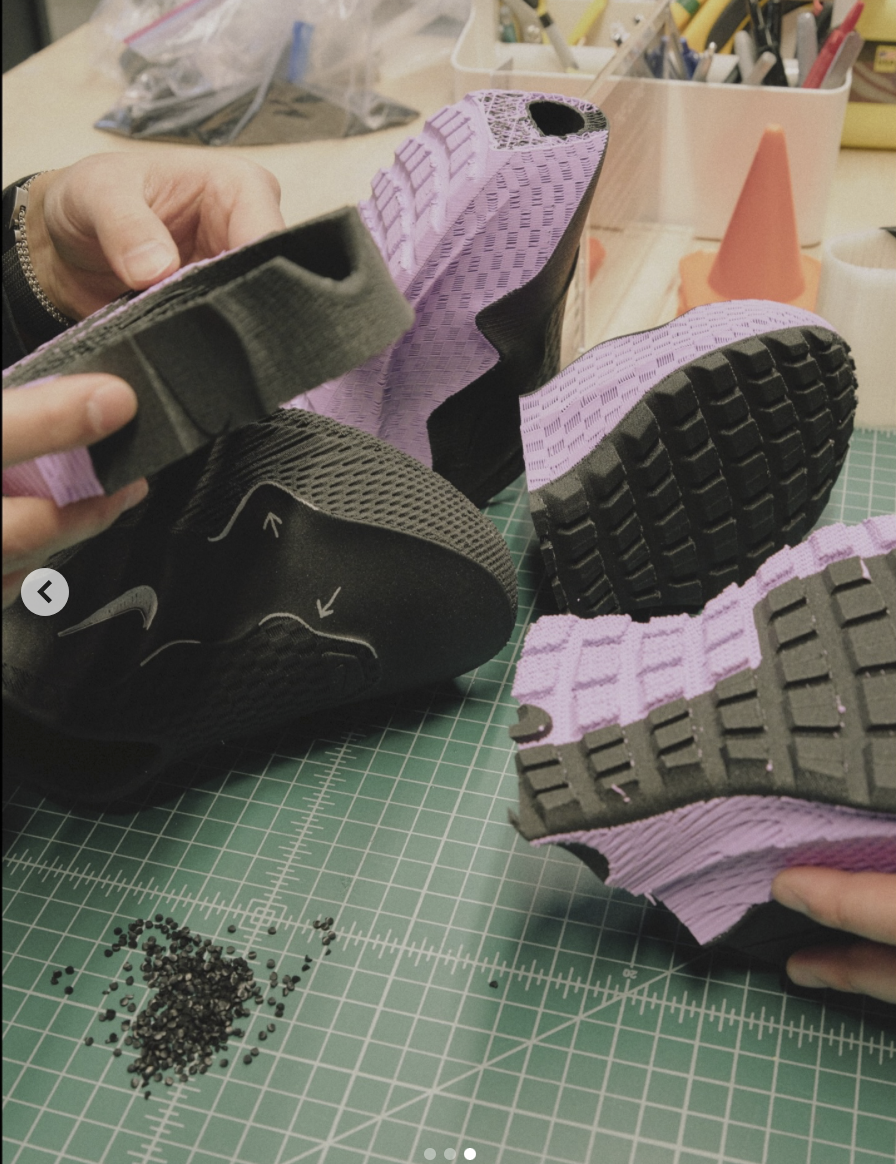
As well as multiple colors, this could let the company play with different shore hardness materials. Maybe it could even use completely different TPU variants to get different properties next to one another in one print. We know that Zellerfeld is working on its own slicer as well. That could let them experiment with different shore hardness materials in different soles of a sole, for example.
An outer sole area could be more durable, while the next layer could use a softer material, for example. Softer material could be used below your toe, and below that layer, a harder material layer could support your toe better. Going forward, this may give Zellerfeld an edge over competitors. As shown in the pictures, the company is implying that it is now using pellets. If it were able to support multiple materials with pellets, it would be able to make more comfortable-fitting shoes more cheaply than alternatives.
Through investing in slicing and machines, Zellerfed could have a cost advantage. But a competitor could buy commercial systems and quickly catch up. It could be much easier and cheaper to get started by buying commercial systems. In order to make this investment in machine development pay off, Zellerfeld needs to innovate where it matters.
If it just innovates on design, it could build on its lead. If it then parleys this work into making the YouTube for shoes, it could have a lasting advantage as a platform. But if Jane in New Zealand can buy a Creality and then compete directly with Zellerfled, then she could have a credible, cheaper alternative. Jane could, in New Zealand, offer shoes more cheaply or with more margin. Also, she could sell the fact that her gear is Auckland-made, and this could entice people to buy this local product. Zellerfeld will build print farms in more places, but if everyone can compete quite directly, then they will lose. The variations in its designs, the talent using it, and the costs must all be unsurpassed.
That means that multiple colors and pellets are so important. Bambu Lab will obviously make a better printer than Zellerfeld. But Zellerfeld could have a better TPU printer than Bambu Lab could. It could specialize specifically in the shoe capability and the shoe form factor. If the specific capability is enough, then it can build a further moat between itself and anyone who wants to make shoes at home. How much do Creality and Bambu Lab care about TPU? And will they venture into pellets? I’m sure that they’ll pay much more attention to TPU going forward. But pellets may not make sense to them at all. That could really build into a lead for Zellerfeld.
Images courtesy of Zellerfeld
🏷️ p3d_feed