At AIAA SciTech 2026, 3D Printing Was Part of the Workflow — Part I
⚓ p3d 📅 2026-01-22 👤 surdeus 👁️ 24

The AIAA SciTech Forum 2026 brought much of the aerospace community together in one place.
With roughly 6,000 attendees, 115 exhibitors, 21 sponsors, and nearly 3,000 technical paper presentations, the Orlando event brought together the full aerospace ecosystem, from government labs and primes to startups and universities. Additive manufacturing (AM) appeared throughout the event in incredibly practical ways, already part of the workflow.
What stood out was how 3D printing showed up everywhere, connecting research, production, testing, and future workforce development, making AM a common element across the event.
From Government Labs to the Show Floor
At the government level, the Air Force Research Laboratory (AFRL) offered a clear example of how 3D printing is being positioned today: not as a novelty, but as infrastructure.
3DPrint.com spoke to Senior Research Biological Scientist Nathan Lord at the AFRL booth, who emphasized that AM is now central to how the lab thinks about materials and systems development.
“The AFRL has a major point of emphasis on leveraging additive manufacturing for the production of various materials for various uses. We see that as a sensible approach to achieving affordable mass, while also enabling continued technological innovation in materials,” he said.
That idea of affordable mass came up often during the event. Whether the conversation was about satellites, UAVs, robotics, or autonomous platforms, the same constraints kept surfacing: cost, size, weight, and power.
“It really depends on the intent of the use case, but in general we’re always looking to reduce cost, size, weight, and power. As technology continues to evolve rapidly, we want to stay at the forefront of all possible options for achieving affordable mass with the right trade-offs for mission success,” Lord continued.
Lord also pointed to AFRL’s broader digital transformation efforts, including a “strong push toward agentic AI,” as part of how the lab is accelerating technology development and shaping future capability concepts. In that context, AM is one piece of a larger toolkit, working alongside advanced digital workflows and autonomous decision-making systems to move ideas more quickly from concept to application.
The robotic “RoboDog” platform at the AFRL booth in particular offered a concrete example of that approach. Rather than hype, the focus was on practicality, using technology, including additively manufactured components, to fill workforce gaps responsibly, explained the expert.
“This is one example where, if a manpower requirement can’t be met, it makes sense to leverage available technology. As long as systems are properly vetted and carefully evaluated, robotics can significantly improve both efficiency and effectiveness, and they can play a meaningful role in supporting Air Force missions.”
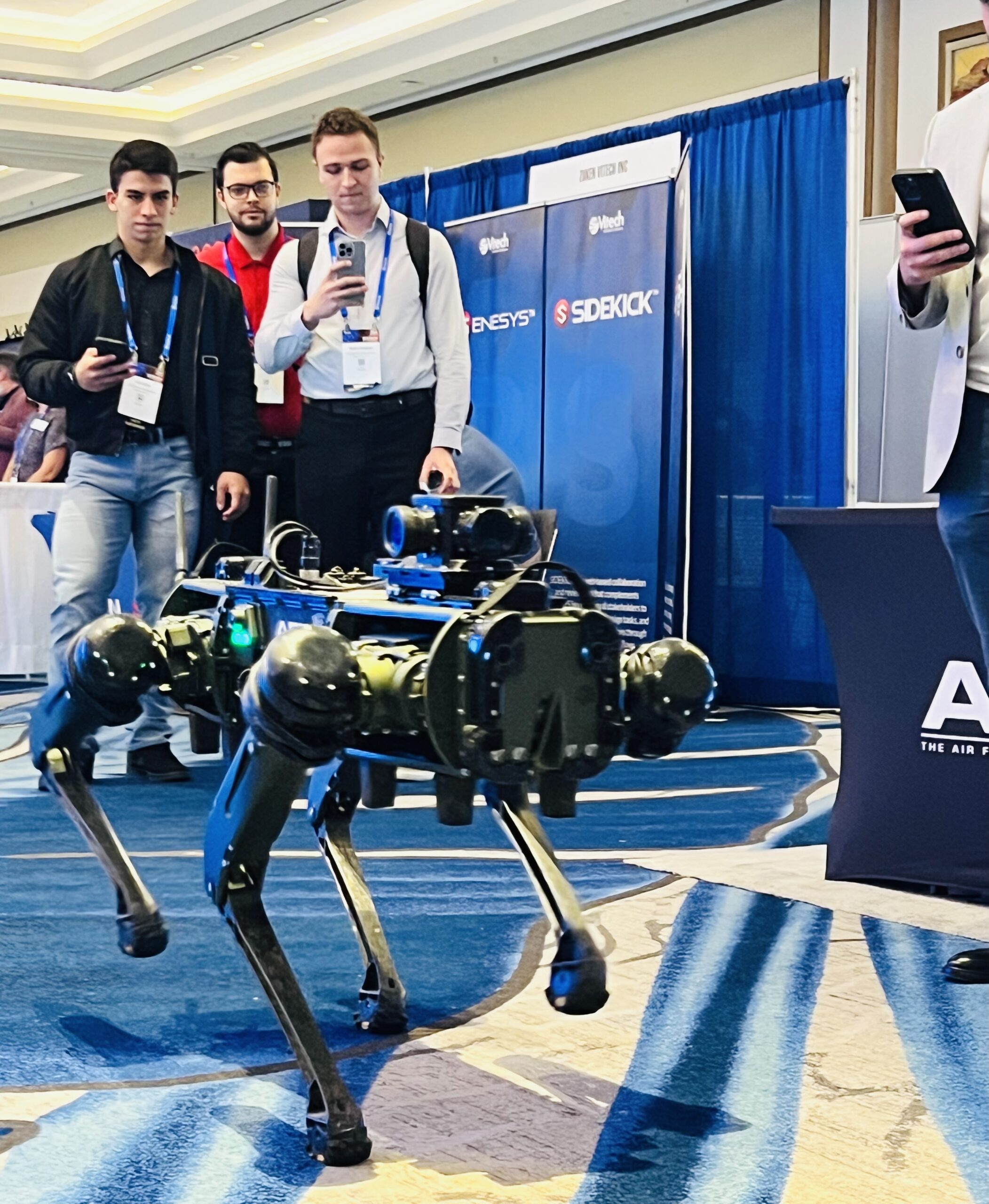
RoboDog walking through the halls at the AIAA SciTech Forum 2026. Image courtesy of 3DPrint.com.
Primes, Recruiting, and a Connected Ecosystem
Spending time on the exhibition floor, it was hard not to feel the full weight of the aerospace ecosystem coming together in one place.
Major primes like Boeing, Northrop Grumman, Lockheed Martin, RTX, and Siemens were recruiting, meeting with partners, and actively engaging with engineers, students, and startups throughout the week.
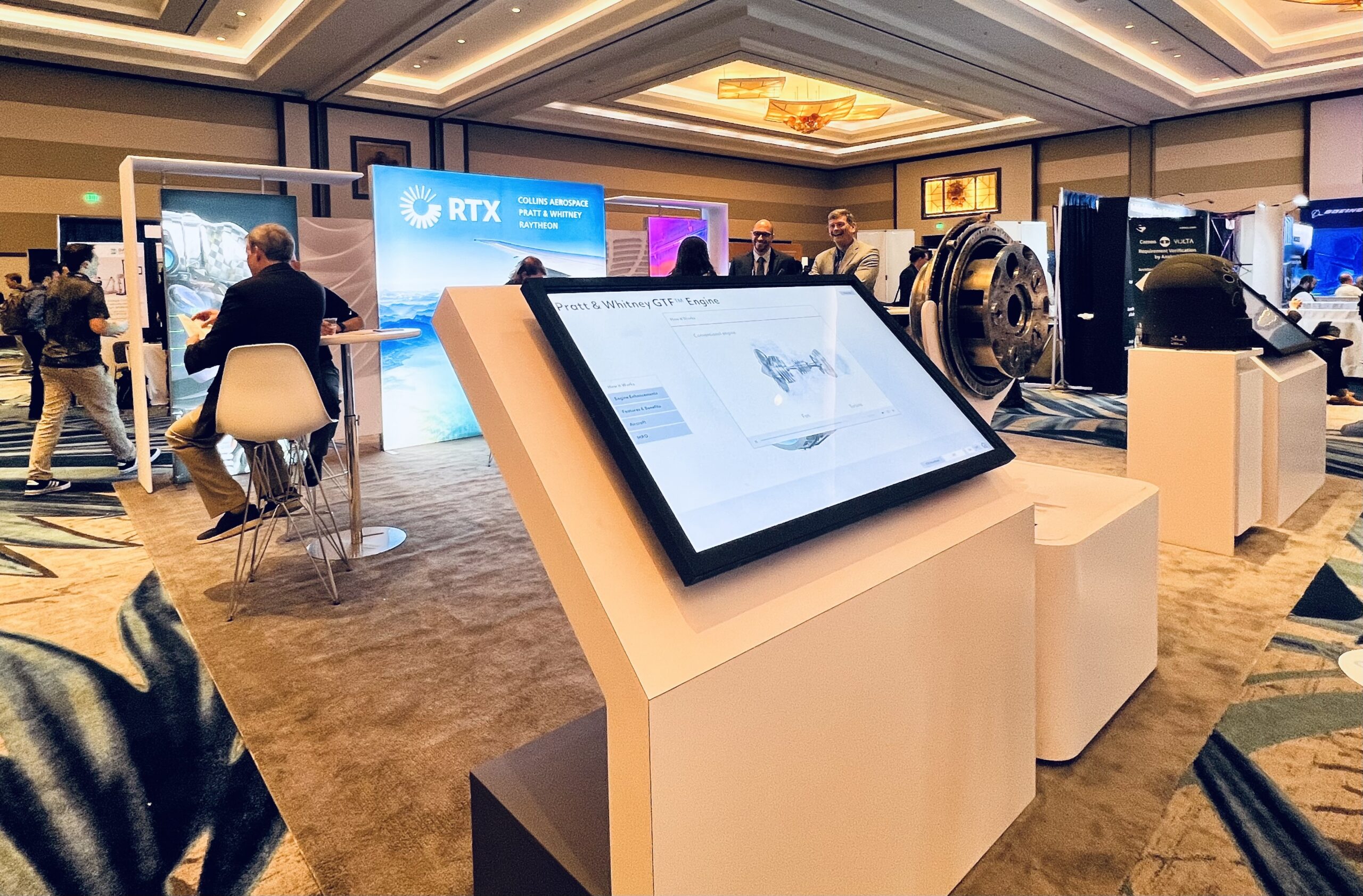
RTX’s booth at the AIAA SciTech Forum 2026. Image courtesy of 3DPrint.com.
What made AIAA SciTech feel different from a typical trade show was the way those worlds overlapped. Government labs were talking with early-stage companies. Universities are set up next to large contractors. AM firms shared the aisle with teams focused on simulation, testing, materials, and inspection.
Nothing on the floor and on display felt isolated. The show mirrored how aerospace works today, with 3D printing sitting alongside other technologies as part of the same workflow.
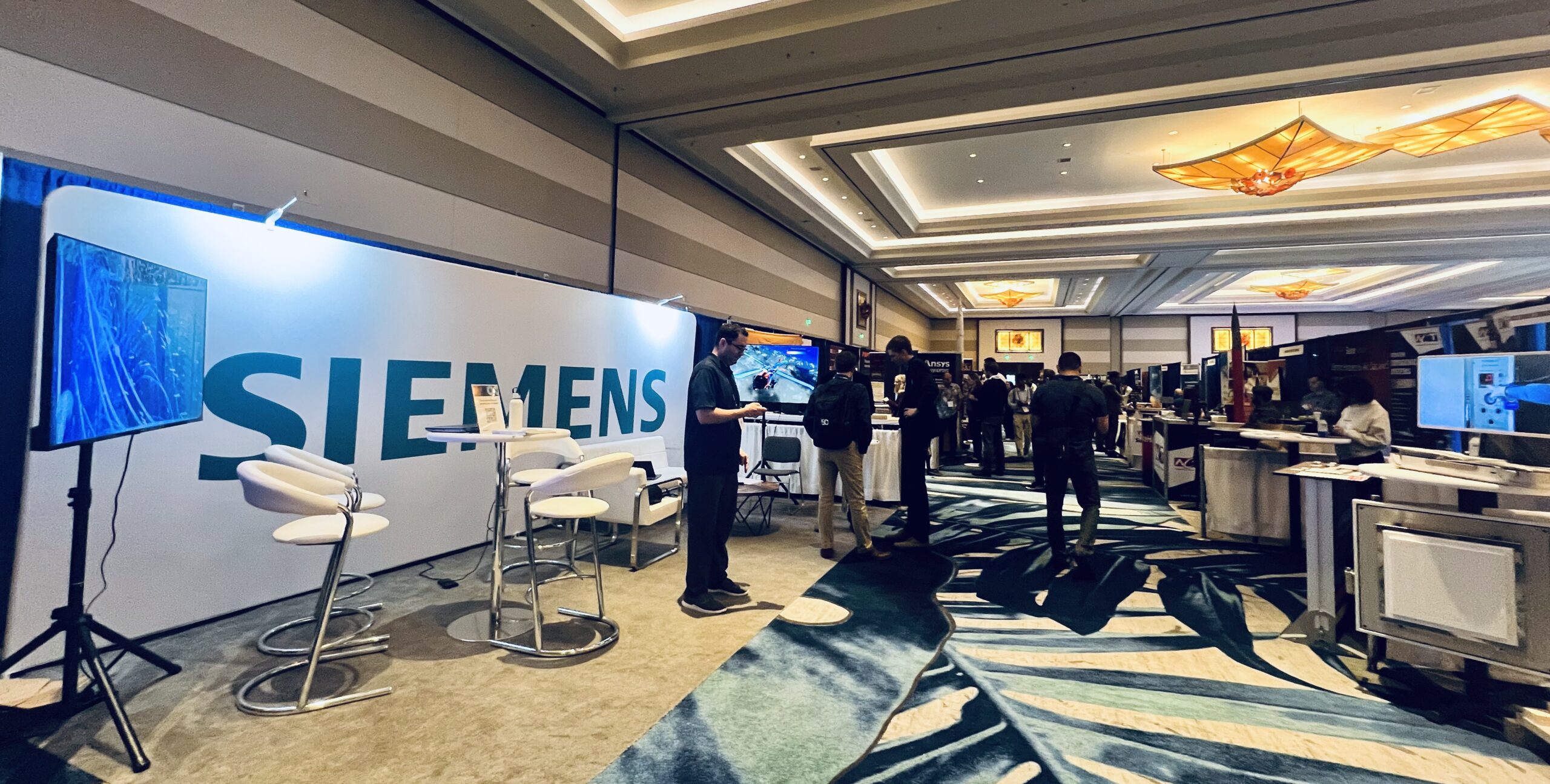
Siemens’ booth at the AIAA SciTech Forum 2026. Image courtesy of 3DPrint.com.
3D Printing as Part of the Workflow
At AIAA SciTech 2026, 3D printing proved to be a big part of how aerospace work is already being done.
Some booths were clearly focused on AM, including VulcanForms, Lithoz, Fathom, Lab AM 24, and Zeiss. But just as often, though, 3D printing would show up indirectly, through conversations about inspection and metrology, materials performance, robotics, autonomy, simulation-to-flight workflows, and workforce training.
Perhaps that’s why 3D printing didn’t feel quite like a novelty: it wasn’t introduced or explained; it was already assumed. And that made SciTech especially interesting, because it was clear that 3D printing is becoming part of how aerospace operates, one piece of a broader aerospace workflow.
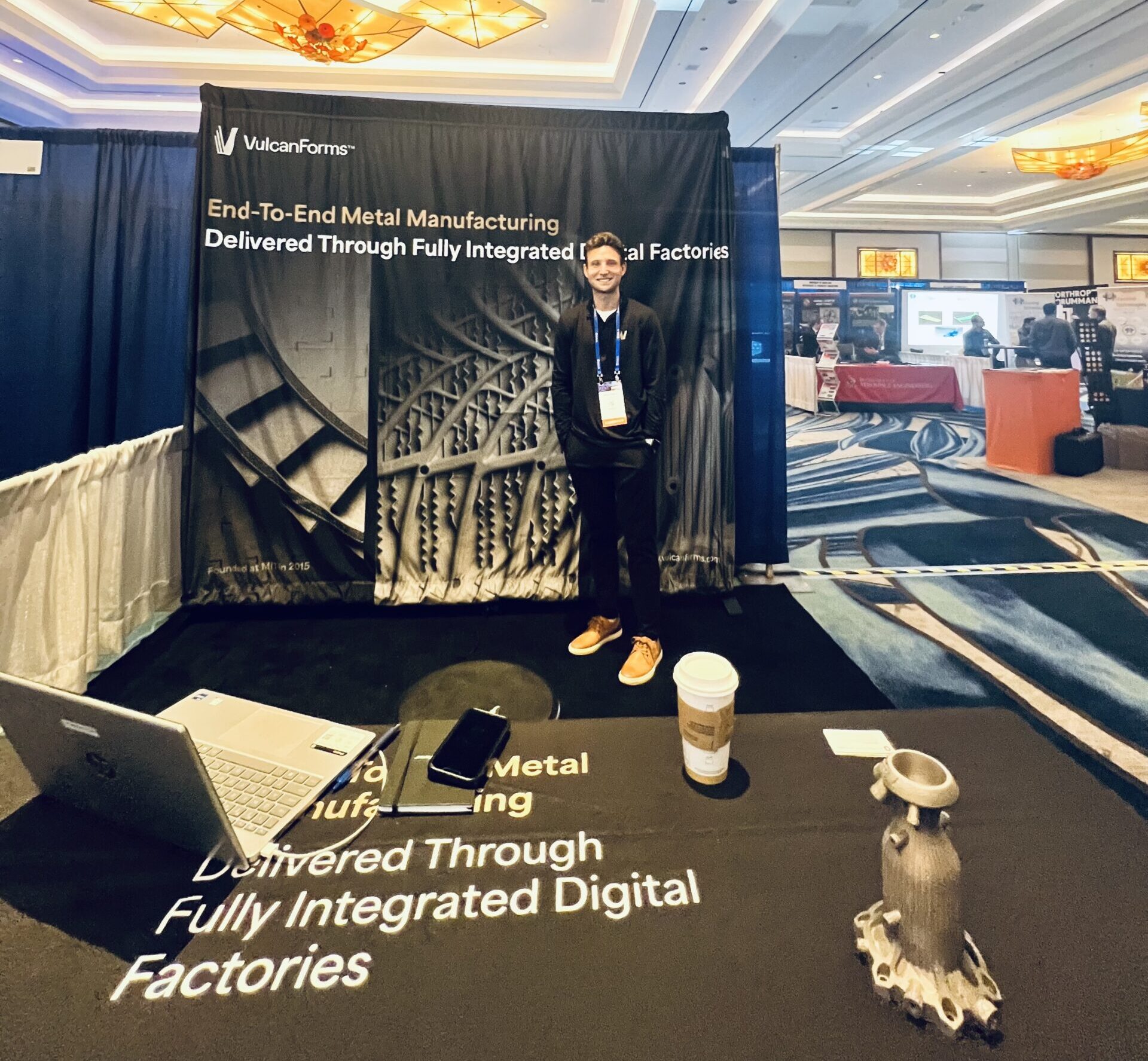
VulcanForms booth at the AIAA SciTech Forum 2026. Image courtesy of 3DPrint.com.
That same shift, from experimentation to production, was easy to see on the show floor.
At the Fathom booth, Chris Brown and Andrew Sonier told me how the company has transitioned a major facility in Wisconsin into a dedicated aerospace and defense operation, complete with ITAR registration, AS9100 certification, and a growing metal AM footprint.
Fathom is using metal 3D printing paired with in-house CNC finishing to produce parts for satellites, high-altitude aircraft, UAVs, and other aerospace systems, often moving directly from design to DMLS production, followed by machining, heat treatment, and coating under one roof.
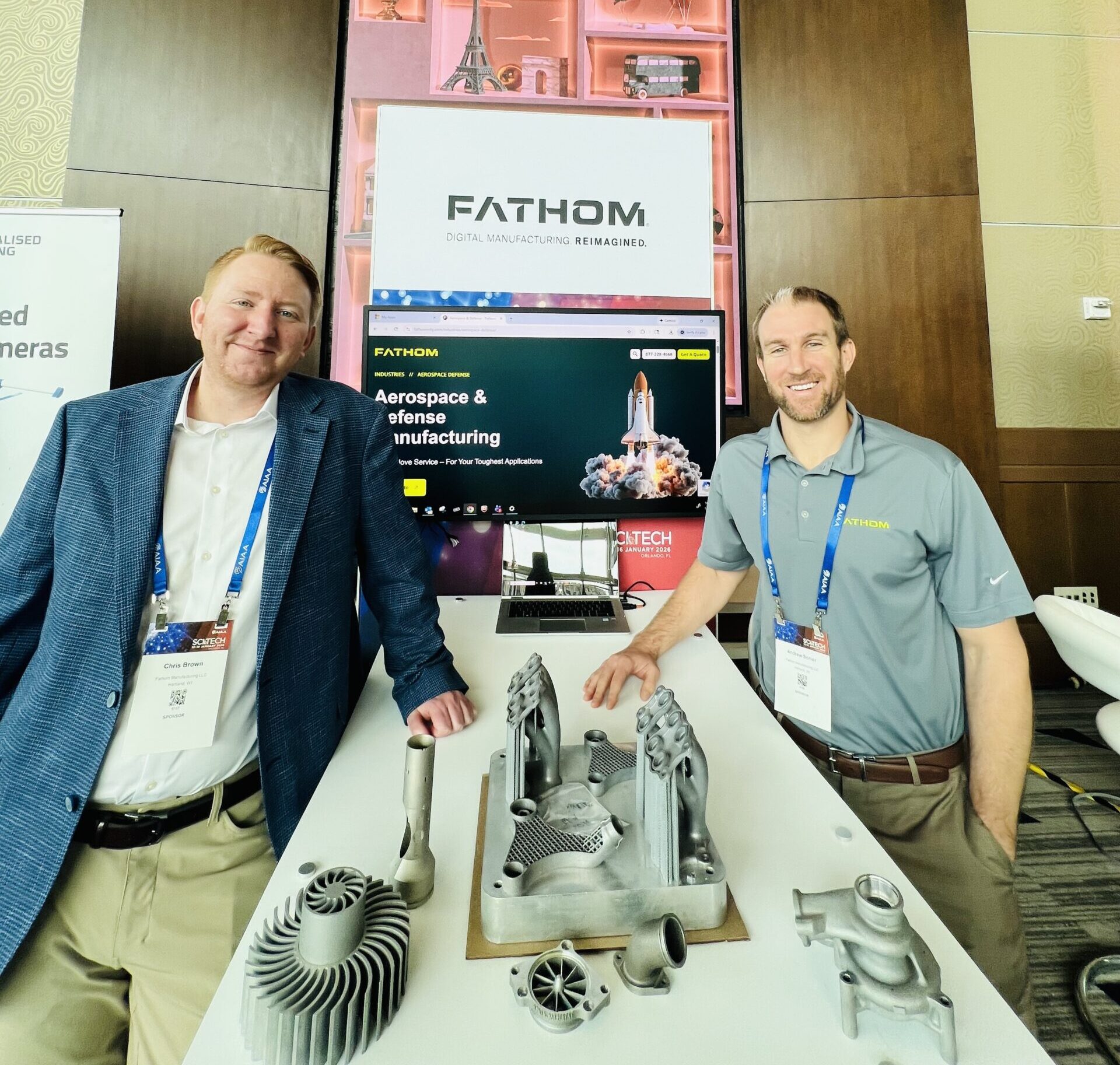
Fathom was at the AIAA SciTech Forum 2026. Image courtesy of 3DPrint.com.
One theme stood out: designing for additive from the start. As the technology matures, AM is increasingly used from design through production, particularly for low- to mid-volume aerospace and defense parts.
That change is especially clear in drones and one-time-use systems, where AM supports lightweight designs, quick iteration, and costs that injection molding or casting can’t match.
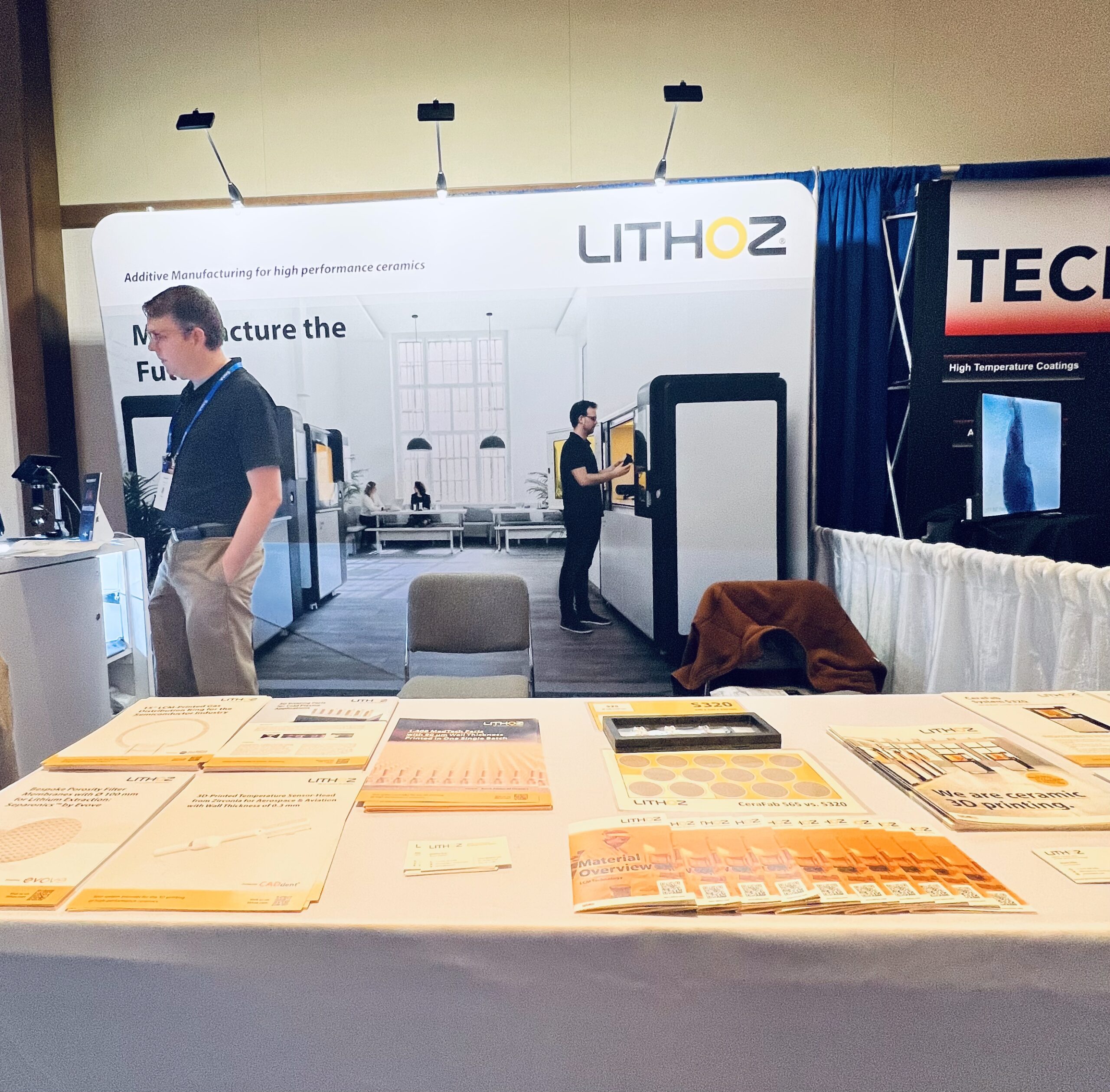
Lithoz’s booth at the AIAA SciTech Forum 2026. Image courtesy of 3DPrint.com.
Beyond the most well-known companies at the event, AIAA SciTech also focused on how startups are pushing AM in new directions.
One example was Lab AM 24, a South Korea–based company focused on wire-based directed energy deposition. At their booth, designer Christy Zo explained the company’s core hardware: “We make the 3D printing head. This head also includes the laser system, the feeding system, and the gas system as well.”
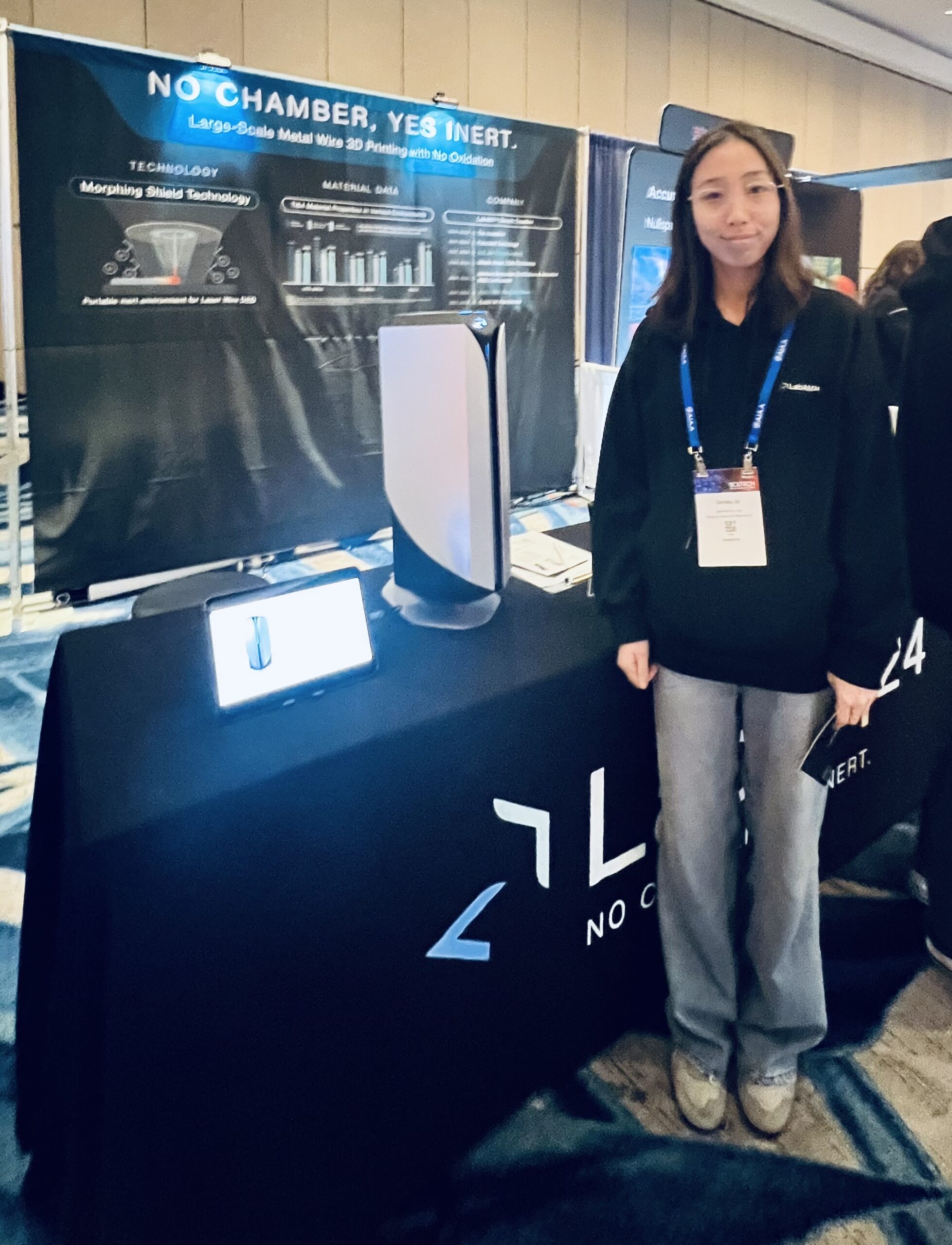
Christy Zo from Lab AM 24 at AIAA SciTech Forum 2026. Image courtesy of 3DPrint.com.
Lab AM 24’s approach tackles a familiar challenge in metal AM: the size, cost, and limitations of large enclosed chambers. Instead, the company uses a portable shielding system that creates an inert environment right at the print head. By dynamically controlling argon flow around the deposition zone, reducing oxygen to below 20 ppm, the system matches the protective conditions of a chamber without the time, space, and cost penalties of building one. This kind of setup can typically be ready in under a minute, opening up opportunities to 3D print large metal parts in areas where chamber systems simply wouldn’t fit, explained Zo.
The technology has already drawn interest from aerospace and defense customers, and AFRL has supported its research.
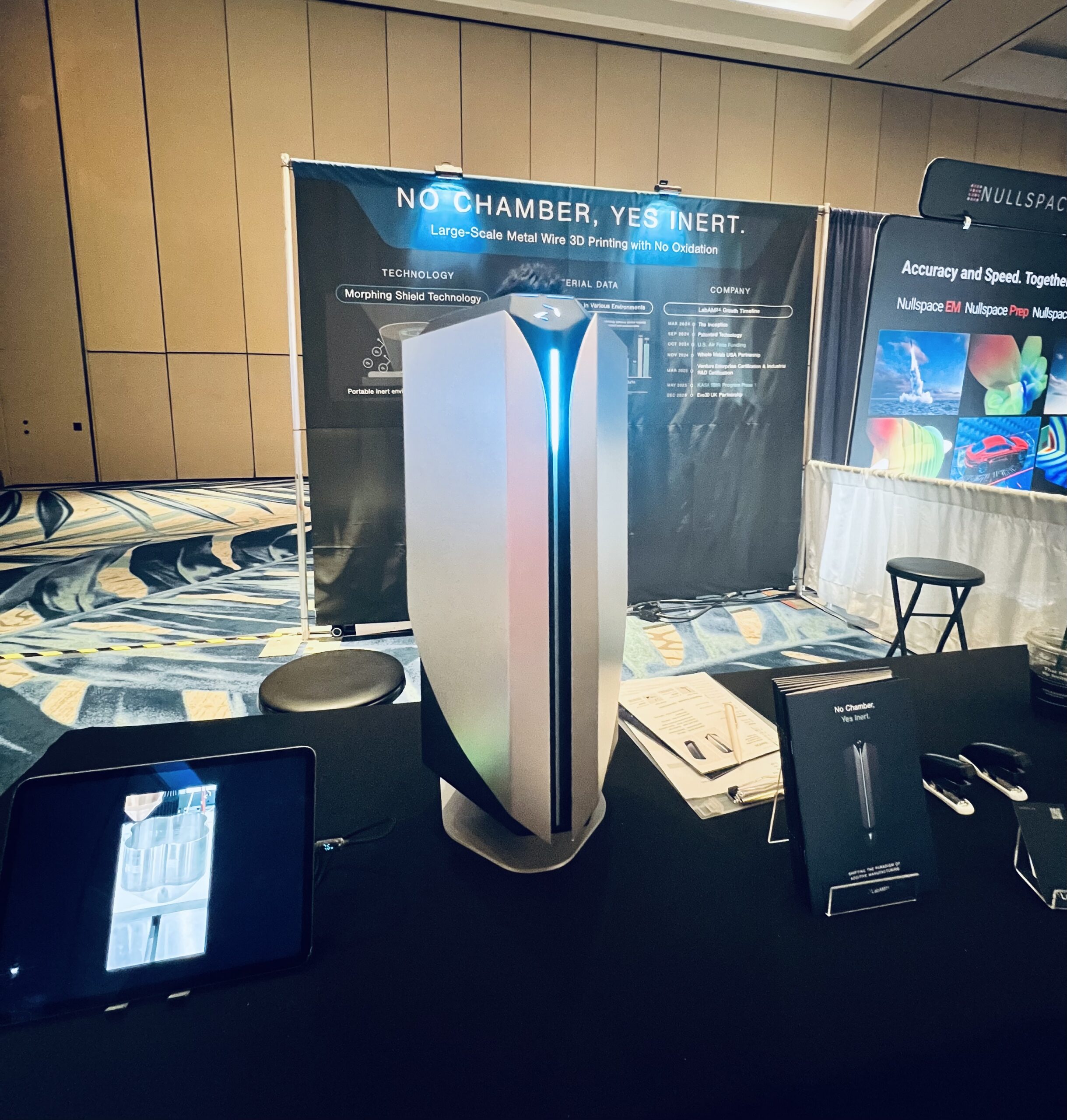
The portable system on display at Lab AM 24’s booth at AIAA SciTech Forum 2026. Image courtesy of 3DPrint.com.
Examples like this showed up across the event — in focused meetings and technical sessions — where AM was focused more on practical progress than on any single breakthrough.
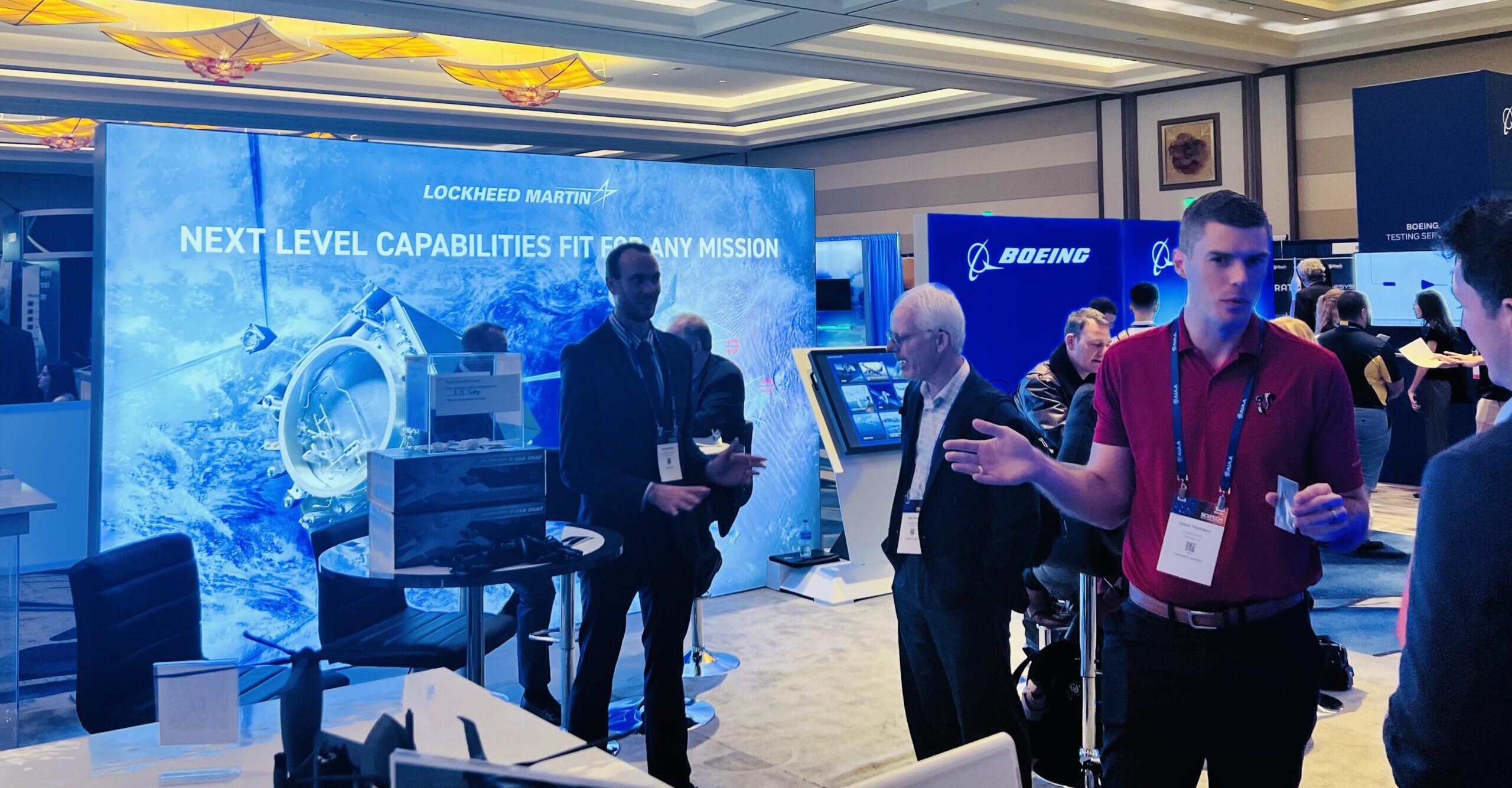
At AIAA SciTech 2026, 3D printing showed up across the event as part of how aerospace work is already done. That quiet presence may say more than any headline.
This is the first article in a two-part series from the event.
🏷️ p3d_feed