University of Glasgow Researchers Develop 3D Printed Compostable Electronics
⚓ p3d 📅 2026-01-27 👤 surdeus 👁️ 19

Recycling is one of those things that people support, but, for the most part, don’t actually do. If it sounds like I’m being judgmental, let me be the first to admit that I’m part of the problem.
However, it’s not just an issue of people knowing something is the right thing to do, but being too lazy to actually do it. As it turns out, “the system” is largely to blame. But there are limited resources to go around, and all materials that can be recycled are currently being under-recycled. So if the system is going to be changed, what should the first step be?
E-waste is as good an answer as any, since it’s “one of the fastest growing solid waste streams in the world”, and its effects are disproportionately harmful. Researchers at the University of Glasgow have given the world a gift with their development of 3D printed circuit boards that aren’t only recyclable, but also compostable.
Publishing the results of their study under the title ‘Additively manufacturing printed circuit boards with low waste footprint by transferring electroplated zinc tracks,’ the engineers replaced copper with zinc, and printed the circuits onto substrates like paper and bioplastics. According to the team, 99 percent of the materials comprising the circuit boards “can be disposed of safely through ordinary soil composting or by dissolving in widely available chemicals like vinegar.”
The University of Glasgow scientists successfully tested the concept across a number of different use-cases, like tactile sensors, LED counters, and temperature sensors. Their work is one example of the activity happening at the university’s Responsible Electronics and Circular Technologies (REACT) Center, sponsored by UK Research and Innovation (UKRI).
In a press release about the University of Glasgow research team’s development of 3D printed, compostable circuit boards, the lead author of the paper based on the study, Dr. Jonathon Harwell of the James Watt School of Engineering, said, “The work demonstrates a major step toward circular electronics, where devices are designed from the outset for reuse, recycling, or safe degradation. Discarded devices already generate tens of millions of tons of waste annually, sour research could have far-reaching impacts for consumer electronics, internet-of-things devices and disposable sensors in the future.”
Another of the paper’s authors, Professor Jeff Kettle, also of the James Watt School of Engineering, said, “One key aspect of our work is that almost any substrate material can be used…We are now exploring ways to adapt this technique to other fields such as moldable electronics or biosensing, which could also benefit from a cheap and versatile way to make high quality circuits with low environmental footprints.”
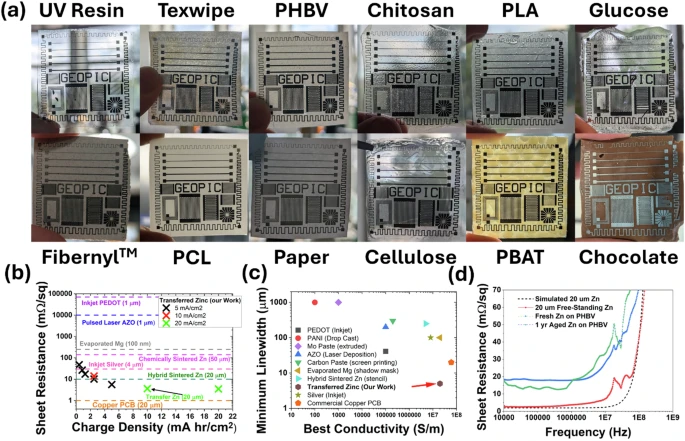
The most impressive aspect of the project is that the researchers didn’t focus solely on the science. They also focused on the practical reality of making the recycling process as accessible as possible. I think that the broader AM industry should pay more attention to the electronics market segment, and easy-to-recycle circuit boards is a way to do that.
Additionally, the University of Glasgow team hit the nail on the head with the specific applications they addressed. The world is about to be even more awash in drone trash than it already is, but drones are also increasingly being used for waste management. All the uses that the team referenced could be incorporated into drone supply chains, which, at scale, would help producers of waste management drones make the case for the sustainability of their own sourcing practices.
As I mentioned in a recent post about American Rheinmetall’s order of prototypes from IperionX that were made with recycled titanium, the Pentagon has become an unexpected patron of AM recycling projects, insofar as they enhance the autonomy of the domestic manufacturing base, not just sustainability. Since the Pentagon is one of the world’s foremost adopters of 3D printed electronics, the zinc-based circuits would fit perfectly with the DoW’s emerging technologies strategy.
Anyone interested in 3D printed electronics should certainly consider attending Additive Manufacturing Strategies (February 24-26 in New York City). On the final day, Scott Miller, the Director of Technology at NextFlex, will provide attendees with a view on the latest developments in additive electronics, and I’ll be moderating a panel, “Additively Manufactured Electronics at Scale.” You can register for AMS 2026 here.
Images courtesy of the University of Glasgow
🏷️ p3d_feed