Cybersecurity: A Necessity in a Maturing Additive Manufacturing Industry
⚓ p3d 📅 2026-01-28 👤 surdeus 👁️ 24

Additive Manufacturing is no longer an experimental technology operating on the margins of industrial production. Over the past decade, it has become an integral part of how OEMs design, produce, and support products across aerospace, energy, transportation, and heavy industry. What began as a tool for prototyping is now used to manufacture end use parts, support global operations, and respond to supply chain disruptions with unprecedented speed. As additive manufacturing matures, however, its digital nature is exposing a critical vulnerability. Every printed part begins as data. CAD models, build files, material parameters, and process know-how are now the primary assets driving value in additive manufacturing. When production is distributed across service bureaus, contract manufacturers, or remote sites, these assets move beyond the traditional boundaries of the organization, and without proper safeguards, the risks extend beyond file loss to the integrity of production itself.
In unsecured additive manufacturing environments, cyber-digital threats tend to unfold gradually rather than as a single isolated event. What may begin as unauthorized network access can quickly escalate into data breaches that expose sensitive build files or proprietary process knowledge. In more severe cases, ransomware or malware can interrupt access to build files altogether, bringing production to a standstill at the moment parts are most urgently needed. Beyond outright disruption or theft, a more subtle and dangerous risk is emerging, interference with the digital thread itself. By tampering with build files, digital twins, or production instructions, attackers can influence how a part is manufactured while leaving the file seemingly legitimate. Such changes often go unnoticed during production and may only become apparent once the part is already in use, eroding confidence in both product quality and operational safety. These risks are increasingly acknowledged by leading industrial 3D printer vendors, including Nikon SLM Solutions, EOS, HP, and others, who are adapting their systems to address cybersecurity threats through hardened connectivity, access controls, and software-level protections as additive manufacturing transitions from prototyping into full-scale production.
Unlike traditional cyber incidents, the impact of such attacks does not remain confined to data. In additive manufacturing, digital compromise can translate directly into physical consequences. Deliberate insertion of defects, minor changes to geometry, manipulation of build orientation, or interference with material parameters can significantly weaken a part without leaving obvious visual indicators. Firmware tampering adds another layer of exposure, allowing malicious actors to interfere with machine behavior, sensor feedback, or process controls. For OEMs operating in regulated or safety critical environments, these cyber physical threats can result in equipment failure, unplanned downtime, regulatory violations, or safety incidents.
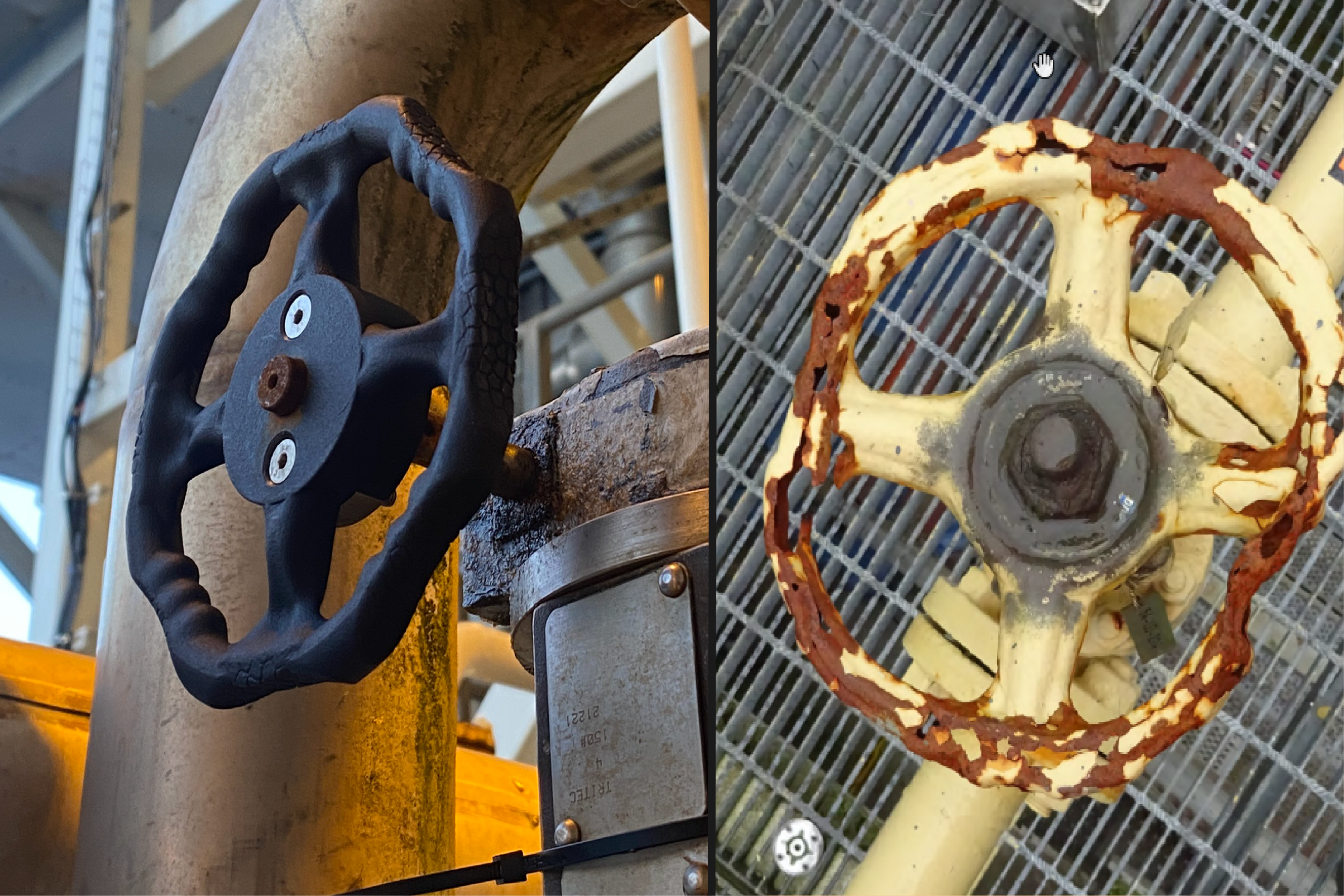
As additive manufacturing continues to scale, these risks increasingly extend into the supply chain. OEMs depend on external service bureaus, contract manufacturers, and remote production sites to achieve flexibility and speed, but distributed environments also expand the attack surface. Compromised partners, unauthorized users, or rogue actors can exploit unsecured workflows to reuse build files, modify designs, or initiate illegal production runs. Counterfeit or unapproved parts may enter the market without the OEM’s knowledge, making traceability and accountability difficult after the fact. In this context, cybersecurity and supply chain risk become inseparable, and protecting individual files or machines is no longer sufficient. Recent investigations involving major global aerospace OEMs have highlighted how counterfeit or improperly sourced materials, including critical titanium components, were able to enter aerospace supply chains despite strict regulatory oversight, underscoring that even the most mature manufacturing ecosystems remain vulnerable to supply chain compromise.
To operate securely at scale, additive manufacturing requires protection across the entire digital thread. Securing a single file or printer is not enough. OEMs need end to end control over who can access their data, where production can occur, and under what conditions a part is allowed to be manufactured. This level of governance is only possible through a centralized platform approach. OEMs across aerospace, defense, energy, and automotive sectors, including Boeing, Lockheed Martin, and Siemens Energy, have publicly stated in recent years that protecting the digital thread and securing additive manufacturing workflows are critical requirements for scaling industrial and distributed production. Similar positions have been echoed by leading automotive manufacturers as additive manufacturing moves closer to serial production. Assembrix addresses this challenge with a secure additive manufacturing platform designed specifically for distributed production. Instead of sending files directly to printers or external partners, OEMs manage production through a controlled digital environment. Build files are encrypted, access is restricted to authorized users and machines, and each print job is executed under predefined rules set by the IP owner. Sensitive data is never exposed as open files, even when production takes place remotely, while real time visibility and full traceability allow OEMs to monitor production, maintain audit trails, and ensure consistency across sites.
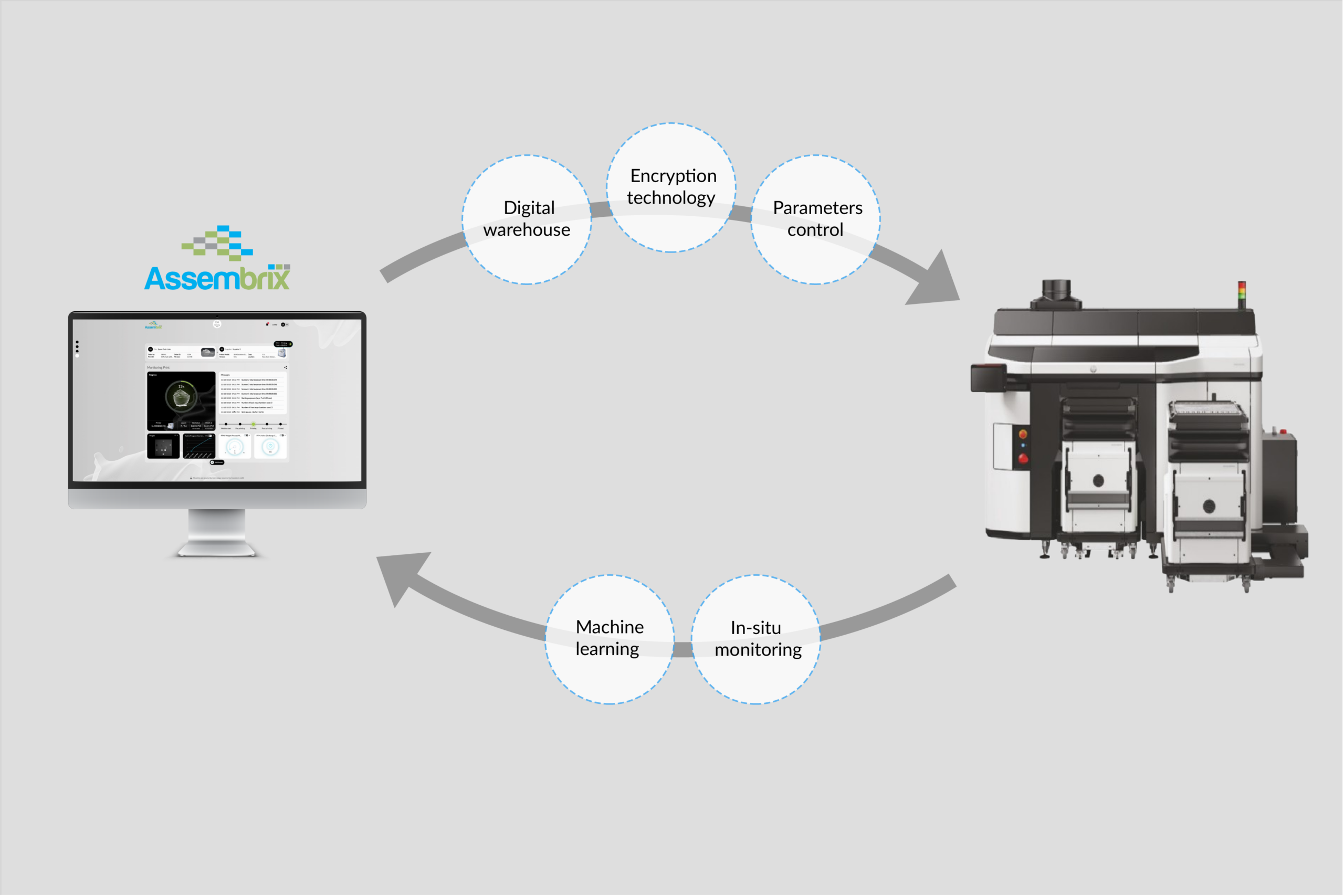
The impact of this approach is already visible in demanding industrial environments. In the oil and gas sector, where downtime is costly and spare parts are often required urgently, secure remote printing has enabled certified parts to be produced locally across multiple regions. Instead of waiting months for physical deliveries, companies can distribute production digitally and manufacture parts near the point of use. By embedding security into the manufacturing process, they achieve faster response times while preserving intellectual property and quality standards. These real world examples demonstrate that cybersecurity does not slow additive manufacturing down. It enables the flexibility and scalability that the technology promises, transforming additive manufacturing from a localized capability into a resilient global production strategy. As the industry continues to mature, cybersecurity will increasingly define who can fully realize the potential of additive manufacturing. The future of manufacturing is digital, distributed, and connected, and ensuring that it is also secure is no longer optional, it is essential.
Authored by Lior Polak, a co-founder and CEO of Assembrix Ltd. Lior co-founded Assembrix after gaining 20 years of hands-on experience in technology management. He managed high-performing teams in enterprise software, e-commerce and cyber security industries, ranging from start-ups to multinational corporations. Prior to co-founding Assembrix, Lior was a director of marketing and business development at the cyber and intelligence division of NICE Systems. Before that, Lior held marketing and product management positions at OpenTV UK. Lior holds a BA in economics and business administration from Bar Ilan University and an MBA from INSEAD, France.
Assembrix is a Silver Sponsor for Additive Manufacturing Strategies (AMS), a three-day industry event taking place February 24–26 in New York City. Lior will present on “Cybersecurity: A Necessity in a Maturing AM Industry,” on February 24. Registration for the event is open via the AMS website.
🏷️ p3d_feed