Friendshoring and Additive Manufacturing: Turning Australia’s Research Strength into Commercial Impact
⚓ p3d 📅 2026-02-09 👤 surdeus 👁️ 7

Global supply chains are being re-written. After decades of globalisation driven primarily by cost efficiency, geopolitical tensions, trade disputes and pandemic-era disruptions have exposed the risks of concentrating manufacturing and critical materials in a small number of regions. In response, governments and industries are turning to a new strategy: friendshoring.
The term gained prominence in 2022 when then US Treasury Secretary Janet Yellen described friendshoring as working with “allies and partners” to strengthen economic resilience while maintaining productivity gains of economic integration. Rather than retreating from global trade, friendshoring reshapes it around trusted, politically and economically aligned partners.
For additive manufacturing (AM)—a technology already transforming how and where products are made—friendshoring presents a powerful opportunity, particularly for Australia.
Australia’s AM Paradox
Australia consistently ranks around fifth in the world for AM research output, driven by strong contributions from universities and CSIRO in areas such as advanced materials, process modelling, qualification frameworks and sustainable manufacturing.
Yet the country has long struggled to convert this strength into scalable, certifiable industrial production. COVID-19 exposed supply chain vulnerabilities and heightened interest in local manufacturing but scaling from laboratory innovation and factory-floor output remains challenging.
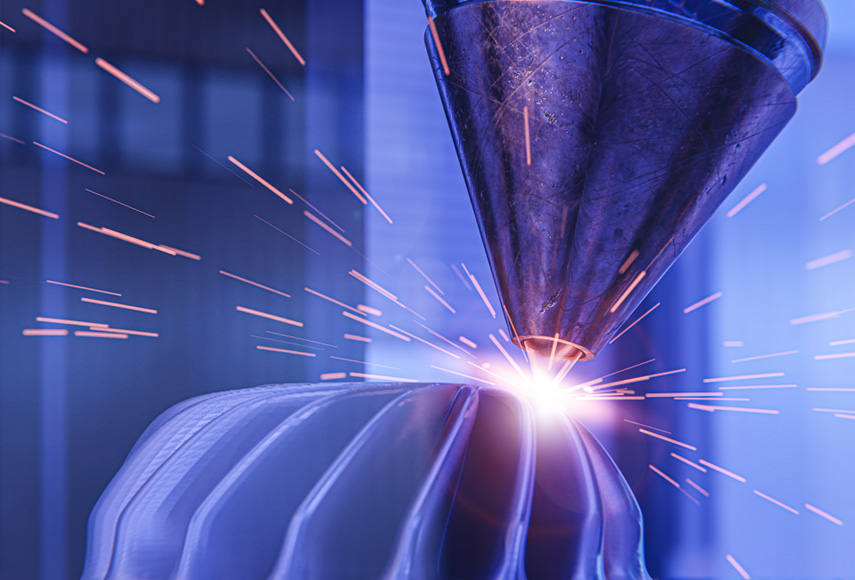
To help bridge this gap, the Additive Manufacturing Cooperative Research Centre (AMCRC) was established in 2025. Backed by $57.5 million in Commonwealth investment, it brings together 13 Australian universities, CSIRO and more than 60 industry and member organisations to drive industry-led research, workforce development and commercial pathways.
“As a nation, we are exceptionally good at innovating,” says Simon Marriott, Managing Director of AMCRC. “But too often, our ideas don’t translate into repeatable, certifiable production. That gap between research and deployment is where we need to focus.”
Why Friendshoring Fits Additive Manufacturing
Additive manufacturing is inherently digital, distributed and collaborative. Designs can be transferred securely, production can be localised, and supply chains can be shortened. These characteristics make AM well suited to friendshored manufacturing networks, where trusted partners share capacity and standards instead of competing solely on cost.
In practice, friendshoring in AM reduces exposure to single-source suppliers, improves access to certified production and accelerate commercialisation by linking research capability with large-scale manufacturing and market access.
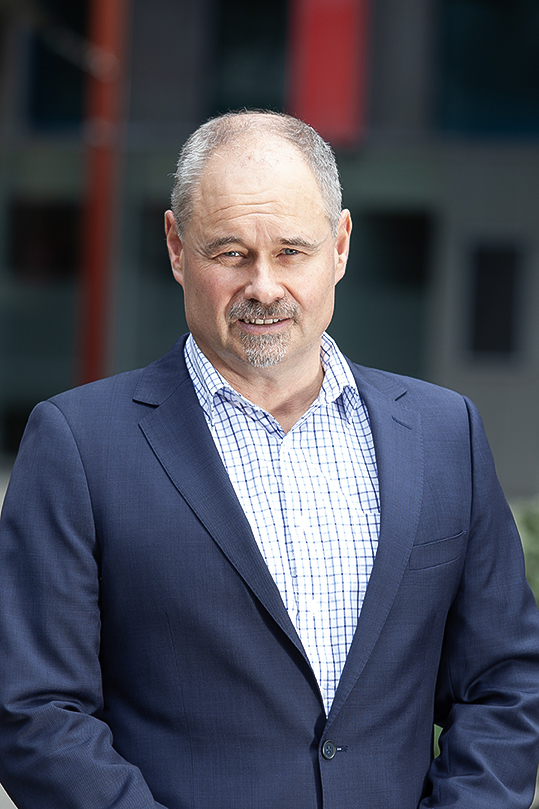
Simon Marriott, Managing Director of the Additive Manufacturing CRC
“Friendshoring allows Australia to plug into global ecosystems where our research strengths complement industrial capability,” Marriott says. “It’s about accelerating commercial outcomes through trusted partnerships.”
For Australian SMEs, these networks offer pathways to qualification, production scale and export markets that may otherwise unreachable. Companies such as SPEE3D, Titomic, Conflux Technology and Additive Assurance have built strong international footprints while maintaining domestic engineering and production bases. Titomic, for example, operates manufacturing cells in Australia, Europe and the United States, serving highly regulated sectors such as aerospace, defence and energy.
Friendshoring in Practise: Critical Minerals
Friendshoring is also reshaping access to strategic minerals. In October 2025, Australia and the United States signed a bilateral framework agreement to secure supply chains for critical minerals and rare earths – backed by more than US$2 billion in public investment toward an US$8.5 billion project pipeline across mining and processing.
Supported by Australia’s open foreign investment setting and the government’s Future Made in Australia strategy, which commits $22.7 billion over the next decade to support the net-zero transition and industrial capability, the agreement reflects a broader shift toward building end-to-end value chains with trusted partners.
From Dialogue to Delivery
While the shape of globalisation is changing, cooperation remains essential. Industry now needs less high-level dialog and more practical collaboration: shared infrastructure, joint demonstration programs and harmonised certification pathways.
“In additive manufacturing, qualification and consistency are often the biggest barriers to adoption,” Marriott says. “If we can validate processes across allied partners, we reduce the time it takes for new materials and technologies to reach market. At the same time, we support workforce mobility through common standards, equipment and digital platforms.”
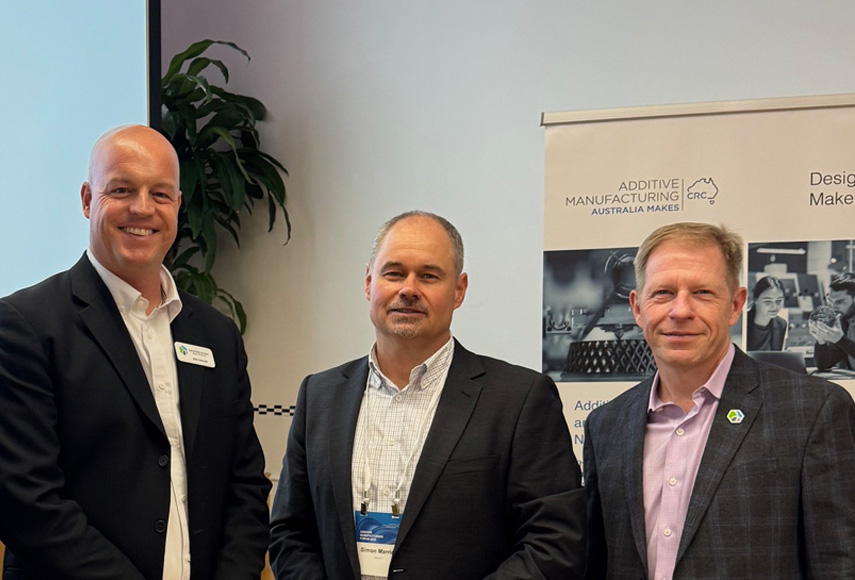
Simon Marriott posing with John Barnes and Eric Versluys
Technology, Sustainability and Future Supply Chains
Emerging technologies are strengthening the case for friendshored AM. AI-driven process optimisation, digital twins and secure data platforms are improving transparency, protecting intellectual property and streamlining quality control across distributed networks.
Sustainability is also becoming central to supply-chain decisions. Additive manufacturing reduces material waste, enables lightweight designs and supports localised production that lowers transport emissions.
A Strategic Opportunity for Australia
For Australia, friendshoring is not a substitute for local manufacturing but a pathway to strengthen and scale it. Embedding Australian innovators into trusted global AM value chains can accelerate research translation, attract investment and strengthen sovereign capability in critical sectors.
Additive manufacturing is redefining what supply chains look like in the 21st century. With strong research foundations and growing industry capability, Australia has an opportunity to position itself as a trusted manufacturing partner—turning research leadership into long-term industrial competitiveness.
AMCRC sees friendshoring not simply as a response to global risk, but as a strategic opportunity to build stronger, smarter and more resilient manufacturing for Australia’s future.
Simon Marriott is the Managing Director of the Additive Manufacturing CRC, bringing more than 30 years of experience across additive and advanced manufacturing to the role. He has held senior operational, strategic and board roles throughout Australia and the Asia-Pacific region, including leading the growth and eventual acquisition of Formero, a major polymer and metal AM service provider. Simon has also served as a director with organisations such as 3D Systems, Amaero, Titomic and the Innovative Manufacturing CRC, contributing to industry–research collaboration and commercialisation. With deep sector knowledge and extensive networks, he continues g to industry–research collaboration and commercialisation. With deep sector knowledge and extensive industry networks, he continues champion the adoption and impact of additive manufacturing across Australian industry.
Simon will be speaking at Additive Manufacturing Strategies (AMS) 2026 as part of the panel “International Reshoring and Friendshoring” on February 24th. The session is part of the broader AMS 2026 conference, which runs from February 24–26 and brings together industry leaders, policymakers, and innovators from across the global AM ecosystem. Learn more and register at AMS 2026.
🏷️ p3d_feed