Low-Temperature 3D Printed Shape-Memory Stents Activated at Body Temperature
⚓ p3d 📅 2026-02-12 👤 surdeus 👁️ 9

Researchers from Waseda University, the University of Tokyo, the University of Tokyo Hospital, Southeast University, and the South China University of Technology have worked together on developing low-temperature 3D printed vascular stents. Published in Advanced Functional Materials, “Adaptive 4D-Printed Vascular Stents With Low-Temperature-Activated and Intelligent Deployment” is important.
A made-to-measure functional stent geometry that can change shape would be easier to implant and could make stent procedures safer and easier, reducing surgical risk and the need for surgery. In this case, the team used my favorite material, polycaprolactone (PCL) and DEP (diethyl phthalate) as a plasticizer. PCL is often used for applications such as trachea fabrication; it is extruded somehow, but in this case, they used a micro-stereolithography (PµSL) machine. The material was optimized to have a class transition temperature at body temperature, which is smart.
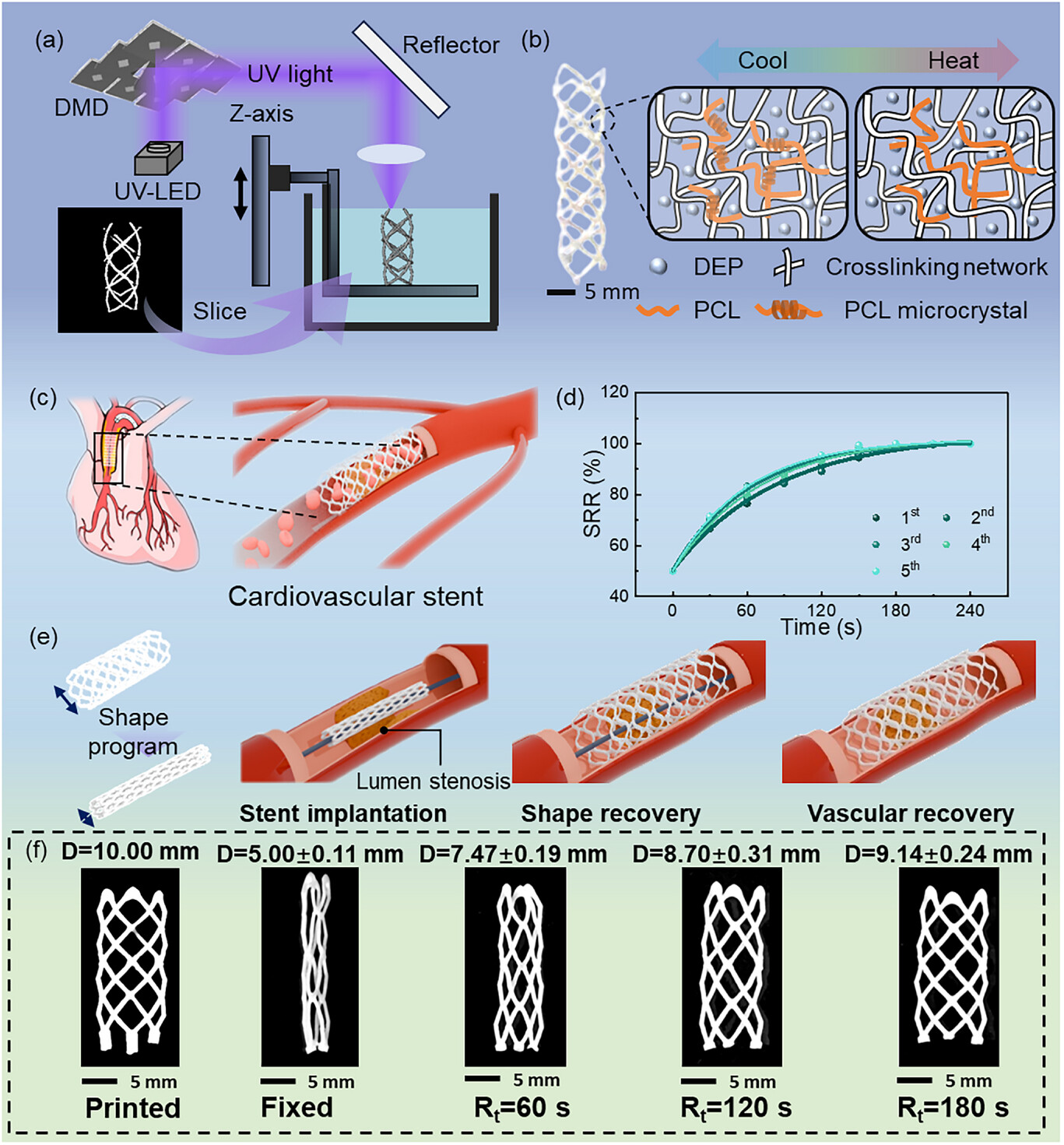
The stent they made is one meant to be used as a vascular stent. The stent is strong, very elastic, and biocompatible, and is meant to evolve into an implantable device. Used in the treatment of coronary heart disease, stents are a major business. What’s more, PCL is bioabsorbable, so the material could, in future iterations, be made to be completely reabsorbed.
Now the team, led by Waseda University’s Shinjiro Umezu, is making a stent that heats and changes shape once it’s in the body through body heat. I love this. The team used Blender to slice the stent, which is a powerful tool but would not be my first choice for this application. I couldn’t find the name of the 3D printer used.
The 10 mm-diameter, 10 mm-high stents were designed with 1 mm-diameter channels. First, the stents were put in 70°C water, then put in cold water for 5 minutes, and fixed. After they were reheated in water at 37 °C. The team also did in vivo experiments in mice as well as in vitro studies on umbilical cells.
Professor Shinjiro Umezu explained,
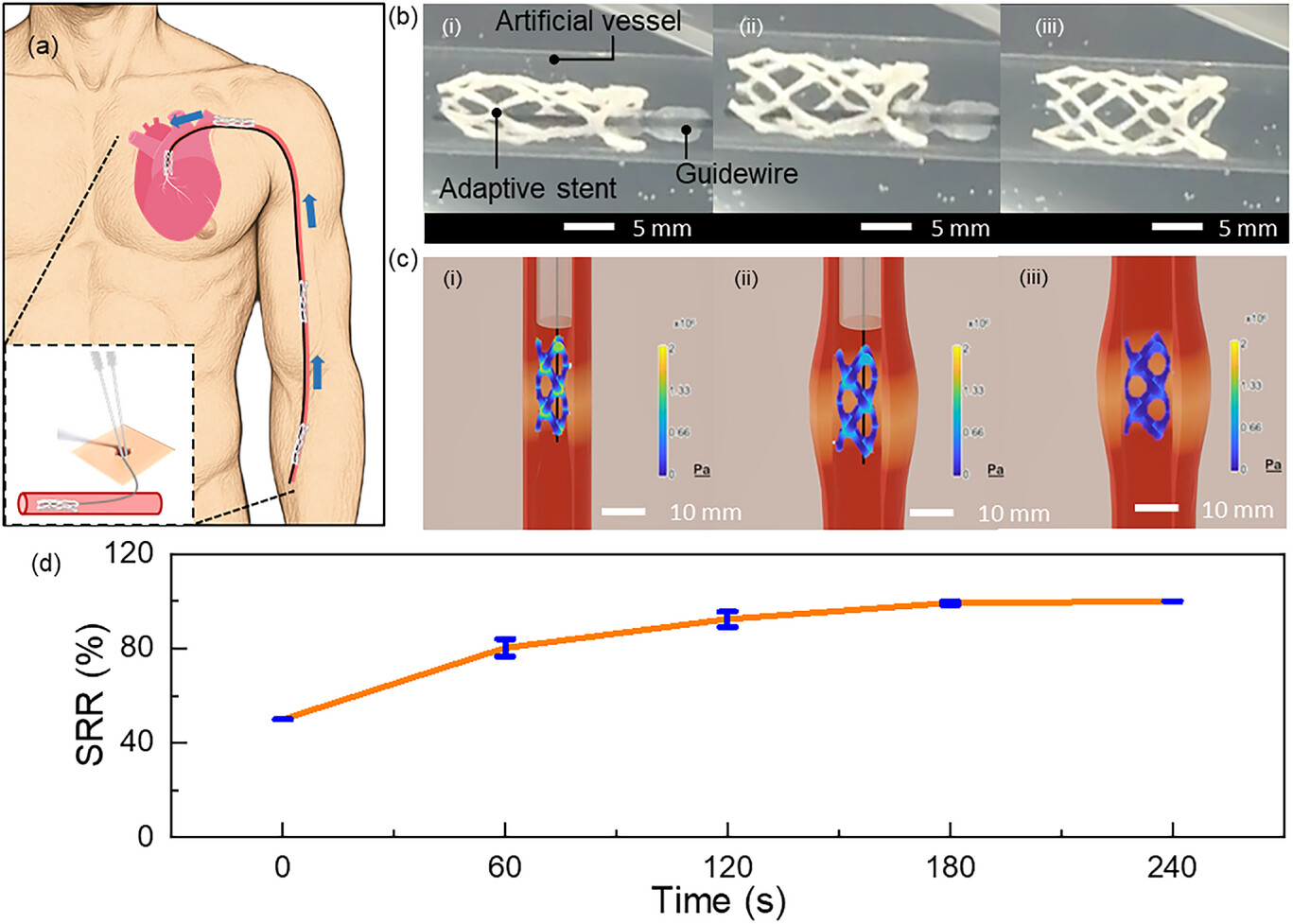
“Our work provides a robust platform for next-generation adaptive vascular stents with programmable mechanics, intelligent deployment, smoother integration with human body, and reduced need for complex procedures, offering significant potential for personalized treatment in anatomically complex vascular structure. Consequently, our research could contribute to future vascular stent technologies used in minimally invasive procedures, potentially simplifying deployment and reducing the need for additional equipment. The same approach may be applicable to other implantable medical devices that are designed to respond to the body’s natural environment.”
I think this is a great development. 3D printed PCL components could be a very safe alternative to a lot of therapies and devices currently. The material is very safe and has some wild properties. If you wanted to make a stent that could then subsequently bioabsorb once the treatment is done, then this could make things even easier and safer for patients. Just by making the stent change back to its shape in the body, the team has made a step forward. This could, if proven out, lead to a huge industry around shape memory stents. We do not yet know what industrial acceptance will be like, but if these could be coupled with simple, relatively safe procedures, they could have a lasting impact on the medical market.
Polymers in the body still scare a lot of companies. But in this case, we’re talking about a material that is safer and more temporary than others. I can really see a whole host of treatments emerge around these kinds of systems. For treatments that have to do with muscles and tendons, something like this could make a lot of sense as well. For oral and other cancers, such custom structures can also provide relief. I really think that this team is on to something, and I hope that much more research will follow.
🏷️ p3d_feed