StoneFlower 3D Launches Laboratory-Scale 3D Printer for Construction Materials
⚓ p3d 📅 2026-02-12 👤 surdeus 👁️ 10

StoneFlower 3D has launched a new 3D printer designed for laboratory-scale research and development with concrete, mortars, clays, and other advanced mineral materials. The system is intended for researchers, designers, and engineers who want to work with real construction materials in a controlled laboratory environment, without moving straight to large industrial machines.
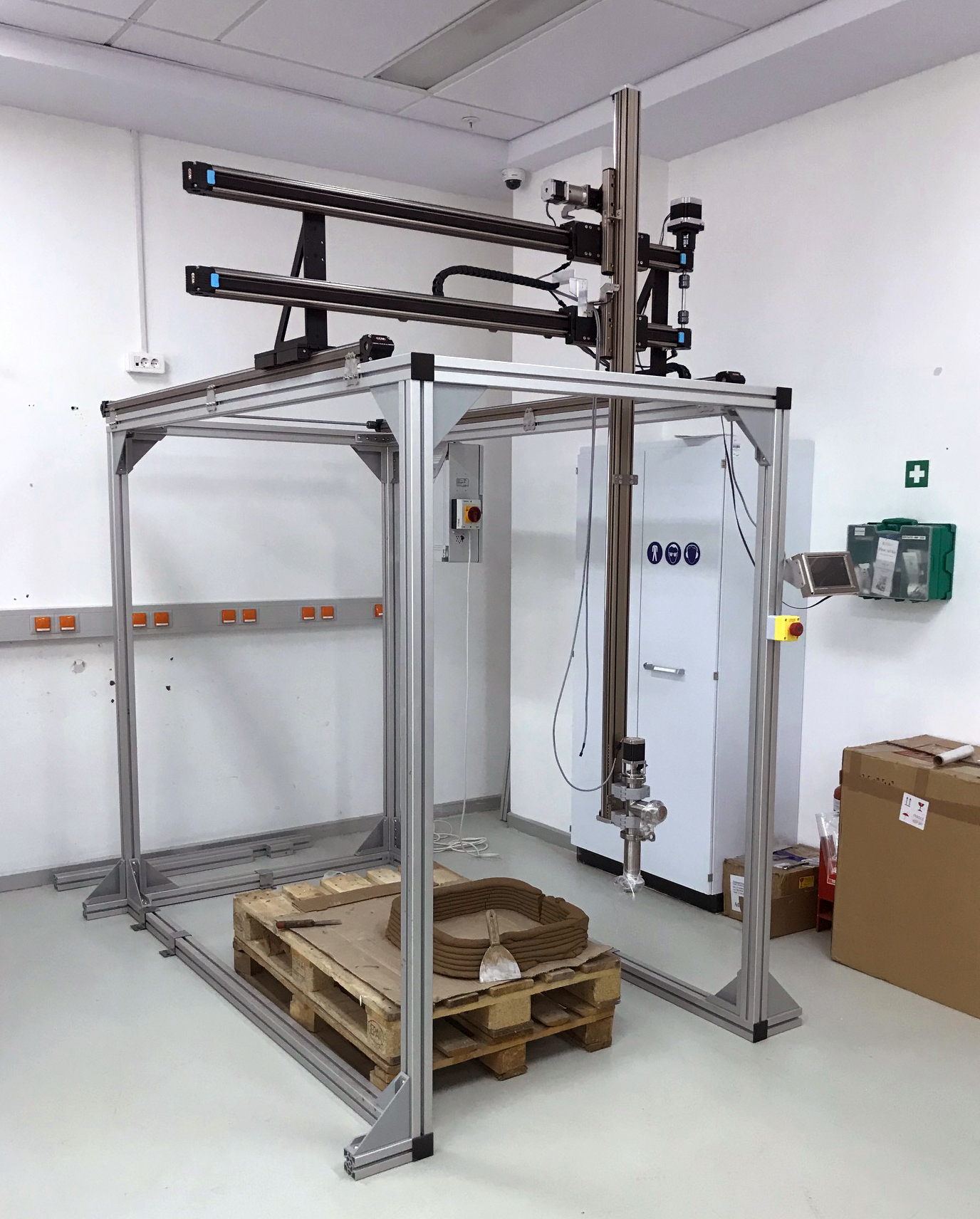
StoneFlower 3D’s laboratory-scale 3D printer.
Based in Munich, StoneFlower 3D says the new printer is built to bridge the gap between small-scale laboratory testing and full industrial production, allowing users to develop, test, and refine real construction materials before scaling up. Unlike many compact systems that rely on simplified materials, this printer can process real concrete mixtures, mortars with aggregates up to 6 mm, fiber-reinforced materials, foamed concrete, clays, porcelain, earth, and even certain biomaterials.
“This system enables researchers to test real concrete and mortar formulations using professional pumping and mixing equipment, while maintaining a compact and flexible laboratory footprint,” noted Anatoly Berezkin, founder of StoneFlower 3D.
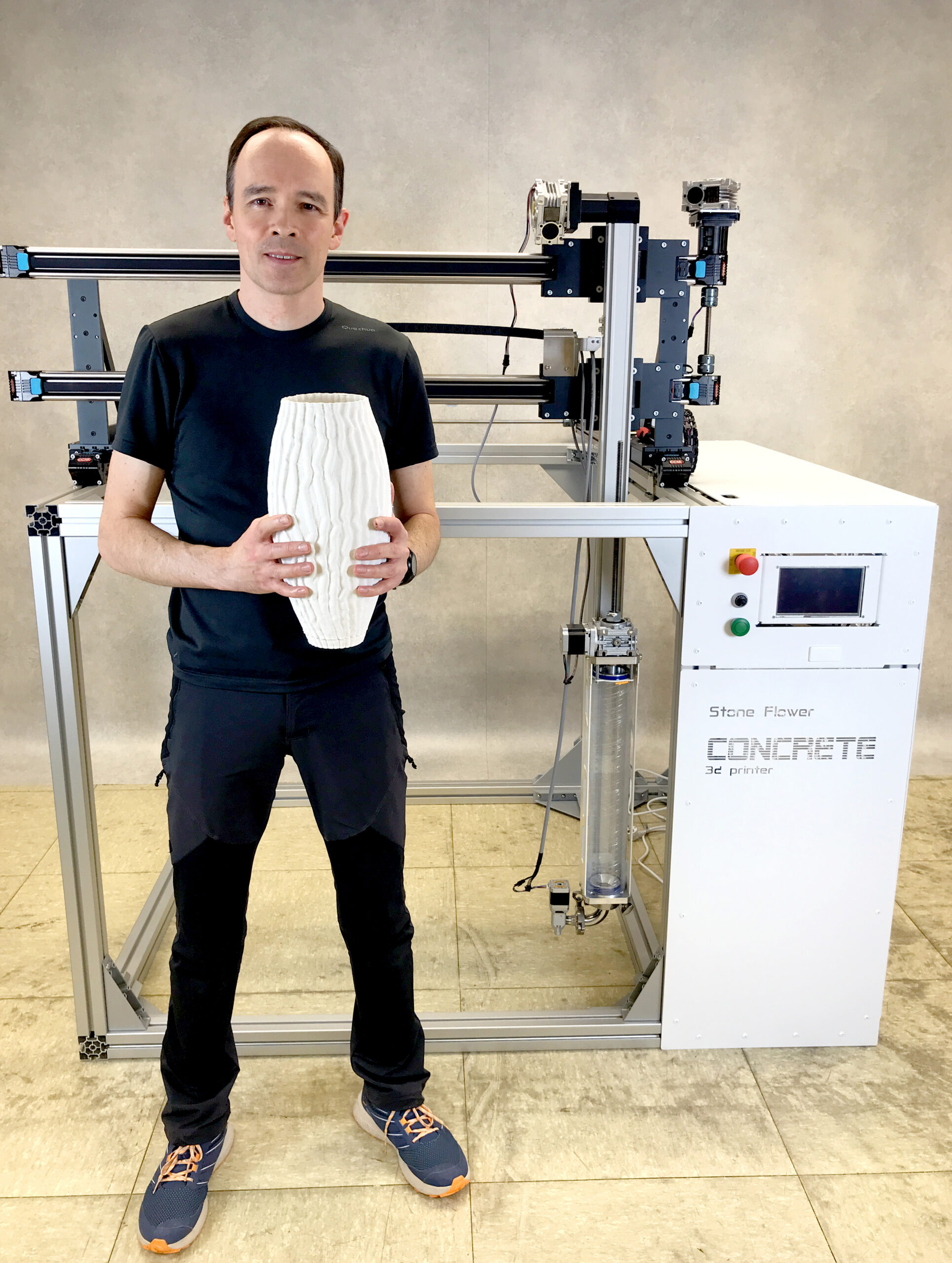
Anatoly Berezkin next to a laboratory-scale 3D printer.
One of the key features of the new printer is its customizable build volume. Instead of offering a single fixed machine size, StoneFlower 3D lets customers choose the printing area size to match their research needs and available lab space. Printing volumes can range from about 50 cm to 300 cm, depending on the configuration.
At the center of the system is a mixing print head that can handle both single-component and two-component materials, such as cement combined with an accelerator. The print head mixes the material continuously to keep the flow stable and can deliver up to 3 liters per minute, with printing speeds of up to 150 mm per second. This makes it possible to work with fast-curing and more complex materials that are difficult to process on simpler lab printers.
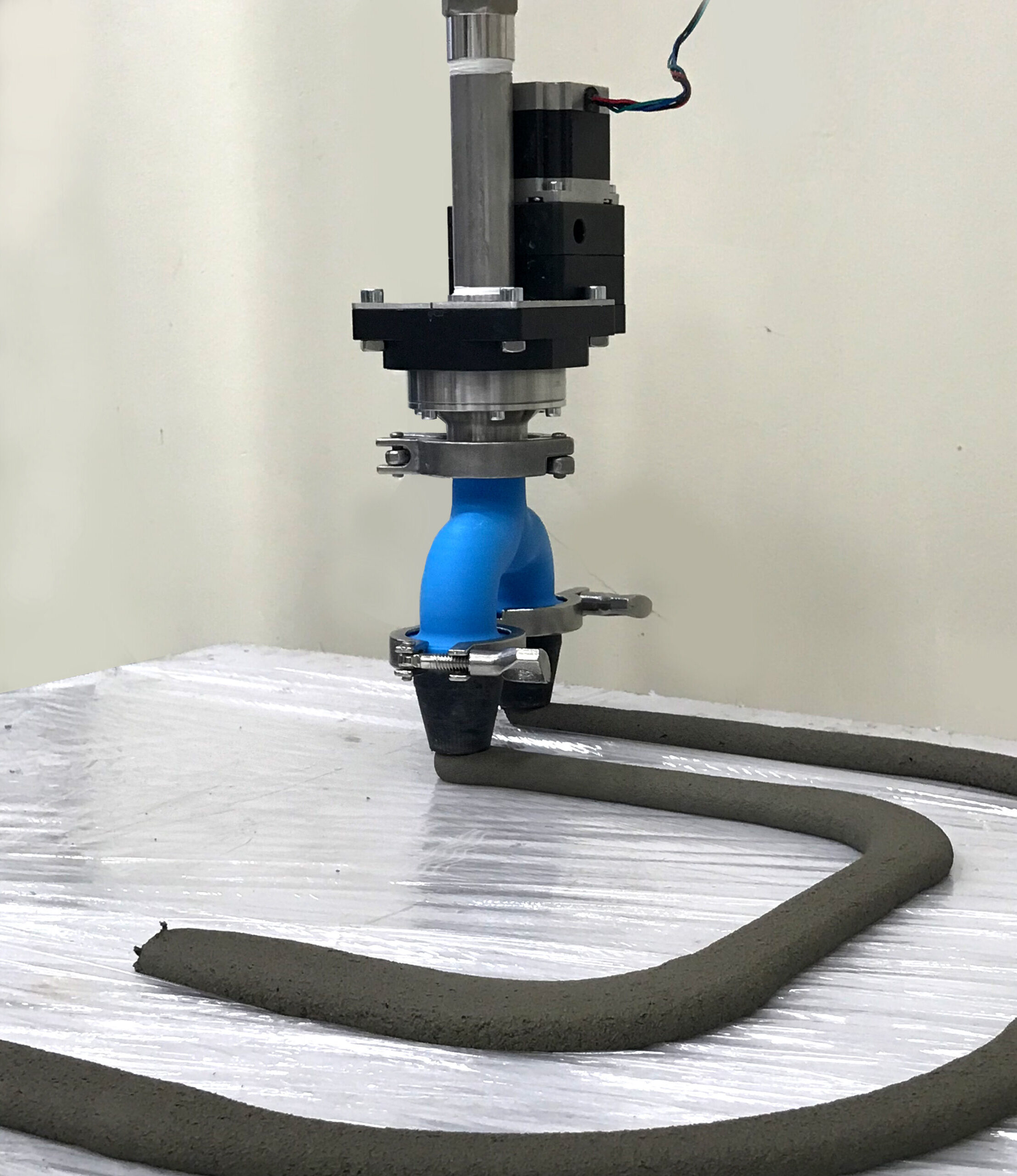
StoneFlower 3D’s laboratory-scale 3D printer in action.
The printer uses industrial-grade hardware and standard G-code, making it easy to operate and compatible with common slicing software. Users can control the system through a touchscreen or web interface, with a ready-to-use Cura setup included. Also, the system works with different material pumps, including a high-capacity mortar pump and a smaller ram extruder. This allows users to choose the setup that best fits their materials and printing process.
StoneFlower 3D expects the printer to be used across several areas. In research, it can support the development of new construction mixtures, composite materials, and biocompatible cements. In architecture and design, it can be used to create complex models and prototypes of façade elements or structural details. The system is also suitable for prototyping and small-batch production of functional concrete parts.
Pricing for the base configuration, which includes the printer frame and mixing print head, starts at an estimated €13,900. Final pricing depends on the selected build volume and pump system, and each order includes operator training.
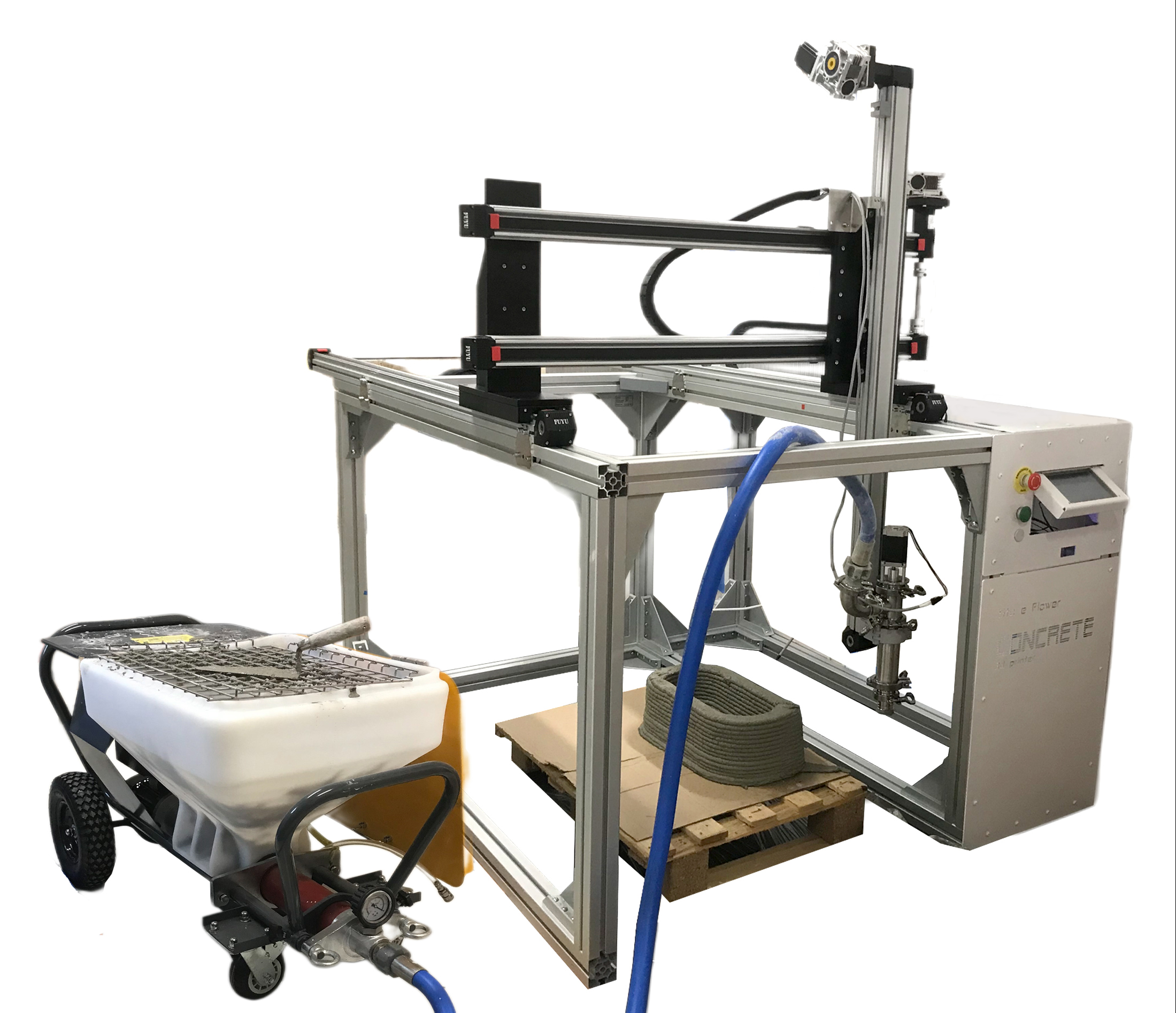
StoneFlower 3D’s laboratory-scale 3D printer.
StoneFlower 3D is not alone in targeting this space. Over the last few years, a small but growing group of companies has begun offering laboratory-scale concrete and mineral 3D printers, mainly aimed at universities, research labs, and early-stage product development teams. These systems exist between small clay or ceramic printers and full construction-scale machines from companies like COBOD or ICON, which are designed for printing buildings and large structural elements.
What makes this segment different is the focus on real material testing rather than final construction. Researchers and designers want to test real concrete mixes, fibers, aggregates, and fast-curing materials without having to invest in large industrial systems. Companies such as Deltasys E-Forming and Eazao also serve the laboratory-scale concrete 3D printing market, with systems aimed at research, education, and early-stage material testing. Meanwhile, companies best known for construction-scale concrete 3D printing, such as AC3D, have also introduced smaller platforms for research and testing, alongside their larger building-focused systems.
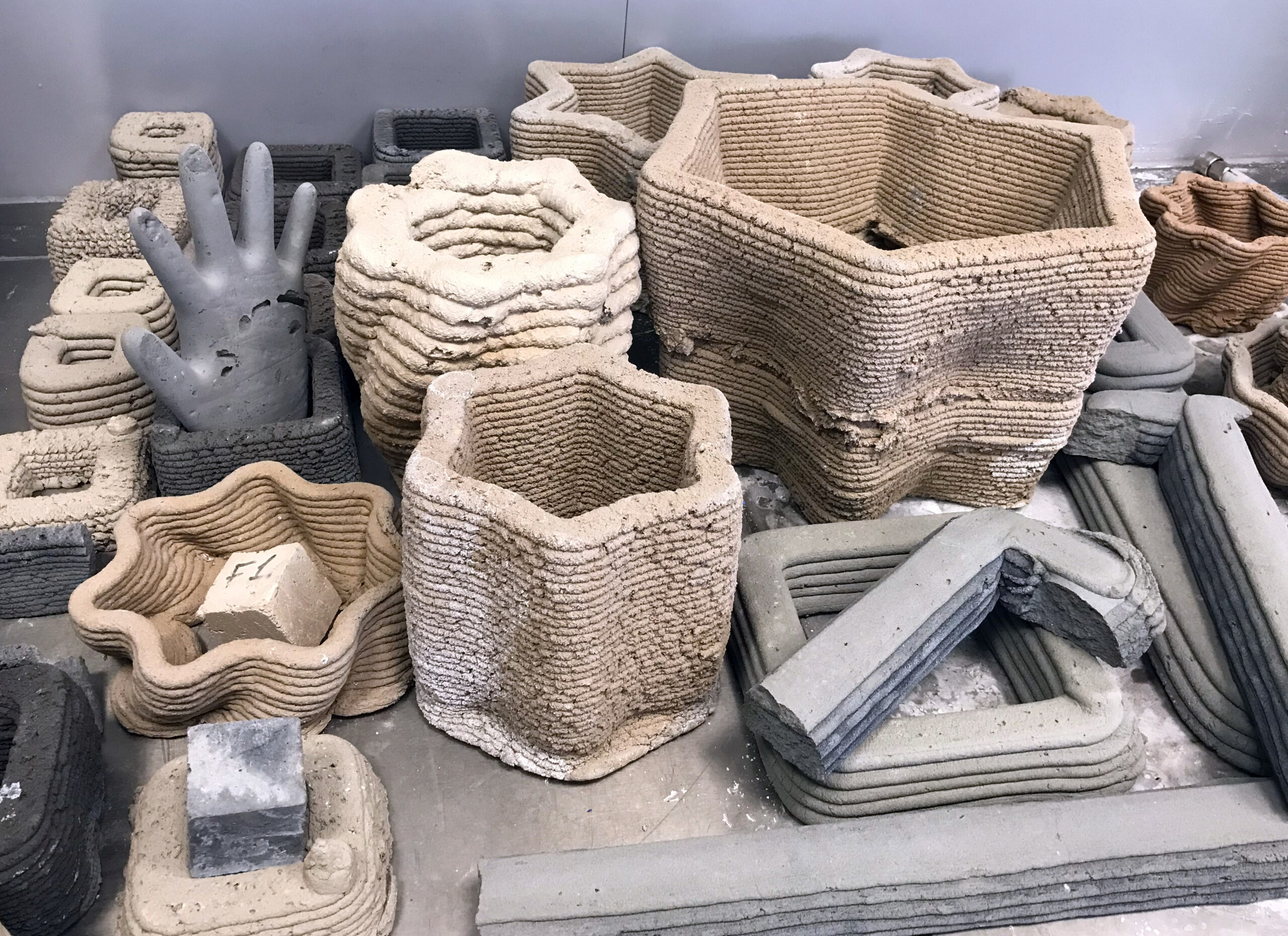
Applications for the laboratory-scale 3D printer.
For StoneFlower 3D, the emphasis is on flexibility. By offering customizable build volumes, support for industrial-style pumps, and both single- and two-component material processing, the company is positioning its system as a practical research tool rather than a scaled-down construction printer. As interest grows in printed concrete and other construction minerals, laboratory-scale tools help researchers, material developers, and designers explore and refine materials and processes before they move into full-scale industrial production.
Images courtesy of StoneFlower 3D
🏷️ p3d_feed