From Vision to Volume: The Next Chapter for Additive Manufacturing
⚓ p3d 📅 2026-02-18 👤 surdeus 👁️ 11

Additive manufacturing has spent years navigating skepticism, hype cycles, and industrial validation. Now, the industry finds itself at a decisive turning point. The conversation has shifted away from futuristic possibilities and toward reliable, repeatable, economically viable production. For Carbon CEO Phil DeSimone, this shift from experimentation to everyday manufacturing represents the most meaningful evolution yet, and the current momentum signals that the technology is moving from promise to real-world impact.
A Sector That Has Quietly Come of Age
When I first entered the industry more than a decade ago, AM was often framed as a disruptive force positioned to overturn traditional manufacturing overnight. As we now know, that moment never arrived, but something more valuable did. Through steady advancement, the technology has matured into a dependable tool for producing final-use parts across a growing range of industries.
Today, AM is delivering tangible, everyday impact. 3D printed products are improving people’s lives every day – custom dental solutions, advanced seating cushions for wheelchair users, high-performance industrial components, and performance footwear are now part of routine production cycles, not prototyping or conceptual showcases.
In industries like MedTech, long-term investment is paying off. Applications developed years ago are now achieving regulatory certifications, validating AM’s suitability for precise, safety-critical products coming directly off production printers. While these may be produced at lower volumes, they benefit from far greater design freedom, production speed, and performance. This marks a pivotal shift away from AM as a novelty to a proven manufacturing strategy.
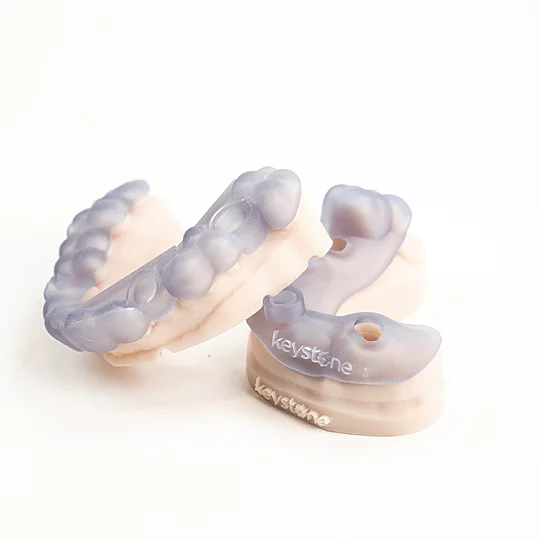
Carbon Keystone dental model. Image courtesy of Carbon.
The Perception Problem That Still Needs Solving
Despite these developments, lingering misconceptions remain. Many established manufacturers still associate 3D printing with prototyping rather than production. Closing this perception gap means more than showcasing clever design possibilities. It requires demonstrating consistency, material reliability, and process reliability — qualities traditional manufacturing has refined for decades. This is particularly crucial in regulated sectors, where trust must be earned through measurable, validated performance.
AI and Automation as Catalysts for the Next Wave
Alongside advances in hardware and materials, AI and automation are rapidly reshaping AM workflows. Automation is already being applied meaningfully, where repetitive tasks can be offloaded to software so that employees can focus on higher-value tasks.
However, the most transformative impact will unfold in design. Creating optimized geometries for AM, particularly lattice structures, has historically required specialized knowledge. By embedding manufacturing intelligence directly into design tools, AI could remove one of the industry’s biggest bottlenecks — the steep learning curve of designing specifically for additive. This would result in faster development cycles, more functional products, and a broader base of designers capable of leveraging AM.
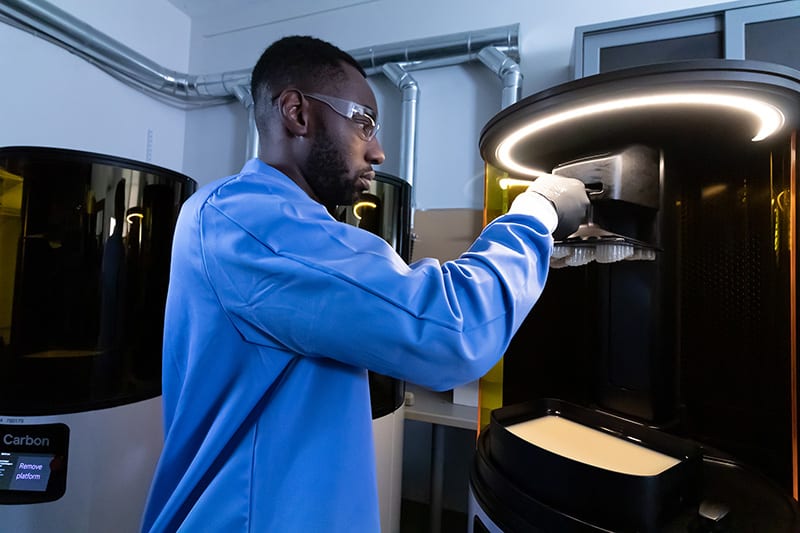
Carbon dental lab. Image courtesy of Carbon.
Rising Expectations and a Redefinition of Value
As AM has matured, customer expectations have evolved. Reliability is now fundamental. Companies want assurance that a printer fleet will deliver the same results each time, regardless of scale or location. Ultimately, customers are looking for end results, which is why the 3D printing process must be viewed simply as the enabler rather than the end goal.
While cost has historically been cited as a barrier, economics improve considerably when AM systems are tuned for the specific application. Working closely with customers to co-develop the right materials, workflows, and geometry can unlock both performance gains and really competitive unit economics. We’ve seen this firsthand, where Carbon 3D printed shoes and midsoles now feature on both high-end catwalks and the high street, with partnerships with the likes of adidas and Alexander Wang. This extends to other areas, like sports protective equipment, where 3D printed helmet liner components are more commonplace, having advanced from the professional level into college and now even high schools with partners like Riddell.
A More Mature, More Realistic Market
This year promises to be more defined by substance than spectacle. The most important developments will center on scalable, profitable, and dependable applications that are worth integrating into everyday manufacturing. These applications will help AM continue to earn its place in the mainstream.
Consolidation will likely continue due to the fundamental challenges of AM as a capital-intensive market, and the complexities of each different hardware and material. The remaining players will be larger, more mature, and focused on sustainable value creation rather than small wins. Success will come from the utilization of 3D printing, not just printer deployments, making working with brands and OEMs to solve real problems and bring differentiated products to market more valuable than ever.
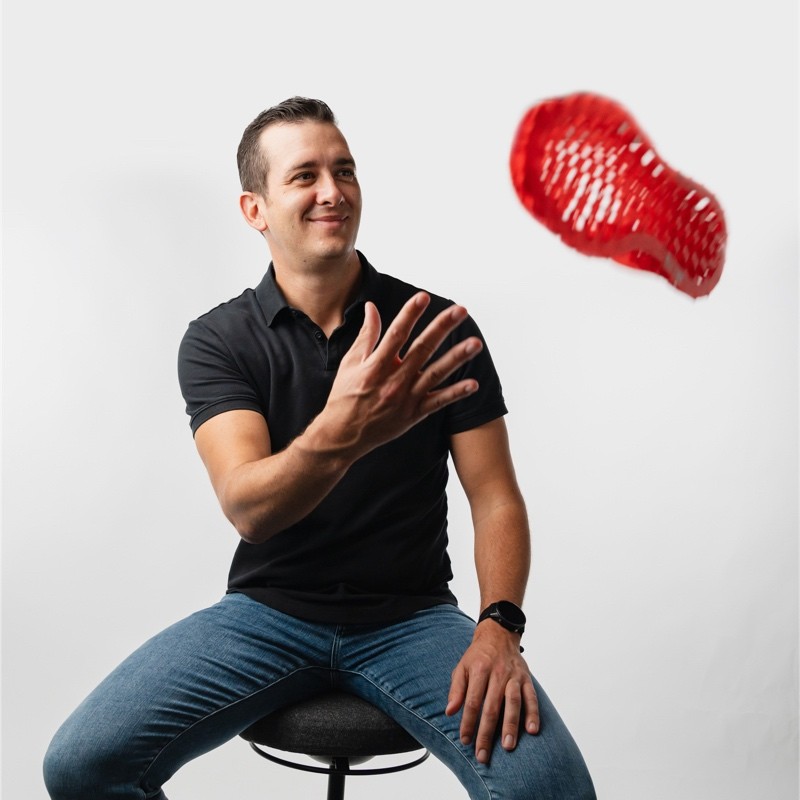
Phil DeSimone. Image courtesy of Phil DeSimone via LinkedIn.
About the Author:
Phil DeSimone is a materials and additive manufacturing expert at Carbon, where he leads initiatives in advanced polymers and industrial applications for 3D printing. With deep technical experience in developing high-performance materials and scaling them for commercial use, Phil bridges the gap between innovation and real-world production challenges. His work focuses on helping manufacturers across industries unlock the full potential of additive technologies. Outside of Carbon, he regularly contributes insights on material science, sustainable manufacturing, and digital production trends to industry publications and events.
Carbon will participate in Additive Manufacturing Strategies (AMS) 2026, a three-day industry event taking place February 24–26 in New York City. The conference brings together industry leaders, policymakers, and innovators from across the global AM ecosystem. On February 26, Phil DeSimone, CEO of Carbon, will take part in a special presentation titled “The Only Best Answer: 3D Printing for Helmets in the NFL and Beyond.”
🏷️ p3d_feed