XTPL’s 3D Printed Advanced Packaging Solution Lands the Company a Strategic Partnership with Leading Semicap OEM
⚓ p3d 📅 2026-02-26 👤 surdeus 👁️ 12

Chip packaging refers to all parts of a semiconductor device aside from the die (the “chip”) itself. As this IBM explainer nicely puts it, “In a nutshell, chip packaging provides the mechanical environment where a computer chip operates.” Advanced packaging refers to solutions where the components that house a chip aren’t only providing a protective environment, but are also part of the chip’s functionality.
The breakthroughs in advanced packaging have largely resulted from the 3D design revolution in semiconductors over the last couple of decades, which has led semiconductor device manufacturers to increasingly explore the potential advantages of stacking chips vertically instead of exclusively side-by-side. This background accounts for why it’s more and more common for additive manufacturing (AM) to be part of the conversation surrounding advanced packaging, supporting the business models of companies like Poland’s XTPL.
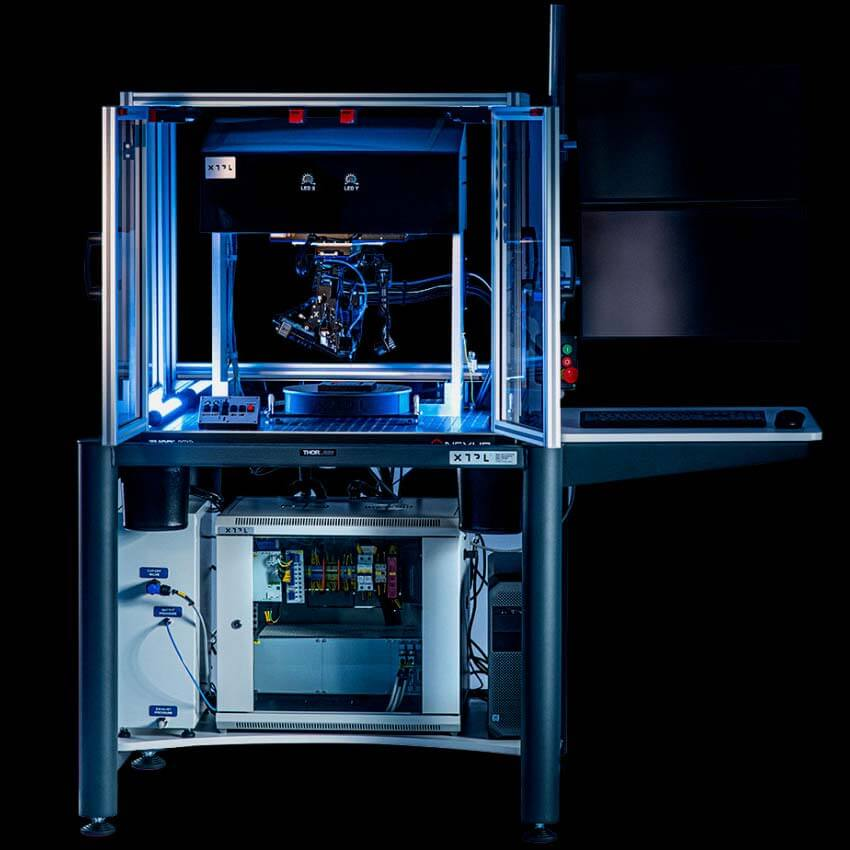
XTPL just announced a strategic partnership with semiconductor capital equipment (semicap) manufacturer Manz Asia, which specializes in advanced packaging technologies that maximize chip performance. The starting point for the partnership is Manz Asia’s acquisition of one of XTPL’s Delta Printing System (DPS) units, which leverages the company’s Ultra-Precise Dispensing (UPD) technology.
That acquisition will be installed sometime in the first half of this year at the Manz Semiconductor Innovation R&D Center in Taiwan, enabling XTPL to reach a whole new audience as Manz Asia gains a new process capability. Since the printhead is the key to the UPD technique, XTPL notes that the strategic partnership provides a potential pathway for ultimately integrating XTPL’s printhead into Manz Asia’s machines.
By partnering with Manz Asia, XTPL has accomplished its goal of expanding physical sales footholds in key markets without having to commit the capital necessary to expand that presence on its own, turning a machine sale into a technology demonstrator in the world’s most important semiconductor market.
In a press release about XTPL’s strategic partnership with Manz Asia on UPD technology, Filip Granek, CEO of XTPL S.A., said, ““I am delighted to start the partnership with Manz Asia – a company with a strong position and deep expertise in the semiconductor industry in Taiwan and Asia. It is only natural for us to work side by side with a partner who knows this ecosystem from the inside. The synergy between XTPL’s unique ultra-precise dispensing technology and Manz Asia’s competencies in advanced semiconductor packaging is a natural fit. That is precisely why I am confident this collaboration will translate into tangible business opportunities for both sides.”
The CEO of Manz Asia, Robert Lin, said, “This strategic partnership with XTPL expands our printing capabilities into ultra-precise material deposition, enabling a wide range of advanced semiconductor applications. The technology supports both conductive and non-conductive materials across 2D, 2.5D and 3D substrates in diverse manufacturing scenarios. By combining XTPL’s dispensing technology with Manz’s automation and process integration expertise, we broaden our portfolio and provide more flexible manufacturing solutions, helping customers accelerate innovation and move efficiently from prototype to volume production.”
In a recent story about a similar partnership between APES and Great Lakes Semiconductor, I noted that advanced packaging could easily end up being the biggest growth opportunity for 3D printed electronics. As I explained, the key to understanding that is understanding how critical chiplets have become in the global semiconductor arms race.
Basically, while the West has leaned into System on a Chip (SoC) designs that incorporate all the compute functions into a single die, China has been forced via equipment import restrictions to take the System in a Package (SiP)/chiplet strategy — combining a variety of different smaller dies into the same device with advanced packaging — to its extreme. What started out as a disadvantage for China has rapidly evolved into a strength, as China has developed the ability to do more with less through innovation.
Now, the West is in a position where the logic of the competition over semiconductor technology has flipped, and Western device manufacturers are trying to catch up with China’s chiplet dominance. This could be a monumental event for the AM market, and, in turn, for reshoring electronics supply chains.
For XTPL specifically, an expansion into Taiwan could be precisely the thing that gives the company a long-term edge in the U.S. and Europe. If the company can bear out its technology in the world semiconductor sector, there’s a good chance that Taiwanese semiconductor manufacturers will turn to UPD technology as they solidify their generational investments in production capacity on the North American and European continents.
Images courtesy of XTPL
🏷️ p3d_feed