When Castings Take 18 Months: How 3D Printing Helped Fix the Soo Locks
⚓ p3d 📅 2026-03-27 👤 surdeus 👁️ 1

This article is Part II of a two-part series on Lincoln Electric’s large-format metal additive manufacturing operations.
In Part I, we looked at how Lincoln Electric built one of the largest wire-arc additive manufacturing (WAAM) operations in the U.S., capable of producing metal parts measured in feet rather than inches. Speaking with Sean Schaefer, marketing manager at Baker Industries, part of Lincoln Electric’s additive manufacturing operations, it quickly became clear that the real test for this type of technology comes when industries face a familiar problem: waiting months, or even years, for large cast components.
One of the clearest examples comes from the Soo Locks in northern Michigan.
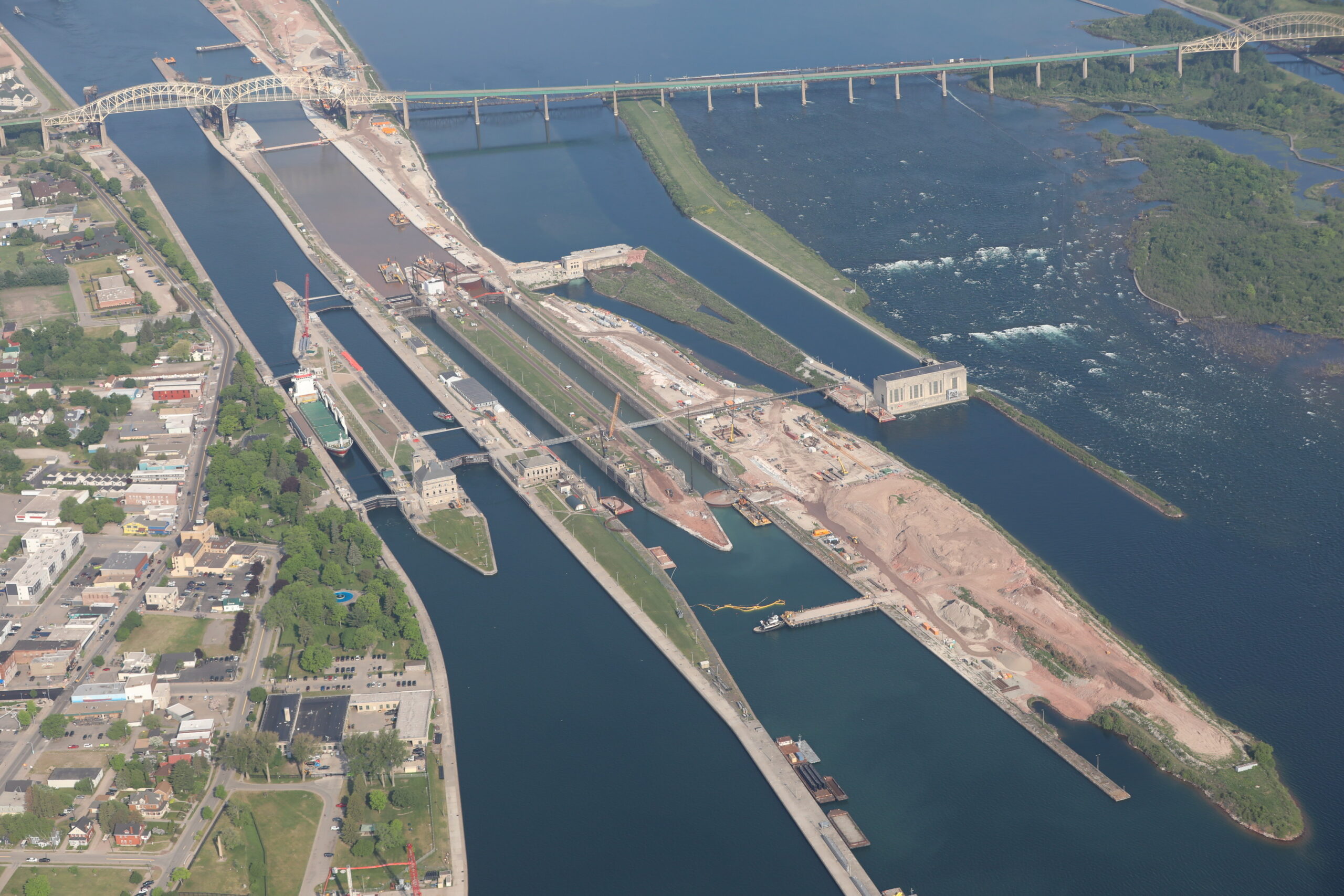
An aerial view of the Soo Locks in Sault Ste. Marie, Michigan, which connects Lake Superior to the lower Great Lakes shipping system.
The signature case study is the U.S. Army Corps of Engineers repair at the Soo Locks in northern Michigan, a vital shipping passage connecting Lake Superior to the rest of the Great Lakes that has operated since 1855, where replacing a “cracked, 12-foot steel lever arm threatened the winter maintenance window,” Schaefer recalled.
“The Soo Locks project was exactly the kind of challenge Lincoln Electric’s additive team is built for: large, time-critical, and nearly impossible to source through traditional casting,” noted Schaefer. “When the U.S. Army Corps of Engineers first sought to have the broken part recast, the quoted lead time was 18 months. Instead, we were able to cut that down: print it, machine it, and install it in about three months.”
Lincoln Electric printed the part in two seven-foot sections, welded and machined the joint, and delivered on schedule.
“Their projected estimate for having those locks closed down for just six months was about a billion dollars in lost GDP,” Schaefer exclaimed. “Finishing within the maintenance window meant USACE eliminated the risk of a shutdown if the original in-service part failed unexpectedly.”
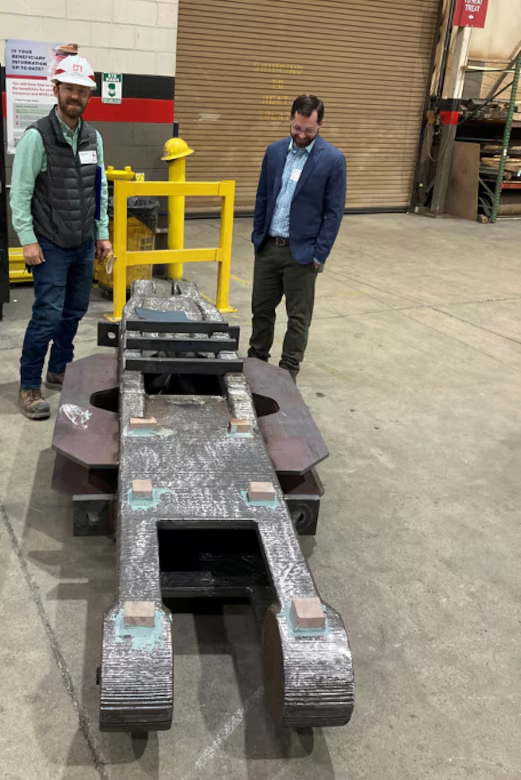
U.S. Army Corps of Engineers Detroit District Structural Engineer Clint Dougherty (left) and Engineer and Research and Development Center Research Mechanical Engineer Dr. Zackery McClelland (right) stand behind the Poe Lock ship arrestor lever arm.
That gap — between 18-month castings and a three-month print-to-install — is where WAAM is paying off elsewhere, too.
“We’ve seen up to about an 80% lead time reduction in some of the best cases over casting,” Schaefer said. “Most importantly, industries that can’t sit idle have noticed. We’ve manufactured replacement parts for the oil and gas and power generation industries. If they have a hydro facility or a refinery down, the ability to print a part instead of having to wait for castings cuts that lead time resulting in significant cost avoidance.”
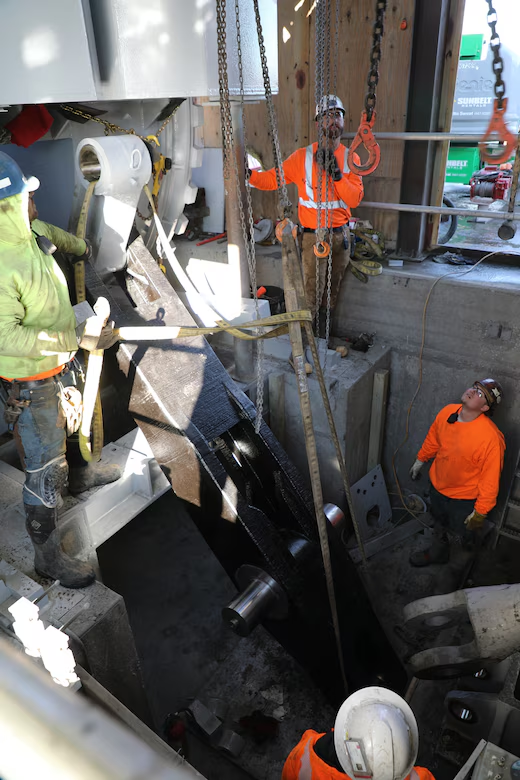
Poe Lock ship arrestor contractor OCCI installs the largest U.S. civil works component produced by a 3D printer at the Soo Locks in Sault Ste. Marie on March 1, 2024.
What Gets Printed (and Why)
WAAM is ideal for large, robust geometry, he tells me.
“We typically say anything larger than a basketball. Parts measured in feet and meters, weighing hundreds of pounds to several tons. And similar to other AM processes, WAAM opens up design options.
“It’s a very collaborative process with customers. A lot of these parts are designed for traditional manufacturing methods, and customers are discovering they have more design freedom with WAAM. We work hand in hand with customers in providing guidance, and there’s a growing number who are getting the hang of designing for this process,” Schaefer indicated.
So far, the early adoption has come from tooling and replacement parts. Schaefer said Lincoln Electric’s systems are often used for aerospace molds and fixtures, where printing can replace time-consuming manual work. With replacement parts, the principal advantage afforded by WAAM is significantly reduced delivery times compared to traditional methods such as castings. By harnessing its advanced software to print near-net shapes, Lincoln can cut down on both material waste and delivery time compared to traditional methods.
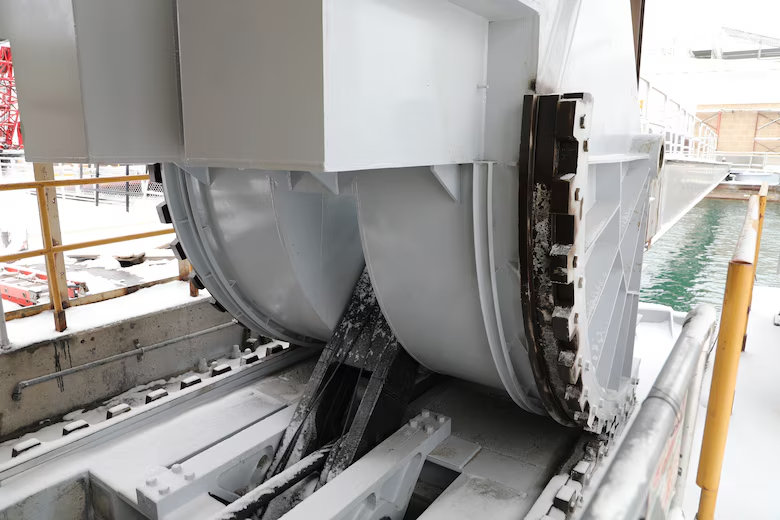
Poe Lock ship arrestor contractor OCCI installs the largest U.S. civil works component produced by a 3D printer at the Soo Locks in Sault Ste. Marie, Michigan, on March 1, 2024.
“On the government side, the Navy has been the most significant early adopter and by far the fastest DoW branch to adopt it,” Schaefer noted. “Much of that work centers on ship and submarine components, where we’re able to deliver parts much faster than castings.”
In 2024, Lincoln Electric announced a strategic partnership with Bechtel Plant Machinery, Inc. for development to support the U.S. Navy in printing components up to 20,000 pounds. It also announced in 2025 an investment by the U.S. Navy’s Maritime Industrial Base (MIB) Program and General Dynamics Electric Boat to install four of Lincoln Electric’s SculptPrint systems.
Lincoln is currently supporting aerospace with tooling, ground support equipment, and prototypes.
When to Call the Printer Instead of the Foundry
Schaefer said the decision rule is simple here: “If you need a part fast, that’s where we come in. The larger and more complex the component, typically the stronger the business case. WAAM isn’t meant to replace fine-detail powder-bed printing or cover every alloy, but for big structural parts that keep critical equipment running, it changes the equation.”
In other words, Lincoln Electric’s $4-billion parent might be synonymous with welding, but this corner of the company is definitely acting like a startup, well, one that prints parts as big as a room and installs them on a deadline. And when the alternative is waiting more than a year for a casting, printing the part instead can change the timeline entirely.
Images courtesy of U.S. Army Corps of Engineers
🏷️ p3d_feed