Death Spiral (or The End of the Fairchild Republic)
⚓ p3d 📅 2026-04-21 👤 surdeus 👁️ 3

Previously, I wrote about the disruption of US military power. Since then, events have required a reassessment. The US is clearly in decline, and a death spiral is occurring that will leave the country without the means to project power overseas. The US will remain a military power, but despite its elevated spending, it will not be a meaningful one. This is not some attempt at rage bait but an analysis of what I think is happening to US military power. It all started when a plane designed in the 1970s crashed in Iran in 2026.
Now, with the US effectively alienating Europe, no one in Europe believes that the US is a dependable ally that will, in any meaningful way, come to its aid. When the recent ceasefire in Iran led to continued attacks on the Gulf States while the US turned away from the conflict, no one in the Arab world can really believe that the US is a dependable ally, either. With oil prices soaring, despite their importance to the US economy, the US acted independently of its allies’ concerns. At the same time, no provisions were made to defend major oil and gas sites or refineries. That oversight means that many Arab nations will now look to themselves for defense. An arms race may be underway, with major Arab nations looking to acquire nuclear weapons and a sovereign defense capability. It may lead to some US equipment being acquired, but the US’s repeated denial of satellite and intelligence access to its ally Ukraine, as well as the withholding of weapons at key moments, and the eventual abandoning of Ukraine, means that no one can reasonably base their national defense on the US as a key ally or weapons supplier. It is important to note that Ukraine has a treaty with the US that guarantees Ukraine´s independence and states that the US will come to its defense. The US has not honored this treaty.
Logically, Europe is doing what it can to move away from US defense goods. Canada is doing the same, and Japan and Korea cannot expect the US to meaningfully aid them. US arms sales overseas may decline, pushing up unit costs for taxpayers. It is important to recognize that this shift has already happened. The damage has been done. This does not mean that the Arab world, the US’s Asian allies, or Europe will distrust only the current administration. No, they will never trust the US again. Being a US ally is pointless. I’m more than a little shocked that this thinking hasn’t reached the US. But what would you do if you were in anyone else’s shoes?
Stalemate
Using low-cost craft. Iran has blockaded the Strait of Hormuz for over a month now. With an arsenal of 50,000 low-cost Shahed drones and thousands of low-cost missiles and boats, Iran has the US in a stalemate. Yes, precision strikes took out much of its leadership, illustrating the US’s signint, guidance, and high-tech fighter and missile prowess. Yes, somehow the US has a tool that can find someone’s heartbeat over 60 kilometers away. But a wild swing to optimism by leadership over an incredibly complex mission to rescue a single pilot illustrates the US’s plight. Probably no other country could have come close to executing that pilot rescue mission. But many countries would have never tried.
The War on Terror cost the US $8 trillion and over 7,000 lives across the US armed services. The wars in total cost over 4.5 million lives. The US can strike anyone with impunity, but everyone knows they won’t stick around for a real war. Just hang in there ten years, and they’ll leave. The Iran-Iraq war cost 500,000 casualties among soldiers from both sides. Earlier this year, the Iranian government massacred anywhere between 3,600 and 36,000 of its own people. In 1983, 241 US personnel were killed in a barracks bombing in Beirut. The US subsequently abandoned serious involvement in the Middle East for decades. These bombings were done at the behest of Iran. It is politically unacceptable for the US to lose soldiers. It is politically acceptable for civilians overseas to lose their lives. But the US public will not be able to tolerate losses of men overseas, especially if many die at once. And any conflict will bore a US public after a while leading to a US withdrawal.
Drone War
Meanwhile, Ukraine has inflicted over a million casualties on the invading Russian forces. Most are inflicted by low-cost drones, often made with 3D printing. Now, Ukraine intercepts hundreds to a thousand Shahed drones per day on some days. Ukraine is developing its drone capability faster than anything ever seen in warfare. And it’s clear that drones will be key to any new conflict.
If we look at cost per kill, it costs Ukraine less than $500 to kill an individual Russian soldier or destroy a vehicle, and around $5,000 to down a ballistic missile or a Shahed drone. The US government couldn´t make a coffee overseas for $500. US anti-missile and vehicle defense systems are significantly more expensive. In 2013, it was estimated that the US was spending $2.1 million per year per soldier in Afghanistan. Against ballistic missiles and drones, the Ukrainian approach is a factor of 100 to 1000 cheaper than other NATO arsenal solutions. The future of War is being developed in Ukraine, and the US looks hopelessly out of step.
US unguided munitions like the AT4 cost $3,000 & M72A7 costs $2,500, and an M3 MAAWS costs $3,000 per round. So individual rounds of unguided munitions in the US arsenal are over 15 times the cost of FPV drones made by Ukraine. Dumb US rounds cost half as much as Ukrainian interceptor drones. Meanwhile, TOW missiles cost from $50,000, and the Javelin costs over $200,000. The US Switchblade 600 is $60,000, the Spike is over $200,000, and a Hellfire is over $150,000. Clearly, the US is overpaying per unit cost and paying far too much for munitions. Meanwhile, drones are replacing all of these systems in combat. And drones replace many of the launchers and vehicles that carry these systems into battle, as well as the troops who man them.
High Costs
The US’s gleaming, multi-million-dollar solutions and billion-dollar programs are ineffective and too expensive. In Operation Rough Rider, the US lost 2 FA-18s and 7 Reaper drones. The costs of this operation may be over a billion in munitions. The US had a total of around 280 Reaper drones, so losing so many is significant, especially since the conflict was relatively minor. The cost of the Reapers alone is over $210 million. The unintentionally funny-named earlier 2023 anti-Houthi operation, “Prosperity Guardian,” exemplifies this inefficiency, with operational costs of approximately $1.6 billion and an additional $2.4 billion spent on munitions. This does not include soldier salaries, overall maintenance costs for all vehicles, pensions, development costs, etc. The true number will be far higher.
The US lost two F-18s during Prosperity Guardian. Neither operation did anything to degrade the Houthis’ capabilities or their threat to shipping. Neither had any meaningful military impact. The first 100 hours of the US’s latest operation against Iran cost $3.7 billion, while daily costs are estimated at around $890 million. At that rate, total costs could easily exceed $32 billion over the course of the operation. The US has lost over 39 aircraft in Epic Fury so far. $32,040,000,000 — that’s around the estimated cost to build a permanent moon base, or roughly NASA’s annual budget, or the entire operating budget for the Department of Justice. It is also around half of Ukraine’s total annual defense spending. The idea that the US could fight a long war with China, or even sustain an intense year-long overseas conflict, is a fantasy.
Guys in Caves
The US lost interest in Afghanistan and Iraq and abandoned its allies. The US abandoned the Kurds in Iraq in 1991, abandoned the Kurds in Syria in 2019, and again in 2026. The US abandoning Ukraine is nothing new; it is part of a consistent pattern going back decades. For rebel forces, believing in the US is something to do at your peril. At the same time, the US could not win a long conflict against the Taliban, nor could it keep the conquered Iraq pacified or free from Iranian influence. So it can strike with precision, but it can not occupy. The Iranian leadership, therefore, knows that some of its leaders will die, but the system they have built will survive no matter what. They know they’ll always take casualties, but they will never lose. And who will rise along with the US, knowing that they will probably be abandoned by it?
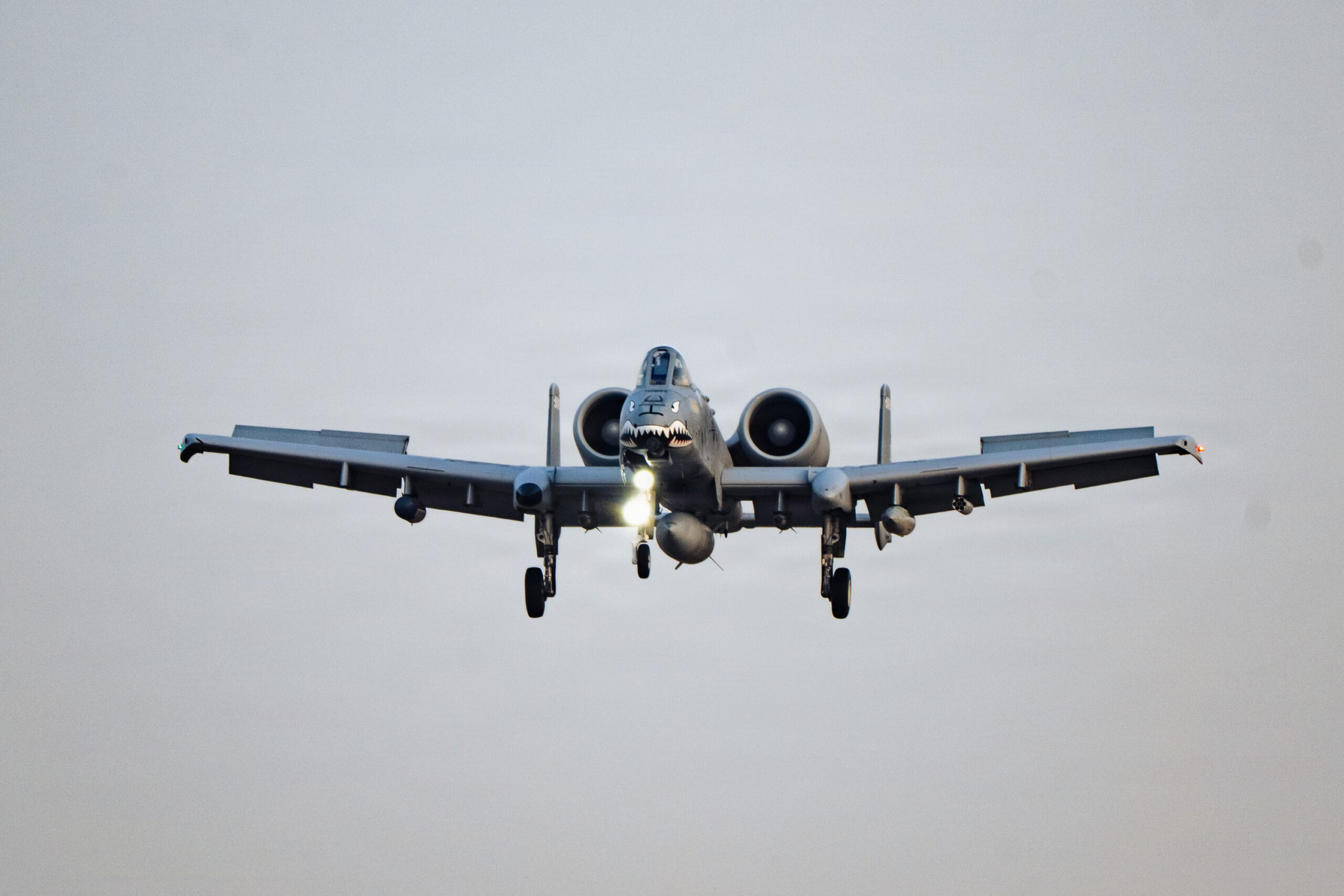
A US Air Force A-10C Thunderbolt II aircraft assigned to the 75th Expeditionary Fighter Squadron prepares to land at a base in the US Central Command area of responsibility, Jan. 29, 2026. Image courtesy of US Air Force/Staff Sgt. Tylin Rust.
The US, meanwhile, is running out of missiles, is depleting combat drones, and bleeding cash. By failing to secure and free up a small body of water after 30 days, the US has proved itself impotent. If you have long-distance drones, subs, and surface craft, and are dug in, the US can bring its full might to bear on you and not dislodge you. Three carrier strike groups of the US’s 11 are up against Iran, and they have been unable to open the Strait, nor can they protect the Gulf States from Shaheds. Of the US’s other carriers, 5 are undergoing maintenance, and 1 is scheduled for decommissioning. It is clear that drone swarms and low cost kit is winning. It is also clear that against a technologically more advanced enemy, the US struggles to maintain air assets. China, with long-range missiles, would keep carriers out of the conflict or further away.
Death Spiral
The United States must rethink and rearm in a new low-cost paradigm. The US can project power and conduct precision strikes, but it cannot sustain a prolonged conflict. Politically and financially, the US would not be able to sustain a war. The current generation of US kit is simply too expensive for it to project power in any meaningful way. By abandoning its allies, it has reduced the number of places where it can fly over or use their bases. This will make it more expensive and difficult to prosecute war. What’s more, by abandoning its allies, it has increased its costs and reduced the overseas revenue from future US weapons programs. The US has essentially painted itself into a corner.
A downward demand spiral, or death spiral, results when fixed costs and overhead are spread across a declining volume of products. Fewer items will be less cost-competitive, and eventually their volume will further reduce until they are unable to keep the company afloat. The US is a government and not a company, so this works a bit differently. But this is how the US military death spiral is happening today. More money is going to ineffective products that cannot perform their tasks. More of these products will be used to compensate for this. Bigger programs will be needed to replace these ineffectual products. These will be more complex, likelier to overrun, and cost more than intended. This will lead to more of these products or more of the ones they’re meant to be made at, increasingly at unsustainable levels. Inventories will be depleted ever more quickly. The system will innovate less quickly because each cycle will be more expensive and longer. The US is therefore spending more and more to do less and less. Simultaneously, other countries increase their capabilities until the US is unable to wage war in any meaningful way.
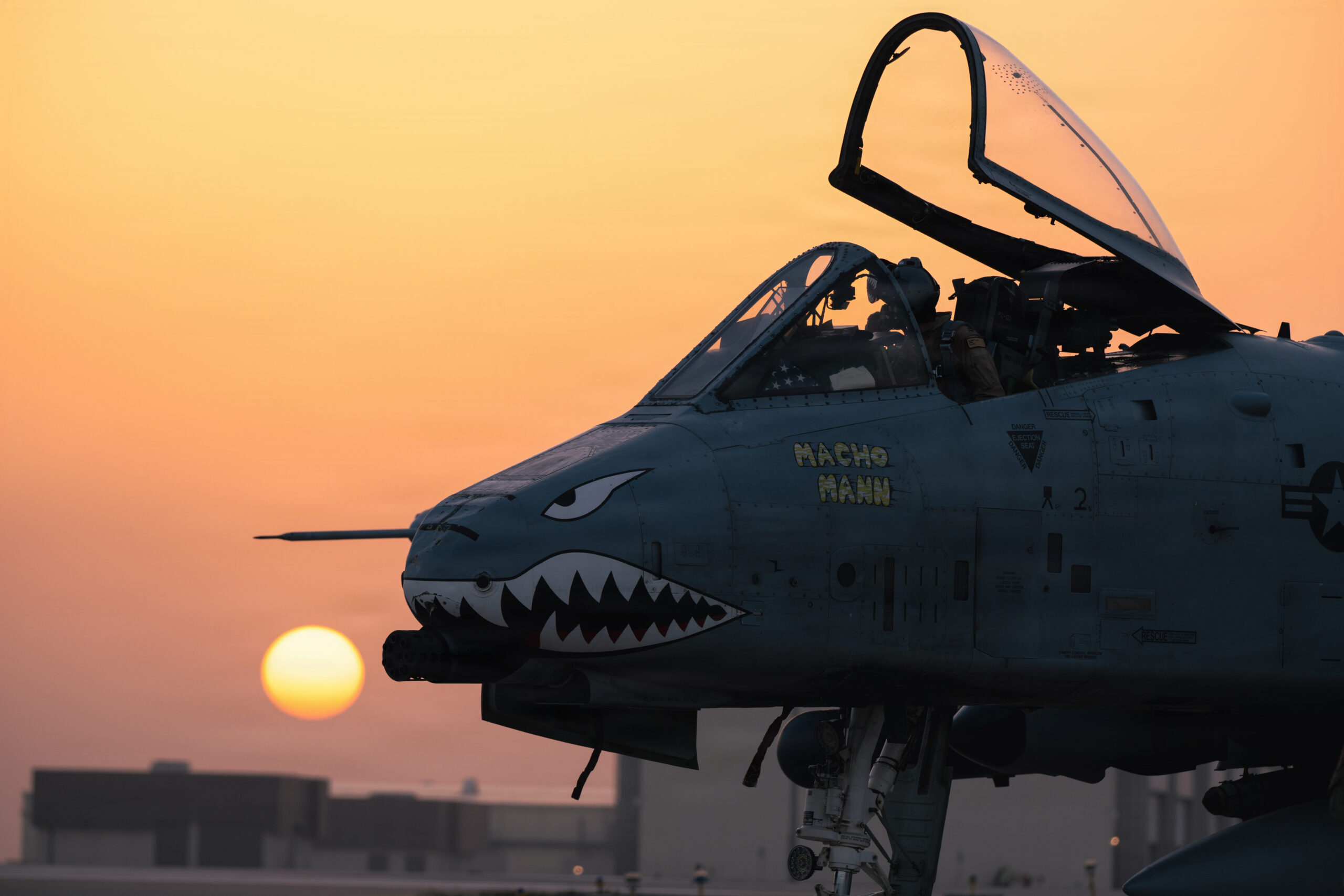
A US Airman A-10C Thunderbolt II aircraft pilot assigned to the 75th Expeditionary Fighter Squadron sits in an A-10 at a base in the US Central Command area of responsibility, Feb. 1, 2026. Image courtesy of US Air Force/Staff Sgt. Tylin Rust.
Again, I’m not saying the US won’t be powerful or able to kill a pigeon with a satellite based laser, just that it won’t be able to meaningfully threaten anyone determined to achieve long-term victory. Sure they can kill me, but my country will never lose. Guys in caves, large countries, near peers, they´ll all win. Or indeed will anyone able to suddenly inflict heavy casualties on US military personnel. This is why Chinese hypersonics and anti-ship missiles are doubly important. They are not only a threat but one that could make further war untenable.
Imagine you’re an English lord whose Grandfather owned all of Jamaica, and you have the biggest country house in Derbyshire, with 800 acres of land. There are old masters on the wall, and you can’t pay the heating bill. This is the problem that the US has. Objectively, the Lord is more powerful and wealthier than nearly all. But practically, the cost structure he has, all the things he has, and all the things he must protect keep him practically poor. He has few options but many assets. But an accountant down the road with a cottage and good savings may have more disposable income and more agility. A captive of its cost structure, the US is unable to properly mete out any long-term power.
Thunderbolt
The US is quietly waking up to this reality. Those who know, know. And the US is trying to address this. But this should be a bright thunderbolt at night, not something most US citizens don’t realize. It’s surreal, but not as surreal as being an A-10 Warthog pilot flying over Iran in 2026. Developed by Fairchild Republic between 1966 and 1976. Based on lessons learned from the Vietnam War, the A-10 Warthog was first produced in 1977 and remained in production until 1984. Meant to take out Russian tanks swarming through Germany, the plane is popular with ground troops and some commanders. Heavily armored and equipped with a large munitions load, it can loiter far longer than newer jets while resisting machine-gun and other fire from below better than other aircraft. It’s also very cheap to fly per hour. I remember being a schoolkid in 1991, and my teacher’s husband, a Warthog pilot, coming to our class. He conceded that it wasn’t a modern plane, but it was useful. In 1991.
Built around a 30 mm Gatling autocannon firing 600 gram 29 centimeter depleted Uranium shells at a rate of 2900 per minute, the plane has been effective. Remarkably few were lost in Desert Storm, with over 70 getting hit and six airframes lost out of 4,000 sorties. Some returned to base after getting hit over 150 times. In the second Iraq conflict, five were lost, and in total, 122 of 719 airframes were lost over 50 years of service. Now in Iran, one was lost, having extracted an F-15 pilot. For that mission, it’s still the best plane. What’s more, in combating low-cost Iranian surface vessels, the Warthog’s maneuverability, stall speed, and time over target enable it to perform a mission that none of America’s newer craft can. Indeed, the US is unable to clear the Strait of Hormuz because it does not have the capacity to combat small surface vessels, even though everyone knew that these vessels would be Iran´s response to the US and these same vessels have been annoying US surface vessels for decades. Indeed in 2002 the US conducted a $250 million war game, Millennium Challenge, where the US lost a conflict against a Persian Gulf adversary equipped with swarms of cheap speed boats. It is now clear to all that the US has not been able to develop a suitable response to the Millennium Challenge in 23 years and trillions of spending. If only the US had more Warthogs!
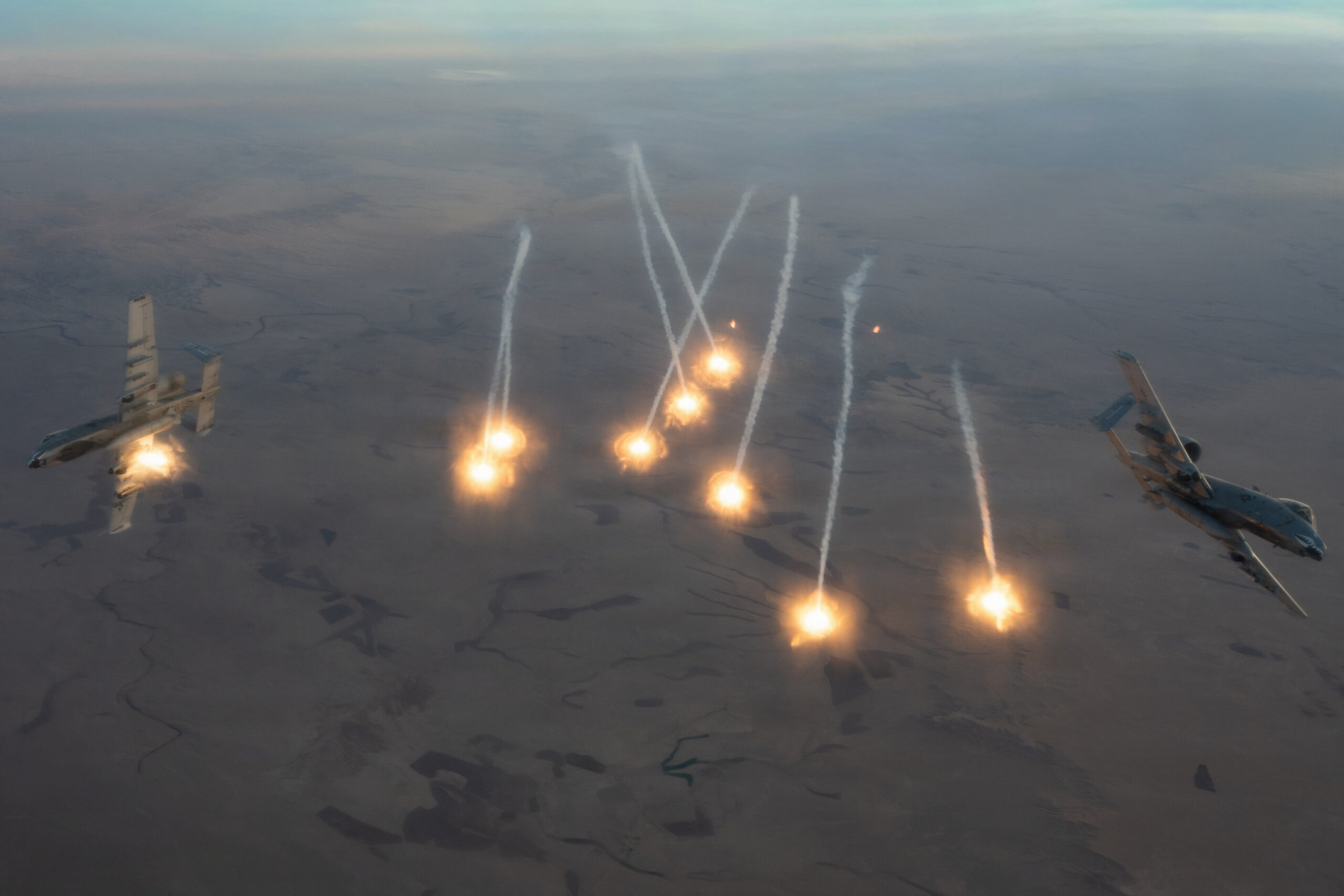
US Air Force A-10C Thunderbolt II aircraft dispense flares over an undisclosed location within the US Central Command area of responsibility, Jan. 5, 2026. The A-10 conducts operations across the AOR to provide close air support and combat airpower as necessary. Image courtesy of US Air Force/Airman 1st Class Travis Knauss.
37 years ago, in 1988, the US began transitioning away from the Warthog towards the CAS variant of the F-16, only to abandon that plan after Desert Storm. The newer, flashier kit was newer and shinier but couldn’t do the mission. Now imagine you’re an aviator with two clipboards strapped to your knees, looking at analog instruments and an honest-to-god mirror flying over a country with modern SAMs and reportedly one of the world’s most extensive air defense networks in something that is probably older than you are, made during the times of Saturday Night Fever, the Bee Gees, and Jimmy Carter. You’re circling, looking for a fellow pilot downed over the world’s preeminent torture kingdom. There is bravery there that I caught a glimpse of when a pilot spoke to our class 34 years ago. But still, it defies belief to do such a thing. It beggars belief that you would send that person out there, in that situation, in that plane.
It also beggars belief that, given the real needs of the Iran conflict, this plane has not been replaced. It’s wild that there is no other craft that can do this. It has been well known for decades that Iran, in a conflict, would menace shipping and enemies alike with inexpensive, fast attack boats, cut price ICBMs and drones. But, there has been no adequate modern solution developed in all this time. And with all the billions spent over the decades, it has not developed better capabilities for close air support or for taking or covering large areas of terrain inexpensively. With ever-diminishing relative capability, the US is confined to spending ever more in every conflict. And if the new kit can’t even adequately replace the functionality of the old stuff, alarm bells should ring because bravery alone will not be enough to face the future.
Images courtesy of CENTCOM
🏷️ p3d_feed