BLT’s Partnership with Shenzhen Startup Illustrates Why a Robotics Boom Depends on 3D Printing
⚓ p3d 📅 2026-05-06 👤 surdeus 👁️ 2

The way that manufacturers produce goods is changing, concerning both the techniques involved, as well as the overarching strategies which organize those techniques into systems of output. Additive manufacturing (AM) is relevant to this broad-sweeping shift in more ways than one, providing suppliers with additional means for delivering final products to consumers, while also contributing to the health of a range of other manufacturing techniques.
The Chinese AM original equipment manufacturer (OEM) BLT just announced a partnership with Haptron Scientific, a Shenzhen startup that makes device sensors. In this case study, BLT and Haptron collaborated to use metal AM for production at scale of force sensors for the humanoid robotics market, an area seeing major interest in China right now despite valid concerns over a potential bubble.
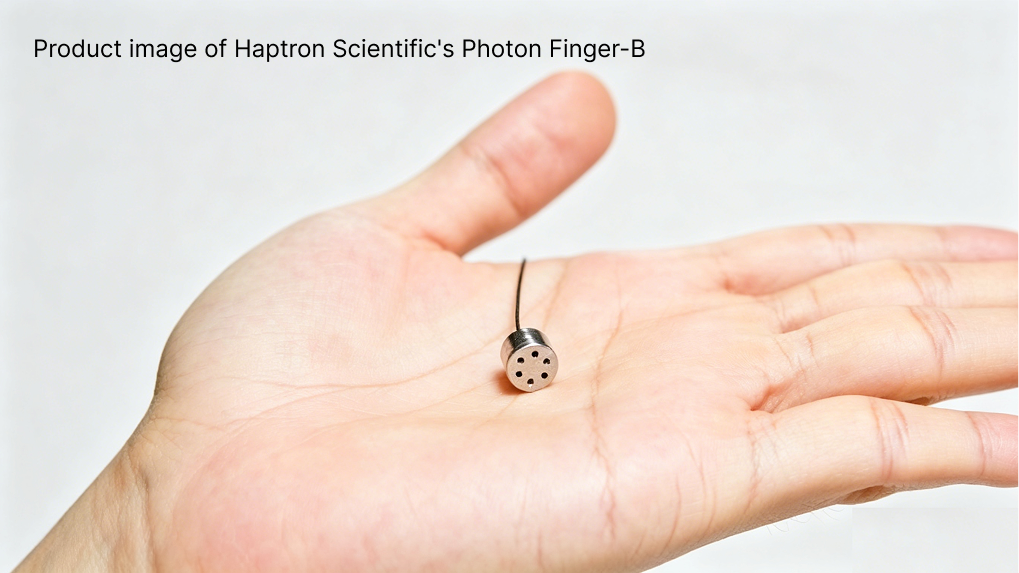
One of the biggest obstacles standing in the way of a humanoid robotics boom is the difficulty in engineering robotic hands that can adequately mimic human performance. Haptron Scientific has reportedly developed “the world’s smallest optic-based force sensor,” a design which the company has incorporated into robotics components including the Photon Finger Max and PhotonR40 wrist sensors. Yet, because of how small the part is—its diameter is just 8.5 millimeters (mm)—Haptron has found it difficult to consistently produce with conventional methods.
That’s the catalyst behind the company’s work with BLT, which has lately reported major improvements in throughput capabilities. Regarding one force sensor that BLT made for Haptron, the Photon Finger-B, BLT notes that not so long ago, the company was only achieving “tens of units” per build plate on its metal systems. Now, BLT is reliably producing nearly 1,000 of the units per build plate, and has delivered several thousand units to Haptron Scientific.
Further, AM enhances the performance metrics of the final product. For the PhotonR40 wrist sensor, the ability to execute a monolithic design enabled a weight reduction of 20-30%, leading to marked improvement in the agility of the robotic systems with which it’s integrated.

This accomplishment in engineering is revealed as all the more important when you consider that China isn’t interested in building up humanoid robotics simply as an act of pure research: the country is targeting deployment of humanoid robots on electronics assembly lines by the end of this year. Whether or not China actually meets that deadline, it’s the sort of ambitious objective that has the power to will technological progress into existence.
And, the dynamic at play perfectly embodies the industrial versatility implied by AM-enabled engineering gains. BLT, and Chinese AM OEMs more generally, have been making a point lately of boasting the viability of their technologies for mass production of small, precise parts. Whether a metal printer turns out the hinge for a foldable smartphone, or contributes to the development of a robot that can build the hinge, the final outcome is more or less the same.
Even more consequentially, the more that Chinese OEMs are able to progress at producing large amounts of small, precise components, the more plausible it becomes that these same techniques could ultimately be used for the Holy Grail of mass production—semiconductors—by leveraging the technology for chip packaging tools. It’s certainly possible that I’ve become so enamored with the “AM for advanced packaging” narrative that I’ve started to see it everywhere. But, given how singularly vital chips are to the global economy, and in light of the background of the Great Power competition presently coloring all the world’s industrial affairs, it’s also possible that China is engaging in a subtle demonstration of force meant to convey that the nation’s semiconductor activity can survive just fine without the West.
In any case, a machine that can contribute both directly and indirectly to bolstering smartphone supply chains is, in itself, quite a magical device indeed. This is very different from the nebulous sort of hype that characterized AM industry bluster in moments that led up to bursting bubbles. This feels real.
Images courtesy of BLT
🏷️ p3d_feed