3D Printing News Briefs, May 20, 2026: Distribution, Fracture Mechanics, & More
⚓ p3d 📅 2026-05-20 👤 surdeus 👁️ 1

We’re starting with business in today’s 3D Printing News Briefs. ATLIX announced a strategic distribution partnership with Excelencia Tech Group, and Timeplast raised $5 million in an oversubscribed campaign, powered by DealMaker. We’ll end with research about 3D printed metals.
ATLIX Consolidates Presence in Spain with Strategic Distribution Partnership
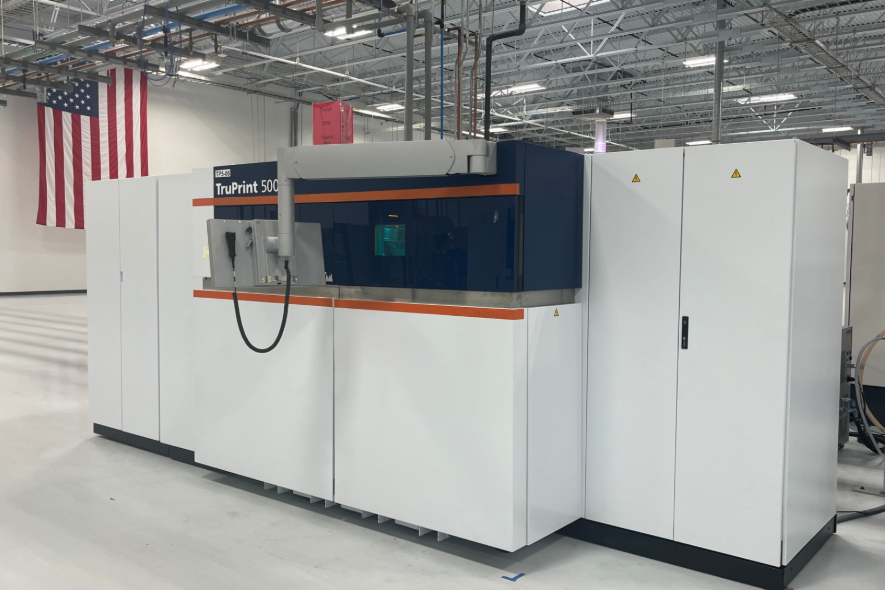
In a recently announced strategic distribution partnership, ATLIX, which manufactures industrial-grade metal LPBF systems, has appointed Excelencia Tech Group as its official distributor for the Spanish market. Based at DFactory Barcelona, Excelencia Tech is supported by a team of AM experts and operates a national network of three offices across Spain, covering the entirety of the AM workflow, both metals and polymers. ATLIX was born from the AM division of TRUMPF, and the Spanish market is an important territory for the brand, what with its strong base in aerospace, automotive, and industrial manufacturing. Per the distribution agreement, Excelencia Tech will bring the TruPrint LPBF platform from ATLIX to Spanish industrial manufacturers, offering customers access to sales, application support, and service through a local partner, while also consolidating ATLIX’s commercial presence in Spain.
Marino Ferrarese, Head of Sales and Marketing, ATLIX, said, “Spain is a strategically important market for ATLIX, and Excelencia Tech is exactly the kind of partner we look for: deep technical expertise, proven service infrastructure, and a shared commitment to driving real industrial adoption of metal additive manufacturing.”
Timeplast Closes $5 Million Regulation CF Campaign, Powered by DealMaker

Materials science company Timeplast, which pioneers sustainable materials and AI-enabled 3D printing, announced the close of its oversubscribed $5 million Regulation CF campaign, powered by the DealMaker investment technology platform. This raise added nearly 10,000 new retail investors to the company’s cap-table: the same investors who purchased thousands of its sustainable straws just six hours after they launched. Timeplast has over 80 proprietary 3D printing filaments in its portfolio, including what it calls the first 3D printable soap and a retroreflective holographic filament. The company is now developing its next big product, a sub-$1,000, AI-powered 3D printer called the Manifester that will potentially turn voice commands into finished objects. Instead of routing the buyers of this recent campaign through a marketplace, Timeplast ran the offering through DealMaker’s white-labeled platform, so it could maintain ownership of the investor data and have a direct path to the community backing its products.
“We didn’t want to rent our investor relationships. DealMaker lets us own the data and build a direct relationship with the people backing us,” said Manuel Rendón, CEO and Founder, Timeplast. “That’s a fundamentally different outcome than showing up as one logo among many.”
IMDEA Materials & UC3M Collaborate to Better Understand 3D Printed Metals
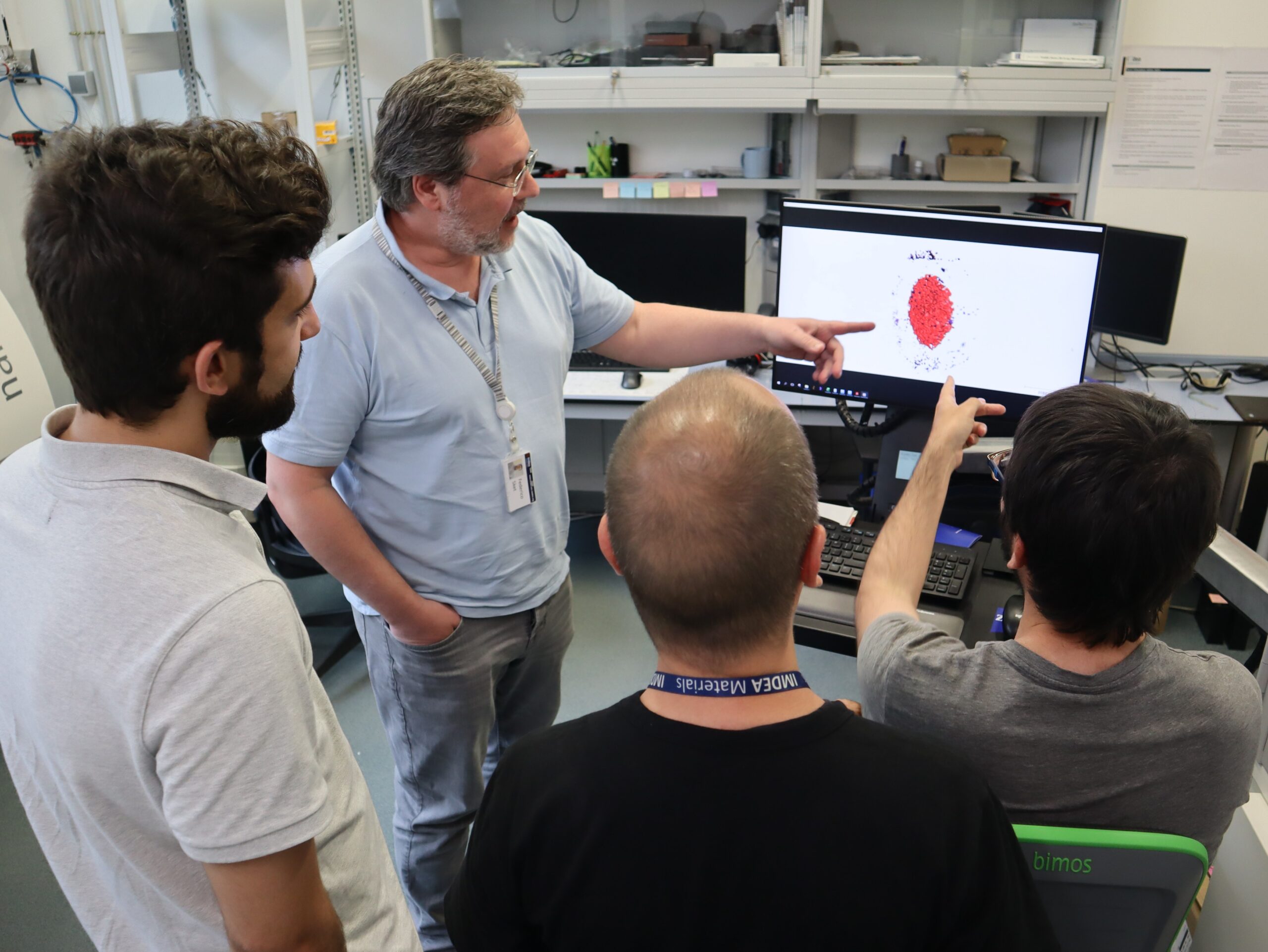
A team of researchers from IMDEA Materials and the Carlos III University of Madrid (UC3M) worked with research institutes in Japan and France to better understand fracture mechanics of 3D printed metals. They had a major breakthrough and found how 3D printed metals can fail under extreme impact. As they explained in their paper, the researchers focused on AlSi10Mg and Ti-6Al-4V, both commonly used alloys in LPBF 3D printing. At the European Synchrotron Radiation Facility (ESRF), the team used strong X-ray beams to look inside the materials in real time while they were being struck at velocities of up to 750 meters a second. At first, the material is compressed by the shock wave, which causes pores to collapse. But, as the material starts to experience tension, the pores reopen and grow larger, eventually linking together to form an internal crack that leads to a Spall Fracture, which is harder to detect and analyze. This research could be very helpful for applications with components exposed often to intense dynamic loads, like aerospace and defense.
🏷️ p3d_feed“Altogether, this paper provides new insights into dynamic tensile fracture of 3D-printed metals. It does so by leveraging the latest advances in fast X-ray phase-contrast imaging and high-resolution tomography, while establishing a systematic protocol to investigate void collapse and spall failure mechanisms in porous materials subjected to shock loading,” explained Dr. Javier García Molleja, a researcher from IMDEA Materials.