Formnext 2025 Day Two: Cost Out & LAPIS
⚓ p3d 📅 2025-11-20 👤 surdeus 👁️ 29

I, for one, think the lack of carpet is a fitting metaphor. They normally throw it out after a few days of use, so not having a carpet leads to a more sustainable show. It’s wasteful and unnecessary. Responsible Tradeshowing, I say. We should never have carpet again. It also reminds us that the connections, ideas, learning, seeing, and meeting are what this event is all about. All the rest is fluff and silly. This is the global exchange, the one moment when we´re almost all together. And that is what is important. Do I miss sitting on the second floor of a stand, looking out over towering neighboring structures with the people below, while being served Barbie-sized burgers by people in dinner jackets? Maybe a little bit. And more pedestrian wine makes walking a bit harder. But, frankly, there is, I think, a theoretical limit to the number of blinis one can consume in a lifetime. Do we want opulence, more snacks, and better gifts, or do we want to spend more money on R&D? The concrete floor grounds me, it reminds me what’s important and why we´re here, and the path ahead. Weirdly, it also seems more comfortable. Am I alone in this? The path ahead will be less plush but no less rewarding. Look, guys, it’s ok, we can go full Schultenbräu and Pom-Bär. Actually, fewer snacks would be good for me, and a lot of you too. We´ve become fat. Marinated in VC dollars, attention, and beset by tire kickers we´ve become bloated, inefficient, and lazy. Lollygagging around, daydreaming from kickoff to kickoff, many firms resemble manatees, idly drifting on the current. This year, it’s time for a detox. I hug people a lot, this year I´ll do it extra well because many of you we won´t see again. For the lifers? It was never about the headlines, the blinis, the money, or the attention. It’s about the mission, it’s about the challenge of making better things. Let’s detox from the opulence, the flashy spending, and the silliness. Let’s detox from overclaim, factual inaccuracies, and ¨fake it till you make it.¨ Let’s just make it together.
Cost Out
Cost out was reverberating through the show over the past few days. Whereas previously low part cost was the main focus, now people are looking differently at the equation. People are looking at lower entry products, lower TCO, reducing material costs, increasing yield and speed. Cheaper versions of machines. Turnaround times, unloading, and post-processing are all being looked at. It’s more multidimensional now with more focus on lowering the initial investment. Others are looking at how to make it easier to onboard customers, train them, and get them up and running. Workflow apps and time-saving features on machines are becoming increasingly common. People are…gasp…listening to customers and improving machines, software, and tools in response to this. This is all thoroughly excellent. Rather than vision, bold pronouncements lead thinking a more consensus-oriented, productivity-minded, holistic approach seems to be winning.
Bambu & Grawing Pandas
Bambu´s success was sudden and seems almost total. We´ve been warning since 2022 about the far-reaching implications of Bambu´s market entry, with updates in 2023 on a new generation of Bambu competitors, such as the K1, and in 2025 about the sustained impact that they´ve had. Just for completeness, I´ll be succinct: many companies will go bankrupt because Bambu will kill them. Don´t think of them as trinket machines, they are probably better machines than what you have, cheaper and faster. But, if we look across the floor, we can see some firms that are making machines that should give Bambu pause. Snapmaker & Creality are some of the most credible threats but Elegoo, with an investment from DJI, could become more of a threat as well. The Chinese firms are working on Bambu clones with zeal and rapidity, increasing their competitiveness. There is some stumbling with some never Bambu machines having issues (with large parts, misprints) that older ones did not. But, the Chinese firms are moving far faster than any other competitor and will collectively have significant market impact.
Low Cost LPBF

The most exciting trend at Formnext for me is the plethora of low cost metal LPBF machines out there. Spanish, Chinese, and other firms are offering value-engineered LPBF machines. We know that people are increasingly looking to adopt these machines for universities and manufacturing. The cheapest one we could find was FastForm, whose desktop unit was either 15,000, 20,000, or 25,000, depending on whom you asked. But there are plenty of options in the 50,000 to 140,000 range. Indian firm AM Ace, Polish firm IAMG, emphatically basque not Spanish Samylabs, and Swiss A Metal. It would be tempting for established firms to ignore this development. More companies can use these machines and more companies can afford these systems than the million dollar machines. The few thousand happy few companies already have an established machine. But, tens of thousands of companies do not. Low cost machines will make our market bigger. Companies are adopting these systems for production. Staggered simple systems can do much work at very low part cost. Yes, there is a little more lifting but it can be spread out and many of these units are simple to unbox and run. Few employees can power low cost systems of increasing sophistication. A major growth driver over the next few years will be the rise and growth of these systems. Ignoring that development is something to do at your peril.
The Best Thing That I´ve Seen in A Decade
Aumatis automates investment casting, turning polymer 3D prints into metal ones with a desktop unit. I love this so much. It still looks very involved and has many steps, but a small-form-factor investment-casting solution could meet many people´s needs (Hall 12.1, Booth B39A).
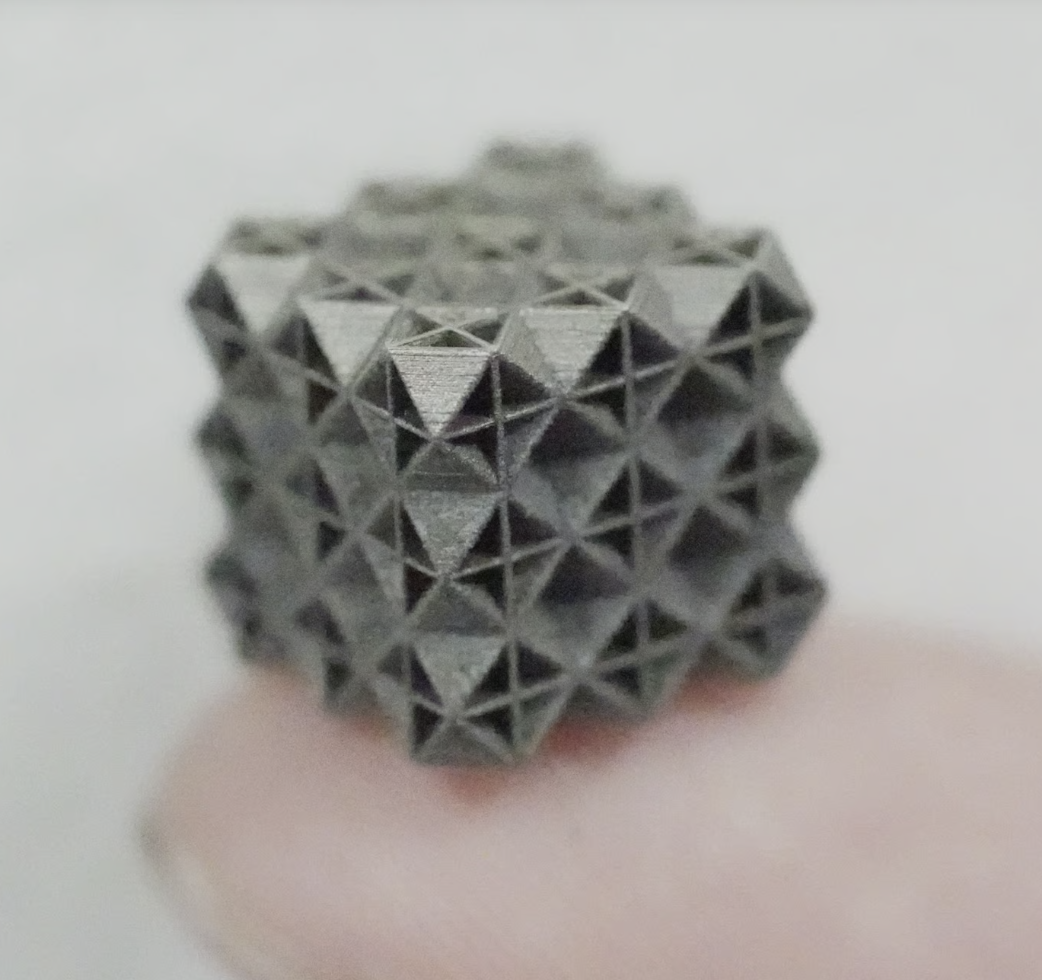
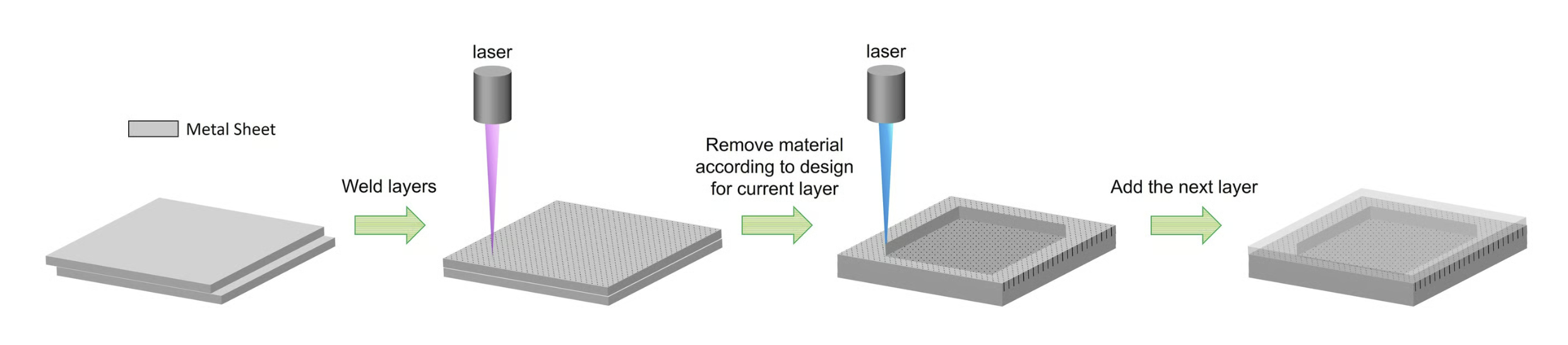
Singapore-based LAPIS is the most interesting thing I´ve seen in a decade. Using LOM and laser ablation, their system uses a laser to weld together layers of metal sheet and then ablates voids before cleaning up the build. The resulting super-intricate 125mm by 125mm steel objects are extremely low-cost, with high levels of detail and accuracy, while parts are dense. You can read the paper here, and LAPIS can be found at the Nanyang Technological University, Singapore Centre for 3D Printing booth, 12.1, A11. LAPIS could be a revolutionary solution for cold plates, heat exchange, and small industrial parts. The cost will be one of the lowest of any Additive process while the technology fills a space in a family of parts between Slurry SLA/Binder Jet and casting/LPBF. This is a current market gap in that area and many parts that can be made at the cost levels that LAPIS is capable of. Visit them, it will blow you away.,
My sarcasm and cynicism do sometimes get the best of me. But, with low-cost LPBF, better competitive Material Extrusion systems, and new paths to metal parts, we´re finally making a big push into production, manufacturing, and industry. I´m super optimistic about these developments and the future is once again bright. But, please god, don´t tell the VC´s.
🏷️ p3d_feed