3D Printing News Briefs, November 22, 2025: Rebranding, Integration, Electronic Eyes, & More
⚓ p3d 📅 2025-11-22 👤 surdeus 👁️ 35

We’ll start with a new software tool from AON3D in today’s 3D Printing News Briefs, and then we’ve got a lot of business, from Conflux Technology and Prima Additive to 3DPrinterOS, Protolabs, and BIO INX. Then, we’ll end with collaborative research about room temperature 3D printing of “electronic eye” sensors. Without further ado, let’s dive right in!
AON3D’s New Software Feature Cuts Print Times By Half

Manifold 3D printed on the AON3D Hylo.
Throughput has long been a major sticking point with manufacturers thinking about adopting AM. But a new software feature from AON3D that uses physics-based G-CODE post-processing could bring about a major breakthrough in AM for production applications. Its Throughput Optimization Module analyzes G-CODE to see how heat will build and dissipate throughout a part, then dynamically adjusts the material deposition rates based on geometry to speed up the printing process, but without compromising part quality or performance. By combining rheology and heat transfer properties, the system will automatically speed up when the conditions allow, and slow down if needed to optimize surface finish. During testing, the software was able to take 13 hours off of a 24-hour print, or 54%. The company says that its new Throughput Optimization Module, when combined with AON3D Basis software’s real-time part qualification, represents “the first major breakthrough in material extrusion throughput in years.”
“Until now, polymer physics have been left out of the slicing process, relying solely on trial-and-error tuning — a time-consuming process with variable outcomes,” explained Adrian Muresan, AON3D VP Software Research. “AON3D’s Multiphysics Process Optimization changes this, achieving deterministic outcomes and tying predictions to results.”
Conflux Technology Appoints Dan Woodford as CEO
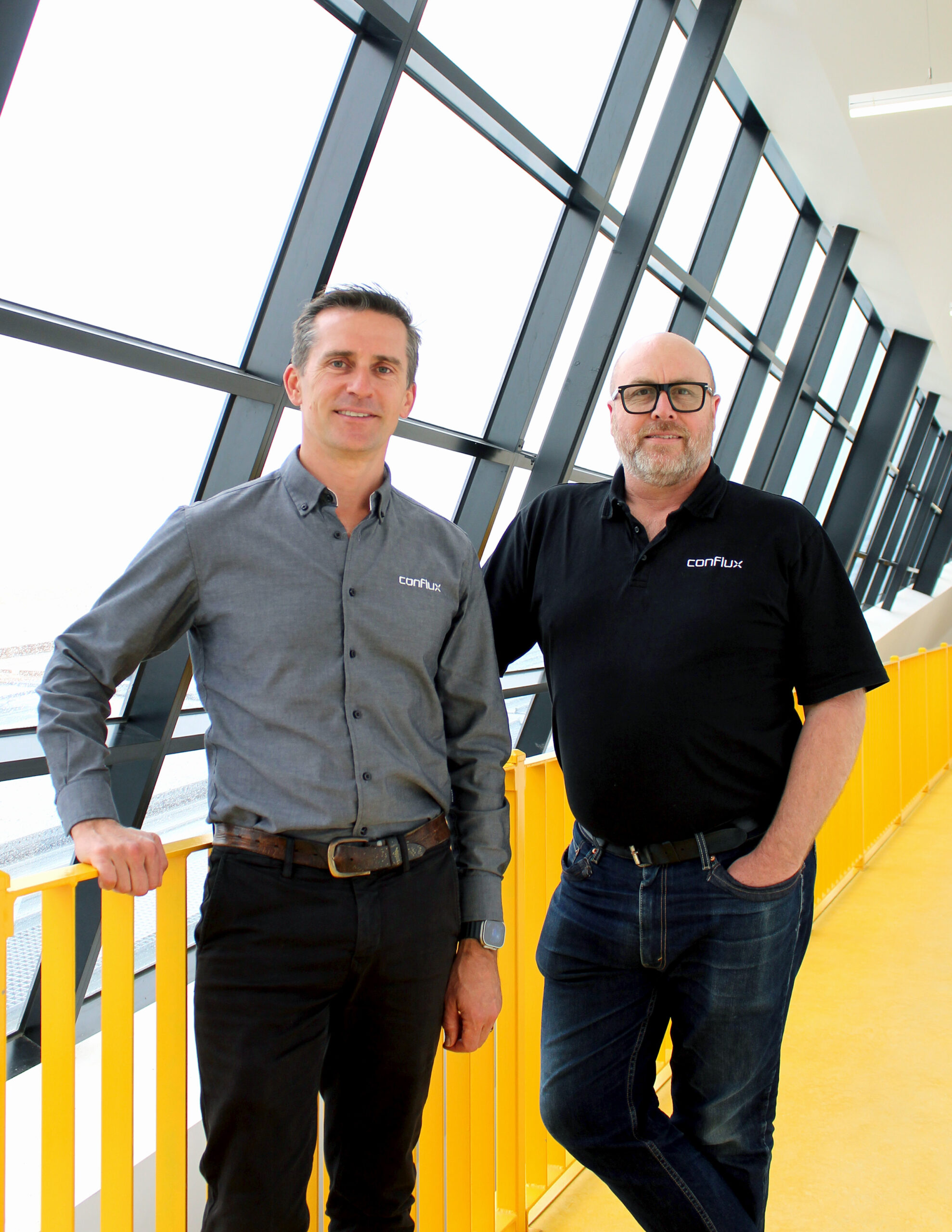
As of 7 November 2025, Dan Woodford, formerly Chief Commercial Officer, was appointed Chief Executive Officer. On the same date, Founder and CEO Michael Fuller transitioned to the full-time role of Executive Chairman
Advanced heat exchange technology company Conflux Technology announced a strategic change in leadership. As of November 7th, 2025, Dan Woodford, formerly the company’s Chief Commercial Officer, was appointed to Chief Executive Officer, and founder/CEO Michael Fuller transitioned to Executive Chairman. This will help to advance Conflux’s strategy for enhancing, as Fuller said, the company’s “international strategy,” and preparing for “its next phase of growth.” Fuller helped transform Conflux from a self-funded startup into a profitable, global advanced manufacturing leader in thermal management; he will now focus on corporate strategy, governance, and technical direction. Woodford, in his prior role as CCO, drove 100% annual sales growth for three years running in focus markets, helped grow production orders, and led the charge on establishing the company’s UK operations. With this change in leadership, Conflux is setting itself up for the next big growth chapter.
“I’m excited and honoured to continue this journey with Conflux, as we move into its next phase of growth and pursue our mission to make a global impact through revolutionary thermal management. We’ll expand our existing international footprint and boost product offerings that meet growing demand across high performance and electric automotive, next generation civil and defence aviation, and electronics and chip cooling markets,” Woodford said.
Prima Additive by Sodick Rebrands & Debuts as AltForm

In 2024, Japanese machine tool leader Sodick acquired a 9.5% minority stake in Italian company Prima Additive, a former Prima Industrie subsidiary that specializes in powder bed fusion (PBF) and directed energy deposition (DED). Then, in early 2025, Sodick entered into a definitive agreement to purchase Prima Additive, which has now officially been rebranded. At Formnext 2025, it appeared for the first time as AltForm, which stands for Advanced Laser Technologies for Manufacturing and reflects the company’s evolution beyond additive manufacturing into advanced laser technologies as well, including laser hardening, laser welding, and integrated automation for laser-based production. The team remains changed, and headquarters will remain in Turin, though a new, larger facility is planned for next year to support continued growth. AltForm presented its new product strategy at Formnext, including the world premiere of its Print 300 and Print 400 PBF Series and new AI-powered HMI.
“Changing our name to AltForm is much more than a rebranding. It reflects who we have become and where we are going,” explained CEO Paolo Calefati. “Over the past ten years, we have fostered the industrialization of metal additive manufacturing.Today, together with Sodick, we are expanding our scope to the full spectrum of advanced laser technologies and automation. We remain an Italian team with deep engineering roots, now strengthened by the global expertise of Sodick. Our mission is clear: deliver reliable, scalable, and intelligent laser manufacturing solutions for the factories of tomorrow.”
3DPrinterOS Announces Expanded Integration with Bambu Lab
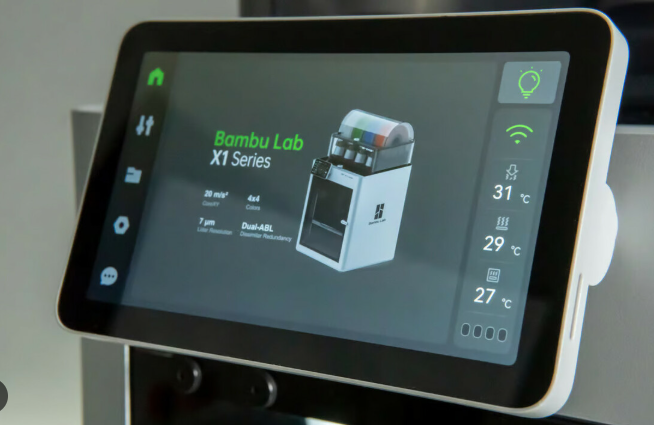
Image courtesy of 3DPrinterOS
Cloud-based 3D printer management platform 3DPrinterOS has expanded its integration with desktop 3D printer manufacturer Bambu Lab. This move is meant to make scalable 3D printing management simpler by allowing for seamless management of Bambu printers via the 3DPrinterOS platform, which is used by thousands of schools, organizations, and enterprises around the world. The platform offers a secure, browser-based interface that’s compatible with major devices like Chromebooks, which are used in many classrooms, and the 3D printing workflow is streamlined thanks to features like automated notifications, role-based access control, and integrations with Fusion and Tinkercad. The expansion supports Bambu’s X1, A1, P1, and H2 models, connecting the printers to 3DPrinterOS to enable centralized fleet management, which includes real-time monitoring, print queue control, and performance analytics. All told, this integration can help reduce pesky administrative bottlenecks in labs, classrooms, and professional environments.
“Scaling 3D printing across large organizations presents unique operational and security challenges. Our expanded integration with Bambu Lab simplifies that complexity, while our local server and private cloud solutions help Fortune 500 companies safeguard devices and data within their own secure networks,” said Rene-Oscar Ariko, VP of Global Sales at 3DPrinterOS.
Protolabs Continues to Double Down on Axtra3D’s Hi-Speed SLA 3D Printing

Digital manufacturing leader Protolabs recently reported weak 3D printing sales, but that hasn’t stopped the company from continuing to invest in advanced photopolymer printing. In 2024, Protolabs adopted two Lumia X1 systems from Axtra3D to meet growing customer demand, and has now expanded its offerings to include four different Hi-Speed SLA material solutions. These new offerings are all from partners in the Axtra3D materials ecosystem, and include flame-retardant solutions from Arkema, ceramic solutions from Forward AM, and tough engineering and ESD materials from Loctite. Protolabs uses the Lumia X1 mostly to print flame-retardant applications, ceramic mold inserts, prototypes, and end-use production parts, and these four new materials are fully optimized by Axtra3D in order to leverage the part fidelity and high throughput of its Hi-Speed SLA technology. Adopting these new materials highlights the trust Protolabs has in Axtra3D and the Lumia X1.
“Protolabs’ rapid adoption of the Lumia X1 underscores the strength of our partnership and the high level of collaboration between our teams. The transparent communication, close interaction, and mutual support we maintain allow both companies to stay ahead of the curve, leveraging Hi-Speed SLA to its fullest,” said Rajeev Kulkarni, Chief Strategy Officer at Axtra3D.
“Protolabs’ focus on scaling transformative technologies aligns perfectly with our commitment to enable their growth and innovation, and we’re proud to play a role in that journey.”
BIO INX Announces Strategic Partnership for Japanese Distribution

BIO INX, a market leader in advanced bioinks, has announced a strategic partnership with Yamato Scientific Co., Ltd. for distribution in Japan. According to CEO Dr. Jasper Van Hoorick, BIO INX was actively working to increase its presence in the country, and was introduced to the Japanese company at “the recent Flemish trade mission organized by Flanders Investment and Trade.” With its cutting-edge laboratory and scientific equipment, Yamato Scientific has long been committed to advancing research and technology, and has had a growing interest in bioprinting. This collaboration shows how dedicated it is to innovation in the field of life science tools, and also highlights BIO INX’s mission to make bioprinting more accessible, so scientists can continue important research into advanced and reproducible bioprinting applications. Japanese companies and researchers will now gain direct access to its portfolio of bioinks through this partnership.
“Offering the innovative bio-inks from BIO INX provides a unique opportunity. BIO INX’s cross-technological materials are compatible with multiple printing methods — from extrusion-based to high-resolution, light-based technologies,” said Takashi Sawashima from Yamato Scientific. “Combined with their strong partnerships and commitment to reproducibility, BIO INX delivers unparalleled performance. Adding these products to our portfolio is of great importance to us as we continue to expand into the bioprinting field.”
Electronic Eyes: Room-Temperature 3D Printing for Mini Infrared Sensors

Figure 1. 3D printing of infrared sensors. a) Room-temperature printing process for the electrodes and photoactive layer that make up the infrared sensor. b) Structure and chemical composition of the printed infrared microsensor. c) Printed infrared sensor micropixel array.
Infrared sensors, or “electronic eyes,” that act as the “seeing” part in devices like autonomous vehicle LiDAR, or smartphone facial recognition, are able to recognize objects when when it’s dark. But a team of researchers from KAIST, Korea University, and the University of Hong Kong developed a 3D printing process that can manufacture infrared sensors in any size or shape you want—at room temperature. Infrared sensors convert invisible infrared signals into electrical signals, and are very important for a lot of electronic technologies these days, which is why flexible form factor and lower size and weight are a big deal for these applications. Traditional processes for manufacturing semiconductors are fine for mass production, but can’t adapt quickly to meet changing technology demands, and also require high-temperature processing, which limits materials. These researchers are using metal, semiconductor, and insulator materials in the form of liquid nanocrystal inks to print core infrared sensor components at room temperature. They report that they’ve successfully 3D printed tiny infrared sensors that measure less than one-tenth the thickness of a human hair, and achieved great electrical performance as well.
“The developed 3D printing technology not only advances the miniaturization and lightweight design of infrared sensors but also paves the way for the creation of innovative new form-factor products that were previously unimaginable. Moreover, by reducing the massive energy consumption associated with high-temperature processes, this approach can lower production costs and enable eco-friendly manufacturing—contributing to the sustainable development of the infrared sensor industry,” explained Professor Ji Tae Kim, KAIST Department of Mechanical Engineering.
You can learn more by reading the team’s published research paper here.
🏷️ p3d_feed