7 Ways ASTM is Making AM More Ready for the Real World
⚓ p3d 📅 2025-11-24 👤 surdeus 👁️ 29

Known for setting industry standards, ASTM used this year’s Formnext to launch a global, seven-part initiative to help 3D printing move faster from research to the factory floor. ASTM focused on the infrastructure behind AM, the standards, certifications, partnerships, and intelligence tools. All of this is designed to make industrial additive manufacturing (AM) more reliable, standardized, and production-ready.
One of the biggest updates came from the United States, where ASTM has deepened its collaboration with America Makes, the country’s primary AM public‑private partnership. The work focuses on strengthening supply‑chain resilience and supporting defense readiness, two areas where qualification and testing matter as much as speed. This includes ASTM’s leadership role in the Department of War–funded Quality Test and Inspection Methods Expediency (QTIME) project. As part of QTIME, ASTM leads an Industry Transition Team (ITT) that connects R&D with production in aerospace, defense, and energy. Partners include Boeing, Lockheed Martin, SAE International, Baker Hughes, and Wohlers Associates. Together, they’re working on faster, more cost-effective non-destructive inspection (NDI) methods for complex AM parts.
Building on that effort, ASTM and NASA, through America Makes, have launched WATCHLIST (Workshop on Additive Techniques for Control and Health-Monitoring Leveraging In-Situ Technologies), a collaborative roadmap for in-process monitoring and control designed to improve process reliability, accelerate qualification, and strengthen U.S. supply-chain security.
“From QTIME’s transition engine to the WATCHLIST roadmap and our Platinum membership, these steps knit together the full lifecycle—from sensing and control to qualification and adoption,” said Mohsen Seifi, ASTM International’s Vice President of Global Advanced Manufacturing Programs. “Our goal is simple: make additively manufactured products trusted, certifiable, and deployable at scale.”
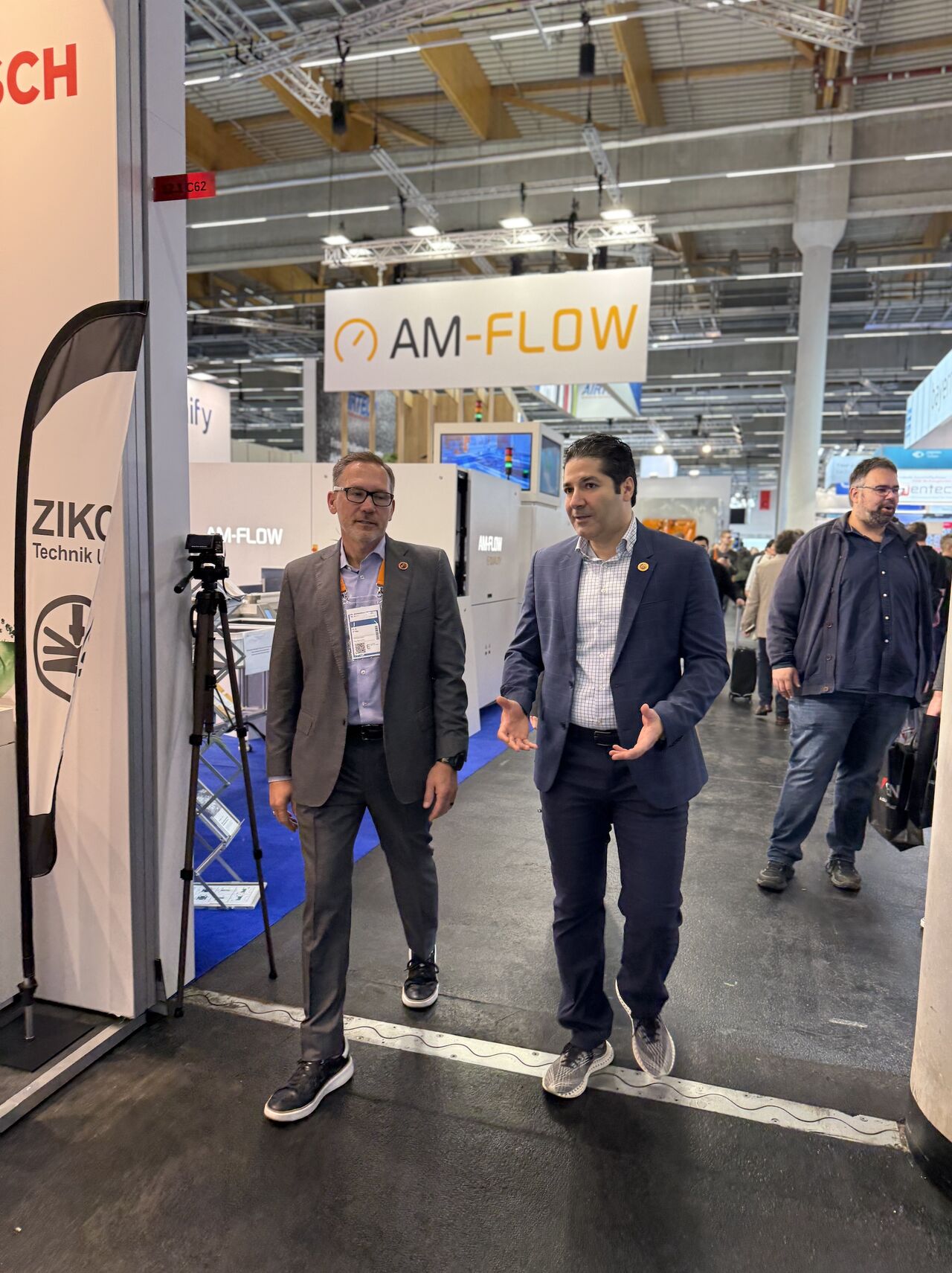
ASTM President Andy Kireta, alongside ASTM’s Mohsen Seifi, at Formnext. Image courtesy of ASTM.
Meanwhile, ASTM UK announced its role in Digitally Enabled Competitive & Sustainable Additive Manufacturing (DECSAM), a £38 million aerospace program led by Airbus. The project is designed to help laser powder bed fusion (L‑PBF) scale up for flight‑ready parts by improving productivity, material efficiency, and environmental performance. With aerospace still one of the toughest industries for AM qualification, ASTM’s involvement points to an important push toward large‑scale, certifiable metal production.
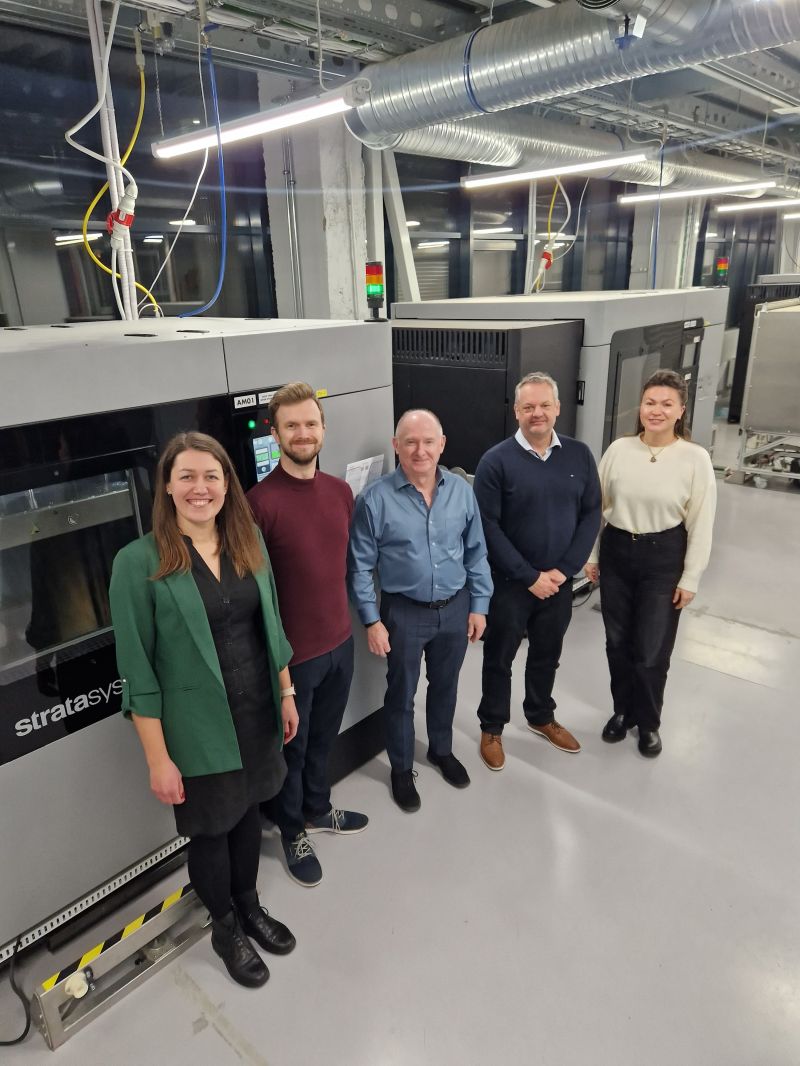
Members of the ASTM International and AM Craft teams during a pilot audit under the AM Certification Program. Image courtesy of ASTM.
In Europe, ASTM expanded its Additive Manufacturing Certification Program by awarding the first certifications under its updated framework to two companies: KSB in Germany and AM Craft in Latvia. Also, in Southeast Asia, the Metals Industry Research and Development Center – Advanced Manufacturing Center (MIRDC‑AMCen) in the Philippines received both AM Quality (AMQ) and AM Facility Safety (AMFS) certifications. These are the first of their kind in the region, pointing to a growing alignment with global quality benchmarks as Southeast Asia ramps up its advanced manufacturing capabilities.
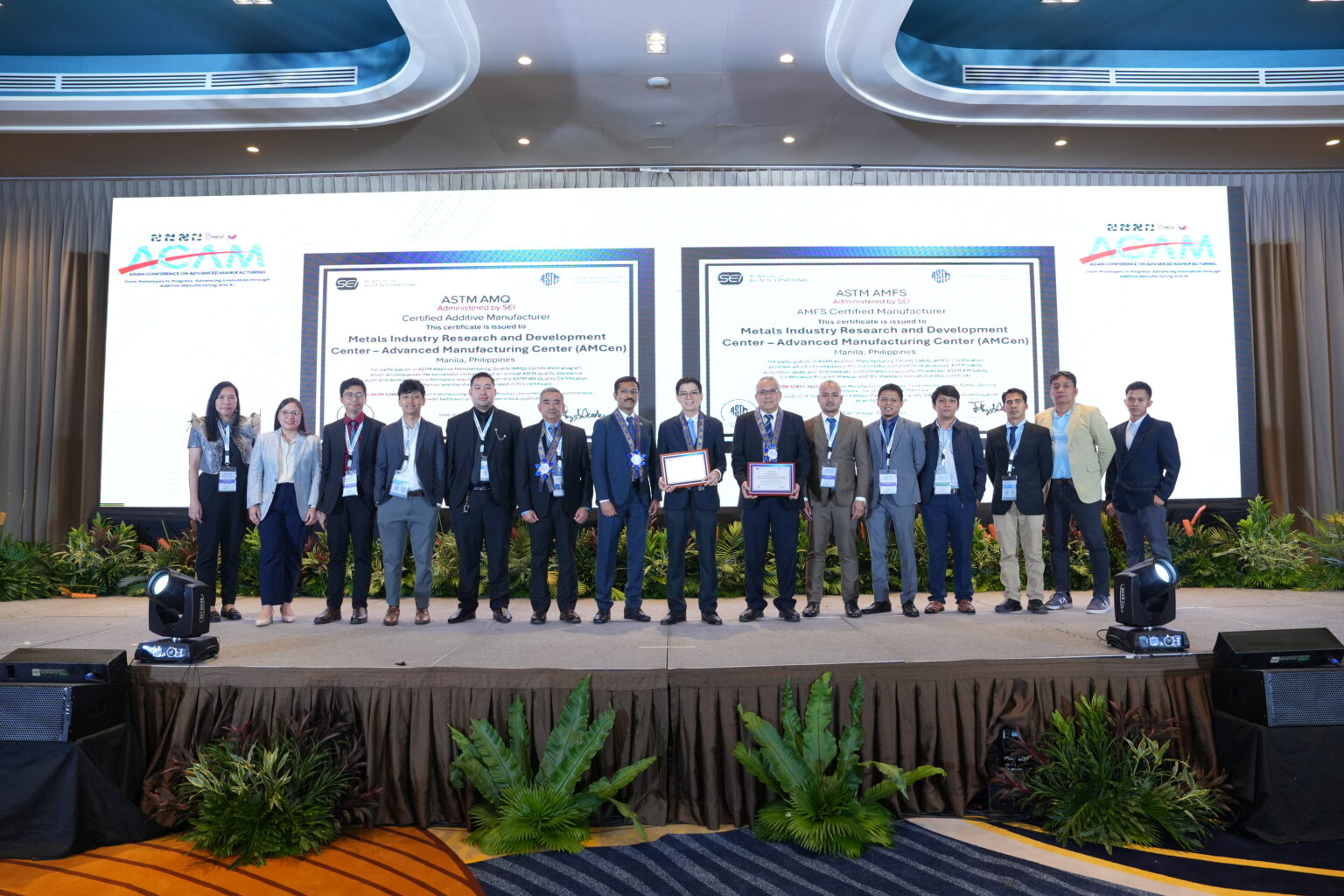
ASTM International and the MIRDC-AMCen under the Philippines’ Department of Science and Technology held a ceremony in Manila. Image courtesy of ASTM.
ASTM also revealed a new partnership with Additive Center B.V. in the Netherlands, aimed at creating the first supplier‑qualification pathway for AM in the semiconductor industry. With high‑tech manufacturing facing intense pressure for cleaner, more consistent, and more traceable production, this partnership is designed to bring AM into one of the most demanding industrial ecosystems in the world.
Beyond certification, ASTM is updating how the industry accesses information. Building on the long history of the Wohlers Report, ASTM introduced a new digital market‑intelligence platform that delivers continuously updated AM data and analysis. Instead of waiting for once‑a‑year reporting, companies will now have access to evolving insights that match the speed of the industry.

Members of the ASTM International and KSB teams during a pilot audit under the AM Certification Program. Image courtesy of ASTM.
Wohlers Associates is also growing. ASTM announced the addition of more than a dozen new consultants across areas like AM, robotics, AI, and uncrewed aerial systems. Now that AM is overlapping more with automation and smart factories, this extra knowledge helps companies handle both the tools and the strategy.
What connects all seven initiatives is making everything work together. ASTM wants to make it easier to certify, trust, and scale AM, no matter the industry or country.
🏷️ p3d_feed“ASTM’s role is not just to define standards — it’s to connect them to industry reality and future readiness. From sustainable aerospace manufacturing to global certification frameworks and live data intelligence, ASTM is shaping the infrastructure of advanced manufacturing for decades to come,” concluded Seifi.