From Spare Parts to Strategic Advantage: How AM Is Reshaping Defense Readiness
⚓ p3d 📅 2025-12-09 👤 surdeus 👁️ 24

When I talk with defense customers and partners about additive manufacturing, the conversation rarely starts with, “What can we print?”
It usually starts with something like, “We can’t get this part anymore.”
Across the Department of Defense (DoD) and the wider industrial base, additive manufacturing (AM) has moved from an “interesting experiment” to mission-critical infrastructure. Part shortages, aging platforms, and geopolitical tension have forced organizations to rethink how they source, validate, and sustain components. 3D printing is now one of the fastest ways to close that gap, especially when combined with digital twins and advanced metrology.
The shift is playing out in real time: on ships at sea, in depots, and across reshoring programs that are rebuilding America’s manufacturing infrastructure from the ground up.
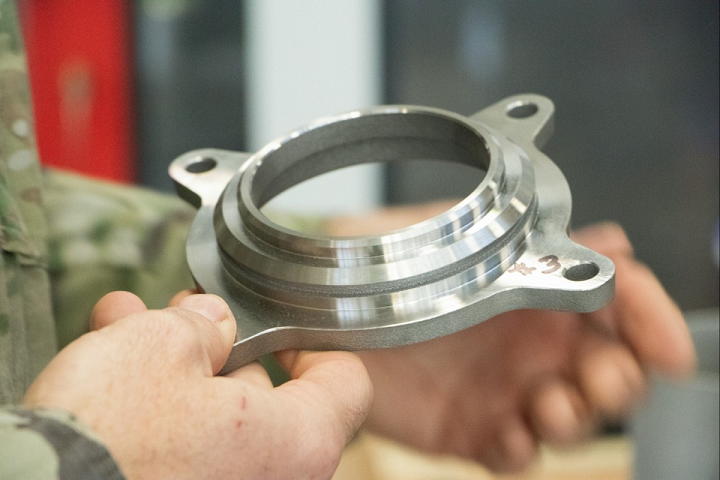
A newly produced Battle Damaged Repair & Fabrication part at the Advanced Manufacturing Center of Excellence inside the Rock Island Arsenal-Joint Manufacturing and Technology Center. Image courtesy of Kendall Swank/U.S. Army.
From Exposed Supply Chains to Point-of-Need Production
COVID-19 was a turning point. When global supply chains buckled, it exposed just how dependent U.S. defense programs had become on long, fragile, and often foreign supply lines for critical components. That vulnerability hasn’t gone away; instead, ongoing conflicts and geopolitical tensions have made it more obvious.
At the same time, many of the platforms the U.S. relies on most (ships, aircraft, vehicles, etc.) are supported by aging parts catalogs. Drawings are outdated, suppliers have consolidated or disappeared, and components go “obsolescent” long before the mission does.
Additive manufacturing gives defense teams a way to fight back on both fronts:
- Overcoming obsolescence: When a part for a legacy system is no longer available, it can be scanned, re-engineered, and printed without waiting months (or years) to stand up a new machining process
- Compressing lead times: Instead of waiting on a long chain of intermediaries, teams can print components in days, sometimes hours, at or near the point of need
On the amphibious assault ship, the USS Bataan, for example, a permanently installed metal 3D printer helped the crew fabricate and replace a critical component for a de-ballast air compressor in just 5 days, avoiding a lengthy, expensive shore-based repair.
That’s not just a “cool demo.” It’s the difference between deployment-ready and stuck in port.
Printers on Ships, In Depots, and In-Theater
One of the most important changes we’ve seen is where additive is being deployed.
A few years ago, most 3D printers in the defense ecosystem sat in OEM labs or research environments. Today, we’re seeing on-board systems, like those on the USS Bataan, which now carry metal and polymer 3D printers to repair tools at sea. Or the Army’s field deployments, where printers now let units produce components for vehicles, weapons systems, or infrastructure without shipping requests back home. Maintenance depots are also using AM to produce low-volume or custom parts, especially when conventional casting or forging isn’t economical.
The common thread is point-of-need manufacturing. Instead of distributing boxes of parts, the DoD is increasingly distributing digital part definitions and the capability to build them where they’re needed.
If a supplier goes offline or a particular material becomes hard to source, that digital definition can be routed to another qualified facility (military, OEM, or small supplier) equipped with the right printers and processes.

3D printer installed onboard USS Bataan by Kenya Latham, assigned to East Coast Repair. Image courtesy of Mass Communication Specialist 2nd Class Darren Newell.
Digital Twins, Metrology, and the Closed-Loop Confidence
Of course, printing a part is one thing. Proving it will perform as intended is another. That’s where digital twins and advanced metrology come in.
Defense teams are increasingly pairing AM with:
- 3D scanning and reverse engineering to create accurate digital models of legacy parts
- Simulation-driven design to analyze stress, fit, and performance before printing
- Closed-loop inspection, comparing the printed part back to the digital model for validation and documentation
Portable 3D scanners have become especially critical in this workflow. When a part fails on a ship or in theater, teams can’t always remove it or wait for it to be sent elsewhere for measurement. Handheld scanners let technicians capture on-site geometry (sometimes even while the part is still installed) and transmit the digital file to engineers who can begin redesign work immediately. That speed and flexibility are what make the scan-to-print pipeline viable in operational environments, not just controlled lab settings.
This creates a continuous cycle of scan, simulate, print, measure, and refine, improving quality, repeatability, and trust. It also supports predictive maintenance, allowing teams to identify wear patterns or stress indicators early and schedule repairs before failures occur.
Strengthening the Industrial Base: AM Forward and Reshoring
Another major shift is happening deeper in the supply chain.
Initiatives like AM Forward encourage major “primes” (defense contractors such as Lockheed Martin, NG, Boeing, and Raytheon) to help small- and mid-sized U.S. manufacturers adopt additive manufacturing. By funding equipment, training, and long-term purchasing commitments, these programs expand the pool of qualified suppliers and make local production more viable.
Other federal programs have taken similar steps, even designating “critical suppliers” and supporting their reshoring production. Instead of relying on a single overseas facility, organizations can build capability inside U.S. plants, highlighting highly specialized small manufacturers.
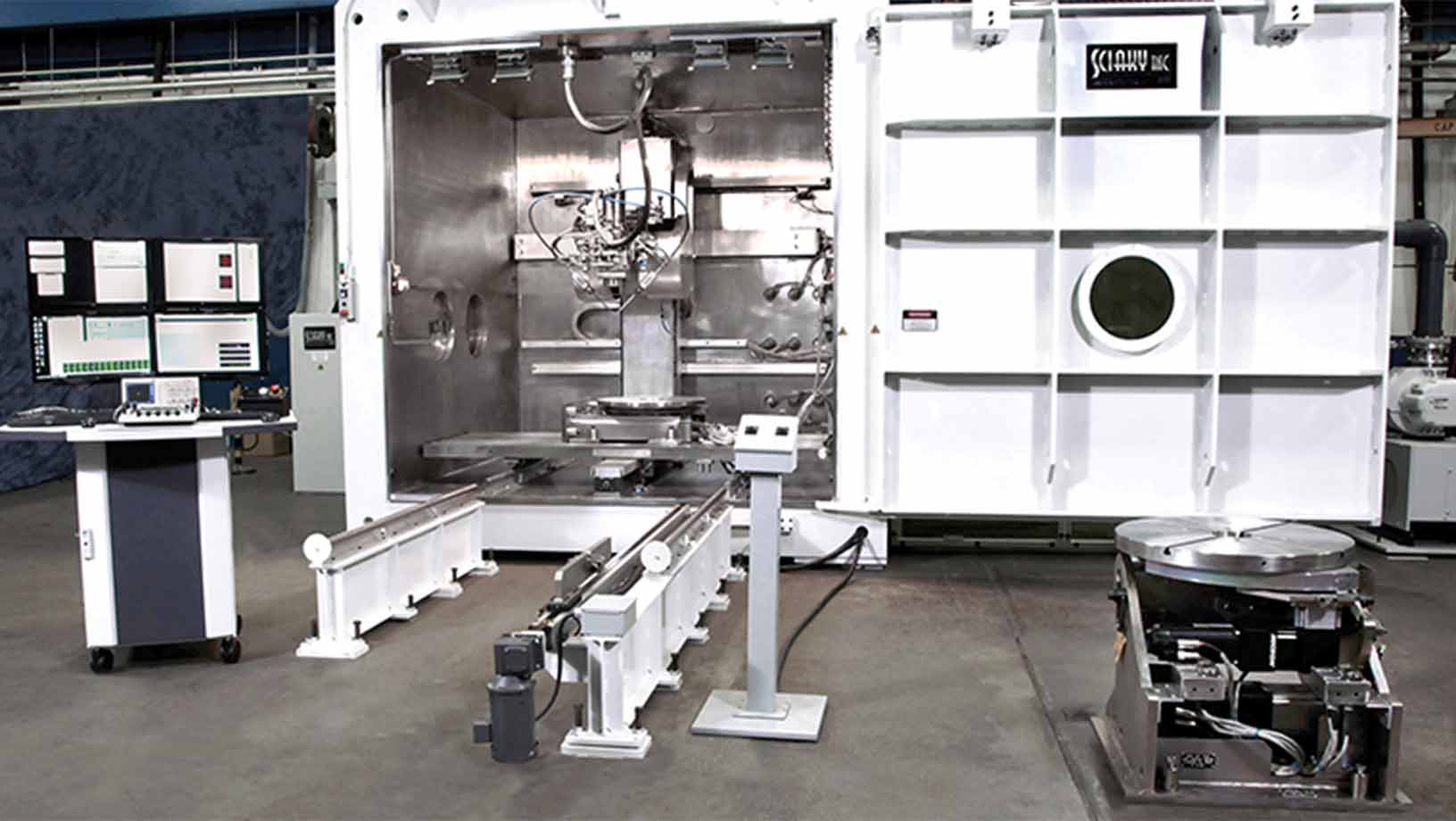
Large-scale DED/EBAM system used for producing complex metal structures for aerospace and defense applications. Image courtesy of Hexagon.
A Cultural Shift in Defense
Government may be known for red tape, but the pace of additive adoption shows a real mindset shift. Supply chain disruptions, operational urgency, and compelling field results have made leaders more open to new approaches.
A new generation is also entering the workforce with a different baseline. For many younger engineers and technicians, 3D printing isn’t futuristic; it’s familiar. That comfort with digital tools and rapid iteration is pushing defense organizations to modernize faster.
Looking ahead, additive manufacturing is on track to become a default capability across the DoD. The question is no longer whether it belongs, but how quickly we can scale it so every mission-critical system, from ships to vehicles to weapons platforms, can stay ready in an unpredictable world.
About the Author:

Jeff Elmer. Image courtesy of Jeff Elmer.
Jeff Elmer is the Business Development Manager for DoD and Government Agencies at Hexagon’s Manufacturing Intelligence division, bringing more than 30 years of experience in advanced manufacturing, federal contracting, and strategic technology adoption. He has led full-cycle business development efforts across multiple defense and civilian agencies, from innovation and production to major contract negotiations and long-term program execution. Elmer specializes in helping government and industrial partners modernize supply chains through AM, digital-twin workflows, and advanced metrology, offering a real-world perspective on how these tools are reshaping defense readiness.
🏷️ p3d_feed