Snapmaker Secures Series B Backed by Xiaomi Founder’s Network and China’s Investment Elite
⚓ p3d 📅 2025-12-10 👤 surdeus 👁️ 23

Desktop 3D printer manufacturer Snapmaker has gotten a series B round. The round is led by Hillhouse Ventures and Meituan. Cowin Capital and Orient Securities Capital dipped in for another round, while Shunwei Capital, Longzhu Capital (the corporate VC arm of Meituan), and Nanshan Innovation Investment also invested. The company does not disclose the amount, which is very strange, but states that it is “raising USD tens of millions total.” This does not tell us much and is rather confusing.
Snapmaker founder Daniel Chen said,
“This financing round is not only a valuable supplement of capital, but also a pivotal moment in Snapmaker’s evolution from product leadership to a fully developed ecosystem. We will focus on three key areas: First, accelerating core technology R&D to address user pain points in multicolor printing, high-speed fabrication, and more; Second, expanding our global talent network, especially recruiting top talent in hardware R&D, AI software, and content ecosystem development; Third, building a comprehensive ecosystem by collaborating with creators, developers, and supply-chain partners to lower the barriers to creation and make 3D printing a universal tool accessible to everyone.”
The investors are a star-studded bunch indeed. Hillhouse is notable for its early investments in tech powerhouse Tencent, Chinese e-commerce giant JD.com, and Zoom. Hillhouse is not just a VC; it also manages funds with very different profiles and operating styles, including buyout deals for large companies. Meituan is a $38 billion delivery/superapp for a local services giant; Shunwei is a Beijing-based fund founded by Xiaomi’s founder; Nanshan is a fund focused on a Shenzhen innovation district; Cowin is a leading $4.7 billion fund; and Orient Securities acts as both an investor and an underwriter. This is Chinese smart money and is among the most desired financial partners to work with. Creality, which is going public, also has a bevvy of leading investors backing it, including Shenzhen Capital, AVIC Pingshan, and Tencent Venture Capital. Bambu Lab, meanwhile, is backed by Wuyuan Capital, TrueLight Capital, and Temasek. Around three years ago, prominent regional investors seemed to have developed quite an interest in 3D printing companies.
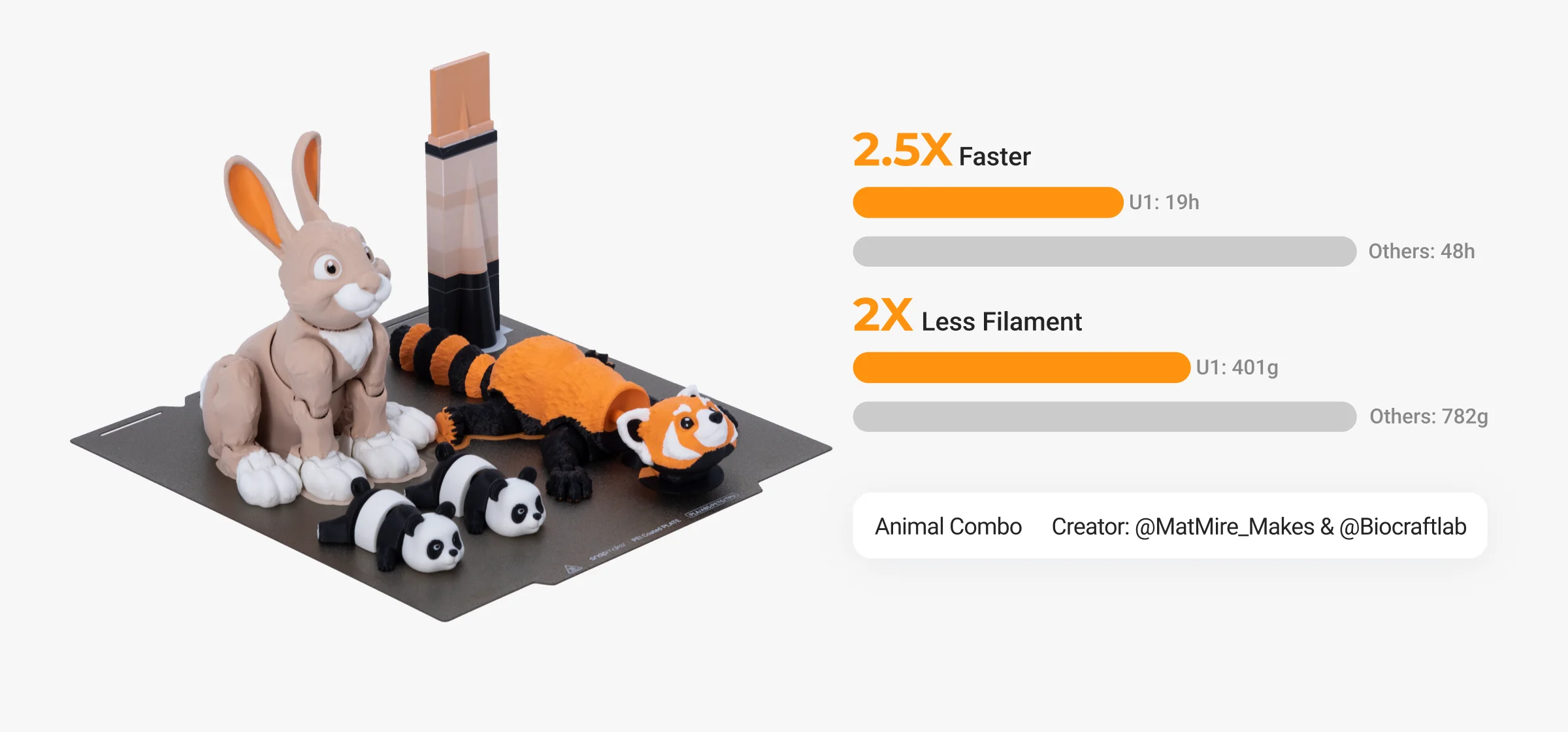
3D printed animals. Image courtesy of Snapmaker.
Snapmaker’s investors are likely to help it scale and internationalize (Xiaomi) while expanding at a breakneck speed (Meituan), while working towards a possible IPO (Orient) and staying friends with the government (Nanshan). It seems that the prominent Chinese 3D printing firms are not only in the business of securing support from just regular billionaires, but also those who are members of the National People’s Congress (NPC, China’s highest legislative body and a state organ), like the hyper-connected Xiaomi founder Lei Jun. The world may be a bit down on 3D printing, but China sure as hell isn’t.
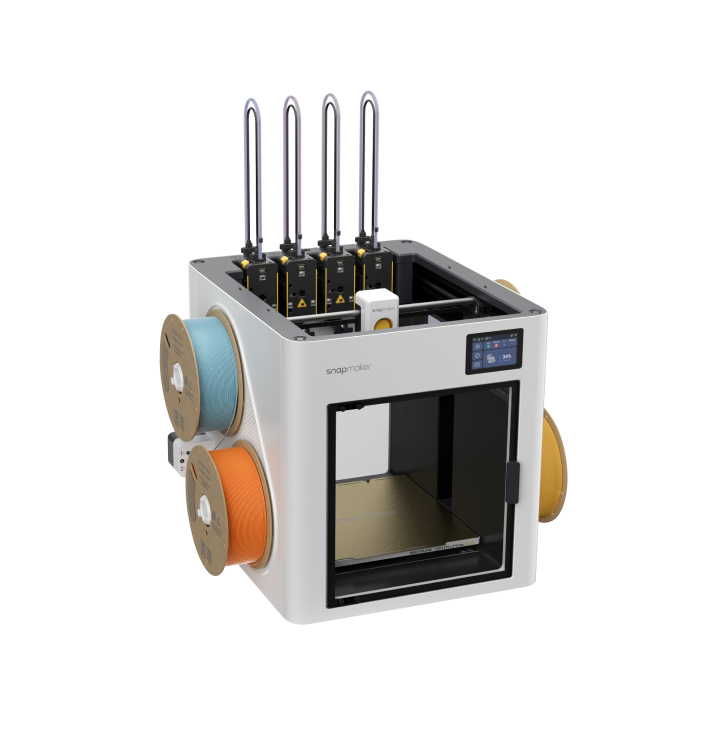
Snapmaker U1. Image courtesy of Snapmaker.
Snapmaker hopes to use its funds for R&D, hire more people, and grow. Snapmaker is a major Kickstarter success story, raising $7.8 million in 2019 for the Snapmaker 2.0 and a record-breaking $20 million this year for its U1. The company said it has done extensive user-led innovation, guided by user interviews and feedback submitted to it. The low-material-waste U1 architecture is indeed an impressive 3D printer that produces colors well. The company aims to launch the system in the first quarter of 2026, and initial crowdfunding backers and reviewers seem content.
The U1 does color very well and can also mix TPU and rigid materials in the same print. ASA, ABS, PA, and other difficult-to-manufacture materials are generally so-so or problematic; the top is open, which interferes with these materials. A top will no doubt become available, but generally, the heat management, fans, and heat flow are less well managed, so engineering materials will probably still be problematic going forward. It has four toolheads in a relatively small printer, which is key to reducing purge waste and speeding up color printing. Toolhead swapping out is also easier than with other systems. It appears to have been designed with greater repairability in mind. Quality control and overall build quality, as well as tooling, appear lower than those of comparable Bambu Lab and Creality systems. There have been many more reported dead-on-arrival printers and many more issues that should have been caught in manufacturing and quality checks than one would expect from Creality and Bambu Lab. Software and sensors are less sophisticated than Bambu’s offerings. So far, it appears that for single-material prints, Bambu’s are generally more reliable, and Bambu’s laminar flow across the bed and print platform is also much better. Snapmaker works with Orca and other slicers, which improves privacy and will make it more customizable and hackable in the future. Snapmaker is based on Klipper and is open-source, publishing on GitHub, but it is working in contravention of the Klipper license by not publishing the changes it has made so far. Also, it’s weirdly locked down, reducing the ability to hook it up to farming software, new sensors, new types of toolheads, and more.
Snapmaker makes tool-changer 3D printers accessible, and if you’re into lots of multicolor models, it’s something that you should consider. If you have a multicolored dragon factory, the considerable speed increases could make this an excellent choice. If you’re running a lot of single-material prints or need ASA, PC, or other materials, Bambu’s is the better option. For businesses, Bambu’s is right now better. If they make it easier to hack the system, it will become a platform for inspiring innovation. Even without this, a more refined model with better quality assurance (QA), quality control (QC), and components is a real threat to Bambu. Currently, however, it seems that Snapmaker doesn’t have a quality-driven manufacturing culture, and it will take time for the company to develop one.
It now seems that Creality, Snapmaker, and Bambu are the most competitive players in the material extrusion market. Elegoo, if DJI backs it with some talented people rather than just money, could join them as well. Together, these firms are getting a lot of love for Chinese financial royalty. They will collectively make the 3D printing market much bigger than it has been. They will grow our market by millions of users by 2026. This broadening of the market will be one of the most significant things that will happen in 3D printing in 2026; this is set in stone already. Which one of them will win? We don’t know yet, but I’m still betting that Bambu can resist being Snapmakered. If you’re worried that these guys are coming for you. Don’t worry, they’re not. They’ll demolish you, sure. But you’ll be roadkill in a rally, an externality, in a race between Chinese firms.
🏷️ p3d_feed